By James Kenney
(This is the second in The Ferrara Files series. Part one can be found here)
By the mid-1980s, Abel Ferrara was, as they say, moving up the Hollywood ladder. The cheap, incredible Ms. 45 had demonstrated just how much he could do with no money and an unknown cast, while Fear City proved he could direct an A-list cast (trying to handle Billie Dee Williams, Melanie Griffith and Tom Berenger was a heady task for the guy who had made Driller Killer starring himself) and deliver a slick, exploitable B-movie.
No doubt the rising VHS trade and cable TV helped put Ferrara on the map and get his films seen, as well. Films didn’t wholly disappear after release, even bloody R-rated ones that would have a hard time getting booked on the Saturday Afternoon movie on channel 5. Hollywood noticed, and Ferrara went to L.A. and took his shot. He made some money (probably spent it, too), and his ability to deliver above-average “product” kept him in demand, which eventually lead to King of New York and the extraordinary run that followed.
But getting there meant this great filmmaker would spend a few years making work that was often more interesting than great.
Ferrara embraced the glossy, MTV-inflected style of the period, directing episodes of hip, music-and-style driven television shows like Miami Vice and Crime Story, where even one of the world’s most distinctive filmmaker was ultimately a temporary cog in somebody else’s machine; made the goofy TV movie The Gladiator, with Ken Wahl, Robert Culp and L.A. DJ Rick Dees (!); and also made China Girl, the one feature from these years that can unequivocally be called a Ferrara film. Then there was Elmore Leonard’s Cat Chaser, a movie that could’ve been great (Ferrara delivered on his end) but heavy-handed, unimaginative producers tore into it, leaving behind something considerably disfigured in its final form.
The surviving director’s workprint of Chaser suggests what should have been: a strange, languid, psychologically probing film, loyal to Leonard and far less interested in conventional action set pieces than in the damaged people drifting between them. Truth be told, there is little in this period where he is making his name that represents Ferrara at his very best. Yet this was the period that many of us grew to knew him by name, anticipating the great auteurist follow-up to Ms. 45 that would eventually arrive with King of New York, which premiered at the New York Film Festival (to boos! But that’s a different story). That is precisely what makes the period still fascinating today.
Ferrara was making slicker, bigger, better-looking movies, and also learning what kind of filmmaker he did not wish to be. China Girl is essential Ferrara, the elusive Cat Chaser workprint may be even more essential, but everything around them charts the uneasy education of an artist. Maybe he didn’t really want to direct Rick Dees and Robert Culp in movies with built-in breaks for commercials, whatever the pay.
MIAMI NICE
I presume Ferrara was hired for Miami Vice because of the gritty visual acumen on display in Ms. 45 and Fear City more than for the psychological complexity of those films. Miami Vice was the cop show transformed into an MTV totem: pastel suits, expensive cars, speedboats, palm trees, wet streets glowing at night, and Phil Collins or Glenn Frey booming over montages of Don Johnson and his stubble looking handsome and pensive behind the wheel of a Ferrari. It was frequently terrific television, for the first couple years anyway, and the pilot holds up as a tight little television masterpiece—but it also could be comically self-conscious about its own coolness.
Ferrara directed two solid episodes, “The Home Invaders” during the first season and “The Dutch Oven” early in the second, but if we’re being frank, neither is particularly special Ferrara. “The Home Invaders” has an excellent guest cast: Jack Kehoe, Esai Morales, David Patrick Kelly, Brent Jennings, Paul Calderon and Sylvia Miles. and concerns a brutal series of robberies in which wealthy Miami residents are attacked in their homes. This already shows producers getting tired of their own premise a bit (do they have to be Vice cops all the time? Let’s find ways to get them to do something else!) Don Johnson’s co-lead Philip Michael Thomas was unavailable due to injury, and Ricardo Tubbs does not appear. Lieutentant Castillo (Edward James Olmos) comes out from behind his desk and essentially becomes Crockett’s partner for the week (in what one assumes was a hasty rewrite), just like what happens in real life (apparently no one was working the Vice desk as long as these home invasions continue!).
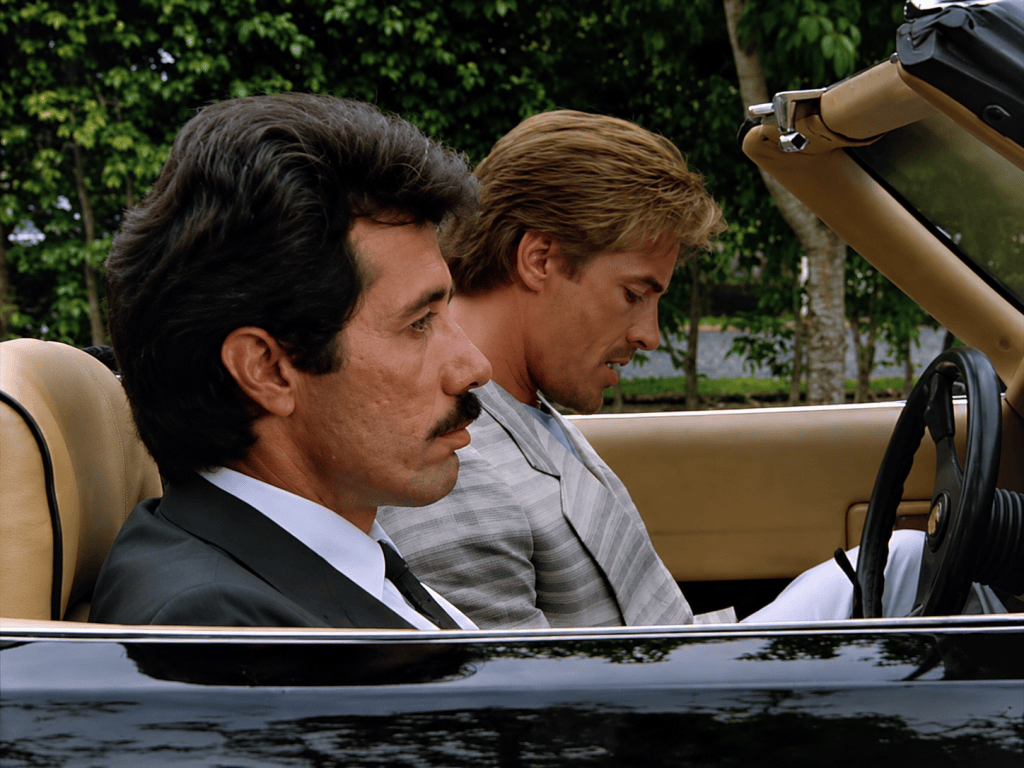
This creates an odd problem. Olmos is a fine actor, and Castillo remains one of the best-remembered characters from the series, but I’ve always found the character’s conception a little ridiculous: the endless glowering, the black wardrobe in the kingdom of pastels that is Miami (in Vice, anyway), his every utterance delivered with a clipped, near-comic moral gravity.
It works when he is kept behind the desk, scolding Crockett and Tubbs as they fall in love with witnesses and suspects with alarming regularity, harass the wrong people and generally behave like Don Johnson and Philip Michael Thomas on Miami Vice. Put Castillo out on the street, however, and the show’s silliness expands exponentially.
Watching him essentially perform the Tubbs function in what feels like a desperation rewrite (which is done well enough, granted) makes you realize just how arch the character is. It is difficult to imagine Lt. Castillo toasting an English muffin or walking a dog, if you know what I mean. Seeing him forced to interact with ordinary human beings outside his office is, well, peculiar.
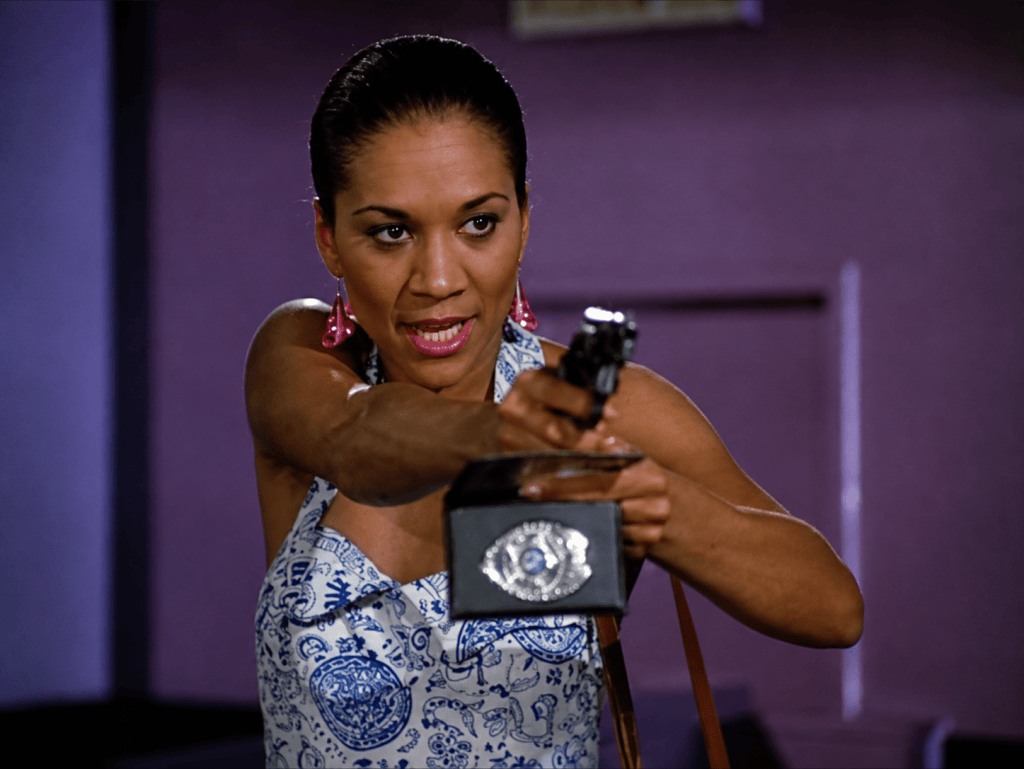
Ferrara returned for “The Dutch Oven,” an episode built around supporting character Detective Trudy Joplin (Olivia Brown). After killing a man in the line of duty, Trudy reconnects with an old boyfriend, only to discover that his circle leads directly into the drug trade she is investigating (surprise!). Some good names show up again: Giancarlo Esposito, David Proval and David Johansen.
Now, I like Olivia Brown. She was in Streets of Fire, after all (playing the long-suffering waitress at Reva Cody’s diner). Hell, she was married to Mykelti Williamson of both Streets and the Miami Vice pilot! (Trivia!) But giving Trudy her “big episode” already makes this episode second-rate Vice. We come to Miami Vice to see Don Johnson rocking a white linen jacket over a pink T-shirt and Philip Michael Thomas breaking out his Jamaican accent, not necessarily to discover what Trudy is all about. The episode is fine and honestly, of course it’s good to let a supporting player get her moment. And while both of Ferrara’s episodes look good, every episode of Miami Vice looks good, of course. There is little here to isolate as some special Ferrara touch. He is a hired hand inside an extremely slick machine whose visual personality has already been determined.
There weree lasting benefits. These gigs began putting Ferrara into contact with actors who belonged in his universe. Paul Calderon would become an important Ferrara actor, while “The Dutch Oven” gave him Giancarlo Esposito and David Proval. Esposito worked in a few Ferrara films (King of New York and Chelsea on the Rocks) and Proval is in The Funeral. Ferrara was accumulating people for his own later projects, and his current work was good enough Mann gave him a very hot project to work on, which Ferrara nailed.
THE FIRST CRIME STORY
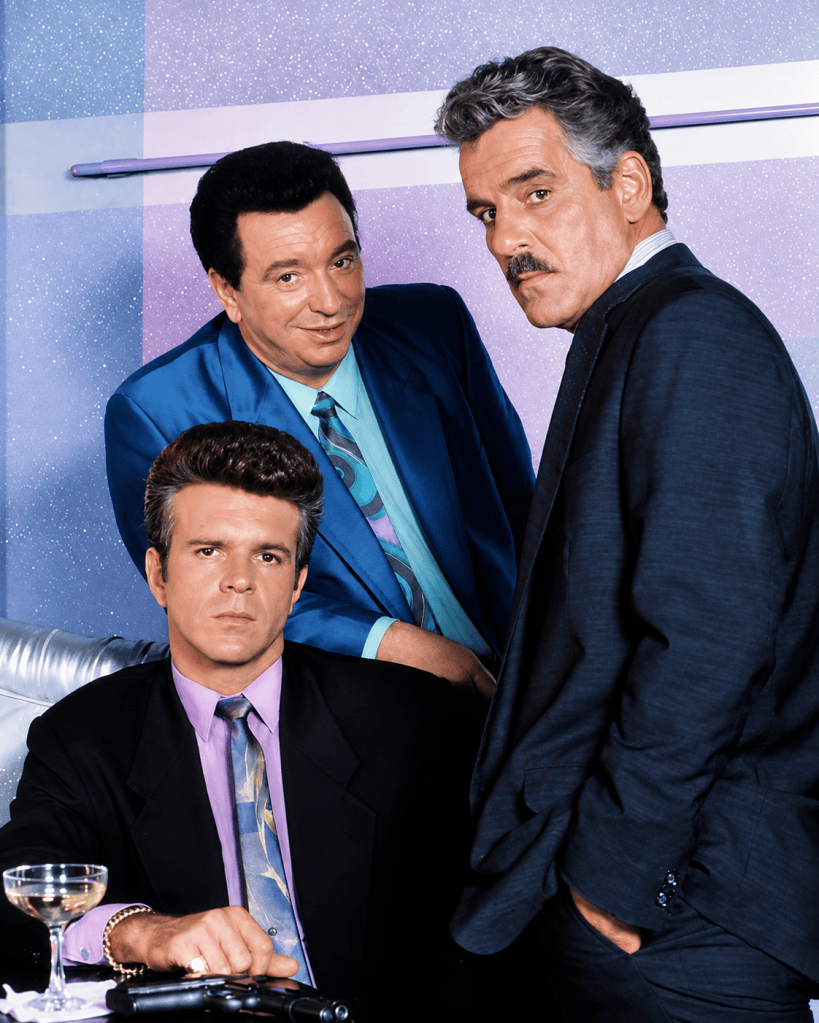
Michael Mann’s next major NBC project was Crime Story, an ambitious (and expensive) period crime series following Lieutenant Mike Torello and his Major Crime Unit in obsessive pursuit of rising gangster Ray Luca, in early-1960s Chicago. The great Dennis Farina played Torello; the also-great Anthony Denison played Luca. Ferrara was assigned the feature-length pilot.
That was not an insignificant assignment. Miami Vice had become a cultural phenomenon, and Crime Story was a costly, heavily promoted attempt to expand the Mann brand into something darker, more serialized and more ambitious. History has diminished its footprint: Crime Story never found a mass audience, struggled through two seasons and disappeared.
But at the time, Crime Story was a big deal. And Ferrara’s pilot is excellent.
I don’t want to project too much, but here, unlike on Miami Vice, the material benefits, and feels shaped by, some of Ferrara’s natural tendencies. The Chicago streets feel dangerous; the violence has weight; and Ferrara gives the whole thing the propulsion of a feature rather than an elongated television episode. Perhaps helming the first episode is key; he’s not beholden to what has come before. The pilot was well-reviewed and a ratings success, although the popularity didn’t last. But Ferrara’s work was noticed, and he had become enough of a celebrity in my house that my dad watched the pilot with me simply because Ferrara had directed it.
For the Ferraraologist, the Crime Story pilot is probably the essential work of this period of handsome paychecks and compromise (outside of his own China Girl). It demonstrates that Ferrara really could do this stuff. Give him somebody else’s actors, somebody else’s characters, somebody else’s format and a large television budget, and he could bring the thing in looking like a movie.
So he does more television.
DEATH WISH ON WHEELS
Ferrara’s only proper television movie was The Gladiator, a clunky Death-Wish-on-wheels potboiler starring Ken Wahl as Rick Benton, a mechanic whose younger brother is killed by a psychotic driver. Benton transforms his pickup truck into a vehicle of vengeance and takes to the streets after reckless drivers while the police, led by Robert Culp’s Lieutenant Frank Mason, try to keep up. Nancy Allen, Stan Shaw, Brian Robbins and the aformentioned Dees round out the cast.
Did Quentin Tarantino see this before dreaming up Death Proof? I have no idea. But don’t get me wrong: Death Proof is lots better than The Gladiator.
There isn’t much reason to seek The Gladiator out beyond its curiosity value or as a Ferrara completist. It is shot largely in the anonymous streets and industrial spaces of L.A. The real entertainment comes from seeing Ferrara direct this particular collection of people. I love the mercurial Robert Culp, who by this point was a jobbing television actor through and through, who likely didn’t see his collection of cliched scenes as anything worthy of him (Culp certainly had a high opinion of himself). I’m not sure he was interested in anything Ferrara had to tell him, and it doesn’t seem like he’d be Ferrara’s kind of guy, either.
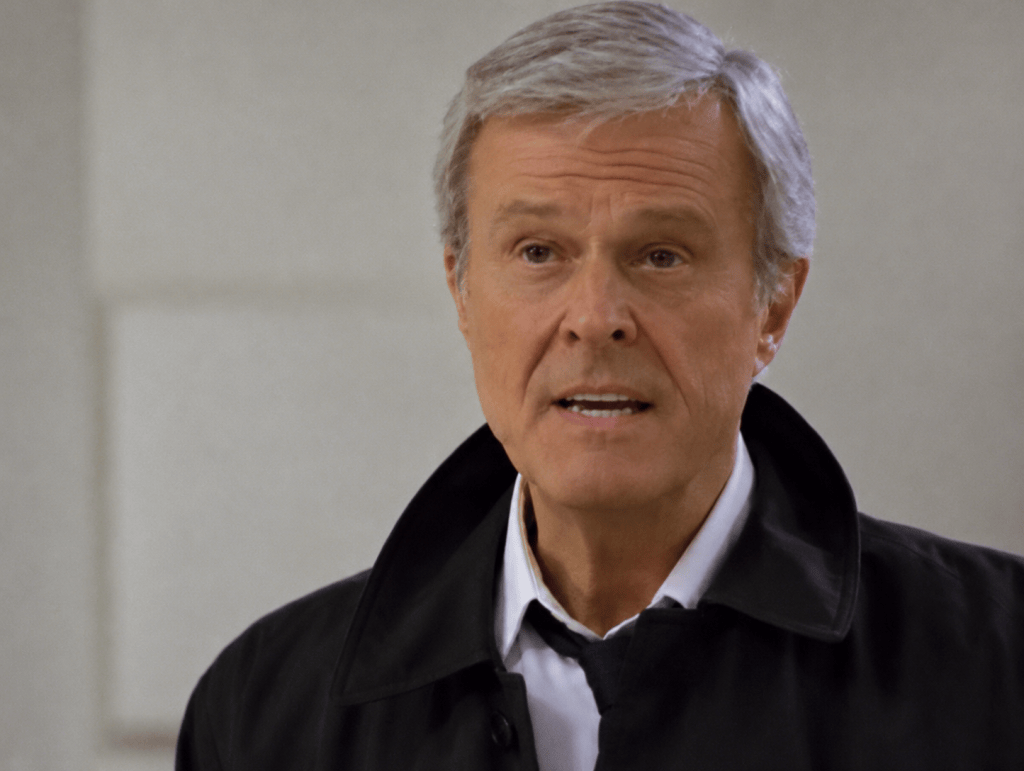
I would gladly rather watch 90 minutes of Ferrara dealing with Culp, frankly, than The Gladiator — picture Ferrara’s later Dangerous Game with Madonna replaced by Culp, an Emmy-nominee for his writing of racially complex episodes of the revolutionary I Spy who by this point was doing Celebrity Bowling and The Love Boat and things like that. I’m not saying anything went on (Culp only has a few scenes) but imagining these two cranky bulls facing off on a dumb movie-of-the-week set, one on the way up, one down, stirs the imagination.
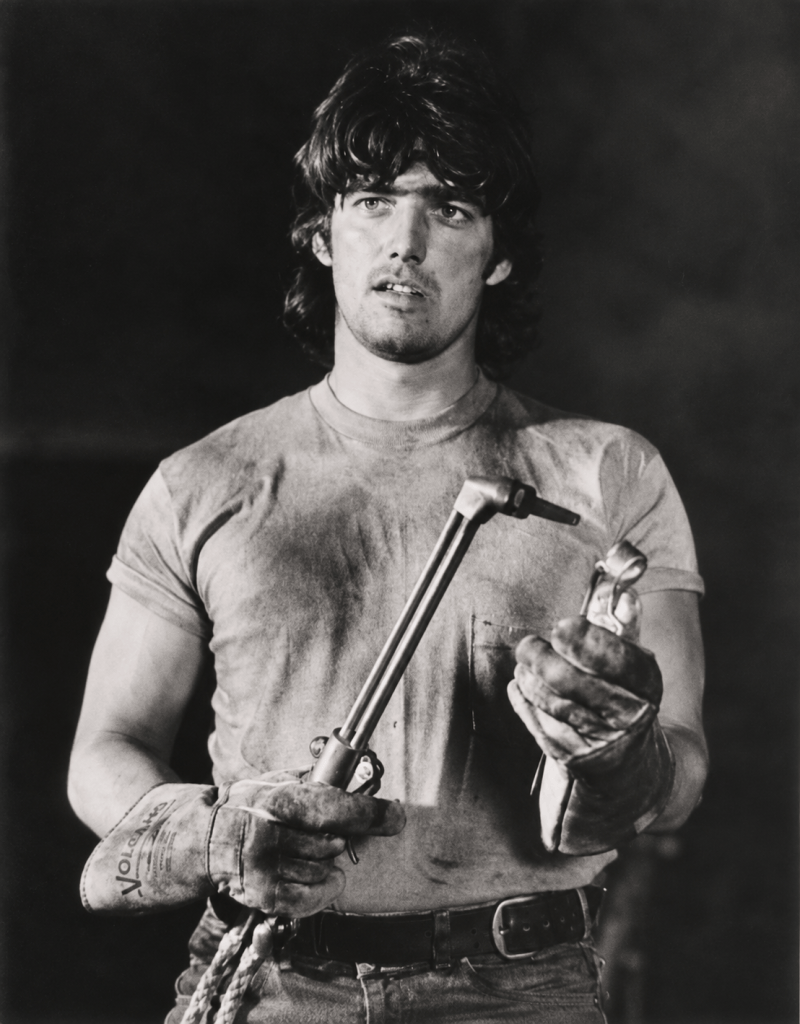
Ken Wahl, though, makes sense as a Ferrara actor. Put him in Tom Berenger’s part in Fear City or James Russo’s role in China Girl and I wouldn’t blink. But the movie itself proves watchable but forgettable, and one suspects that showing up on time on Los Angeles streets, dealing with television actors while a second unit films all the stunts, was never going to work for Ferrara.
There was one more attempt. Or paycheck, anyway.
The Loner was a 1988 ABC pilot produced by Aaron Spelling (of Love Boat and 90210 fame) and written by 48 Hrs. screenwriter Larry Gross. Ferrara even managed to bring members of his own filmmaking family out west for a paycheck, including editor Anthony Redman and composer Joe Delia. The pilot was not picked up. It starred John Terry, who I best know as the guy Annie Potts dates in John Hughes’s Pretty in Pink when she drops all her eccentricities and goes mainstream (a clear fantasy of Hughes, who must’ve liked a lot of alt/rebel girls and dreamed of smoothing out their edges — see Ally Sheedy’s character in the Breakfast Club too, but I digress).
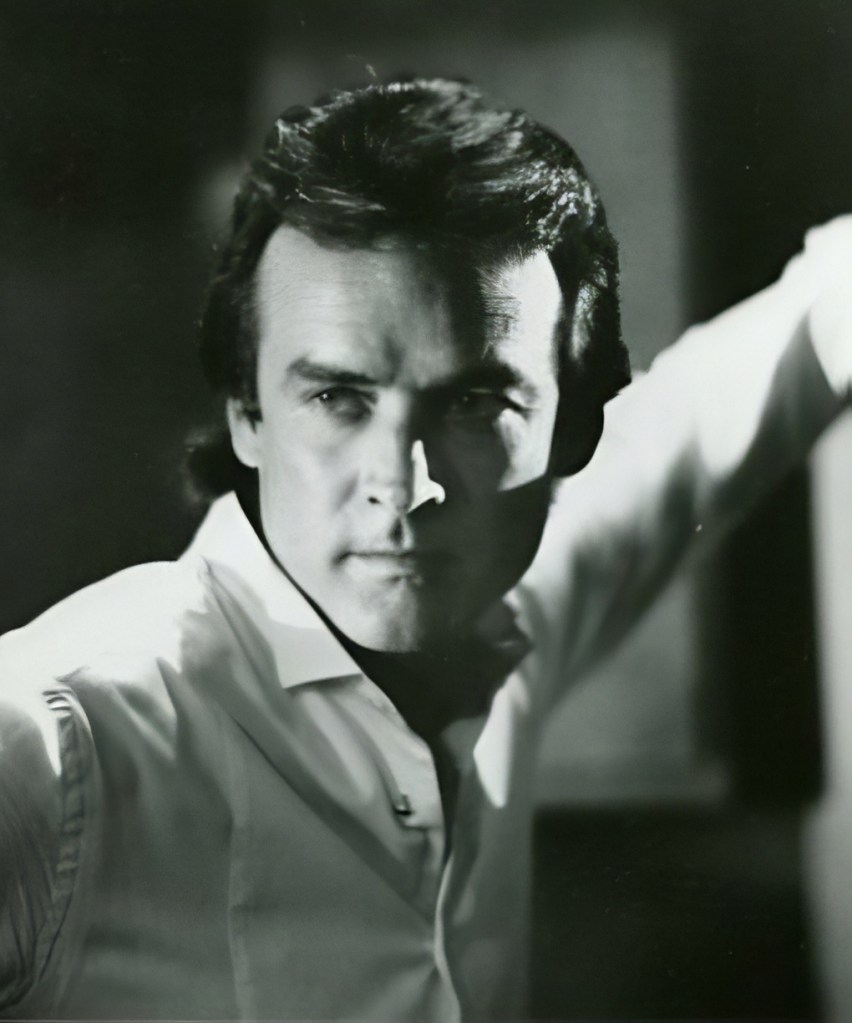
I haven’t seen The Loner. I don’t think it aired more than once. And Ferrara never seriously pursued this kind of network television work again over the next forty years. (Go Go Tales, his later comedy about a failing strip club, was at various points imagined as a series for cable television, but that is a rather different proposition.)
So he went back to New York.
CHINA GIRL
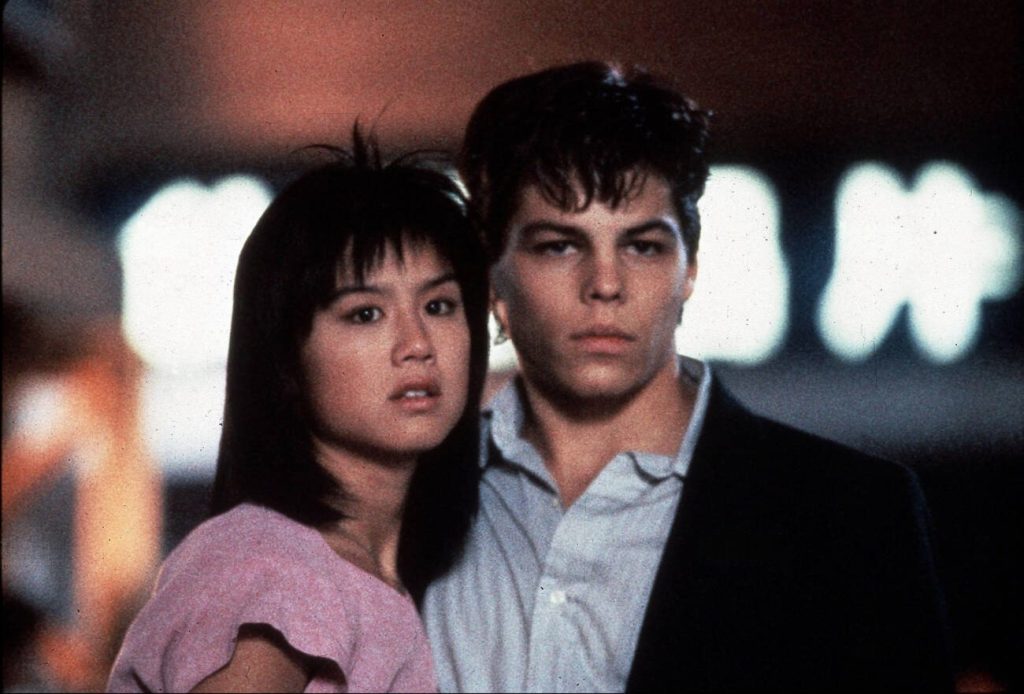
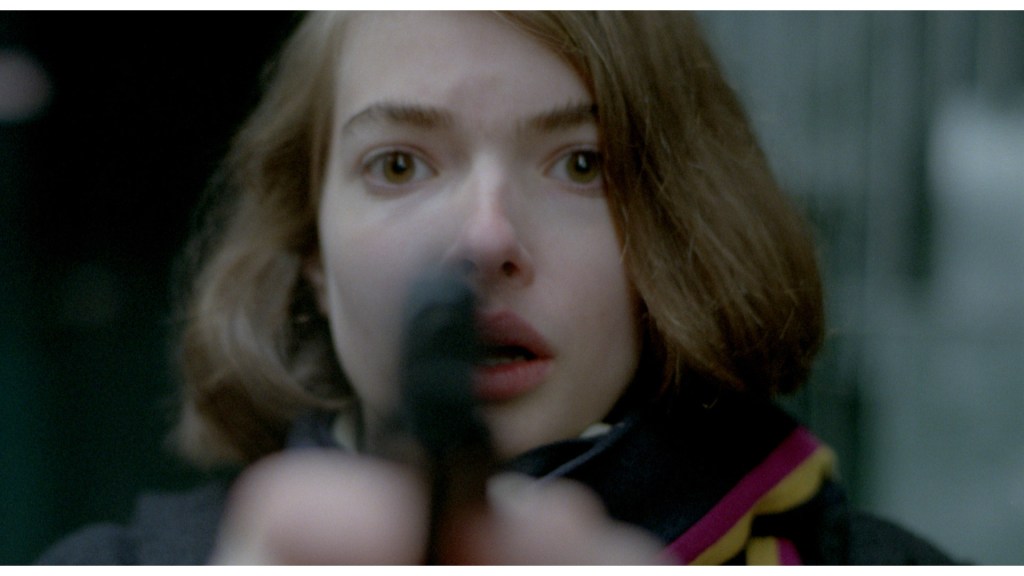
Back in New York, Ferrara made China Girl, written by his longtime collaborator Nicholas St. John: The New-York-Is-Hell “Fear City” of Driller Killer and Ms. 45 had alas, undergone some gentrification, and Ferrara and St. John reflect this by envisioning Romeo and Juliet relocated to the border between Little Italy and Chinatown, where Italian-American teenager Tony (Richard Panebianco) falls for the Chinese Tye (Sari Chang), whose older brother (Russell Wong) is already embroiled in escalating hostilities with Tony’s Italian brethren. James Russo plays Tony’s volatile older brother, David Caruso hams it up as he often memorably did before he became a star (and a much less interesting actor), and the supporting cast includes Joey Chin, Paul Hipp and veteran character actor James Hong.
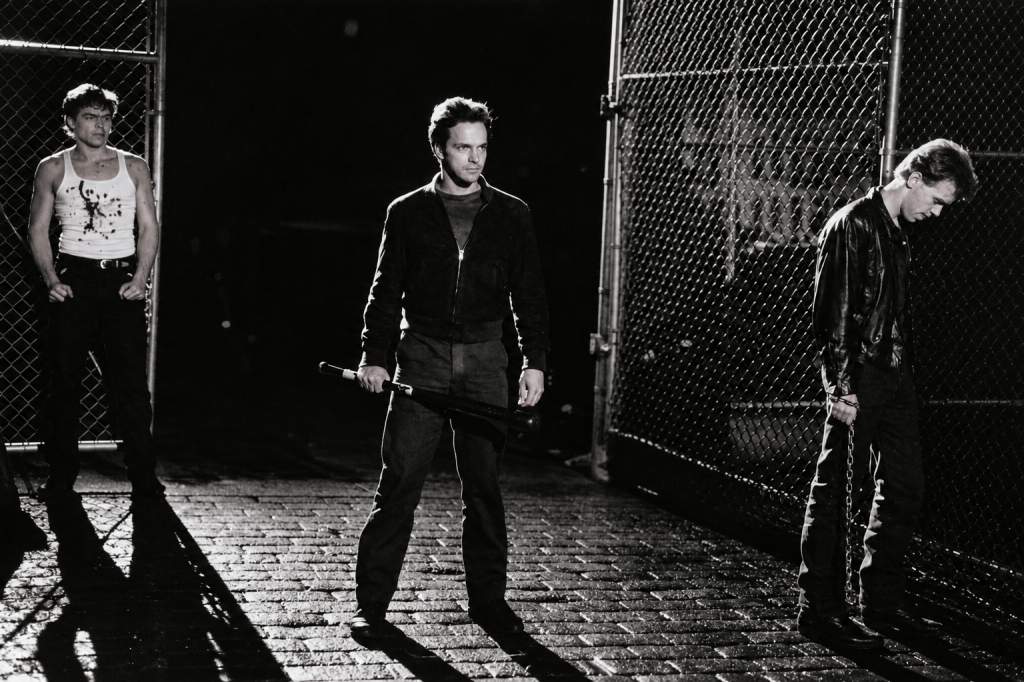
China Girl is Ferrara through and through, although it nevertheless belongs very much to this style-over-content phase of his career. That tendency would reach its logical conclusion with King of New York, except that King of New York is a style-and-content masterpiece. After that, Ferrara would increasingly turn away from actors posing for his camera and toward a cinema in which the camera seemed to be tasked with keeping up with whatever the hell the actors were doing.
“Romeo and Juliet in Manhattan, except Little Italy is being encroached upon by Chinatown” is a swell exploitation-movie premise, and Ferrara attends to it with gusto. Bojan Bazelli’s slick photography gives him the full mid-eighties visual arsenal.
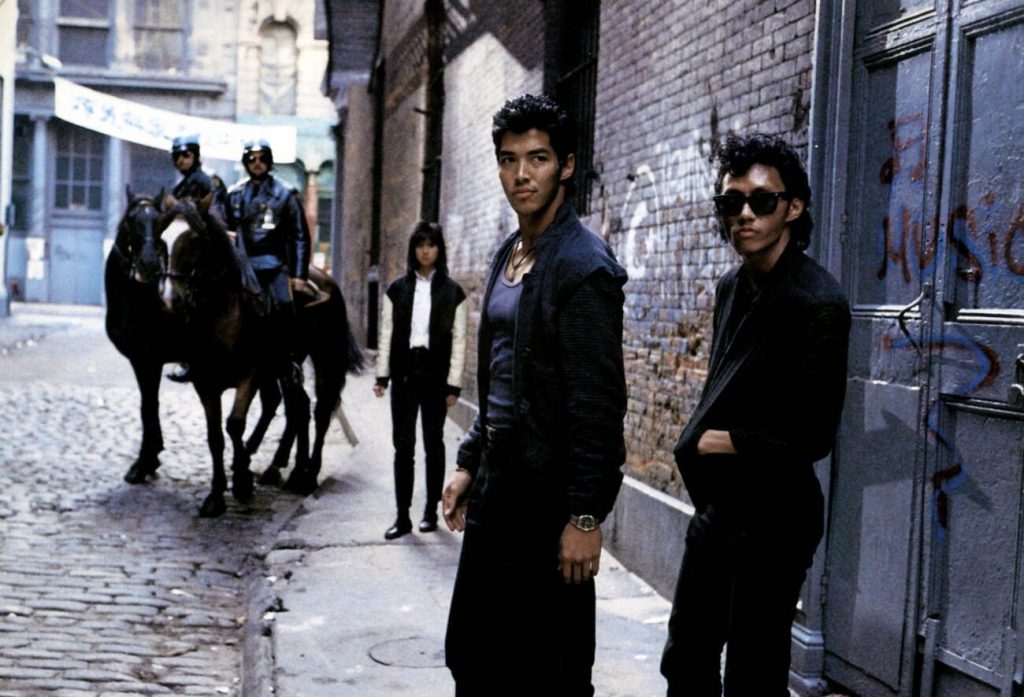
Nicholas St. John’s screenplay also complicates the racial warfare in ways more interesting than the premise might suggest. The young soldiers work themselves into murderous frenzies over territory and ethnicity while the older men understand perfectly well that money is money. Yung Gan can rage about his sister seeing an Italian while simultaneously leaning on Chinese businessmen and harassing their customers for payout. Ethnic pride, it turns out, has negotiable boundaries when cash is involved. That is the kind of shading that keeps China Girl from becoming merely Romeo and Juliet with switchblades and neon.
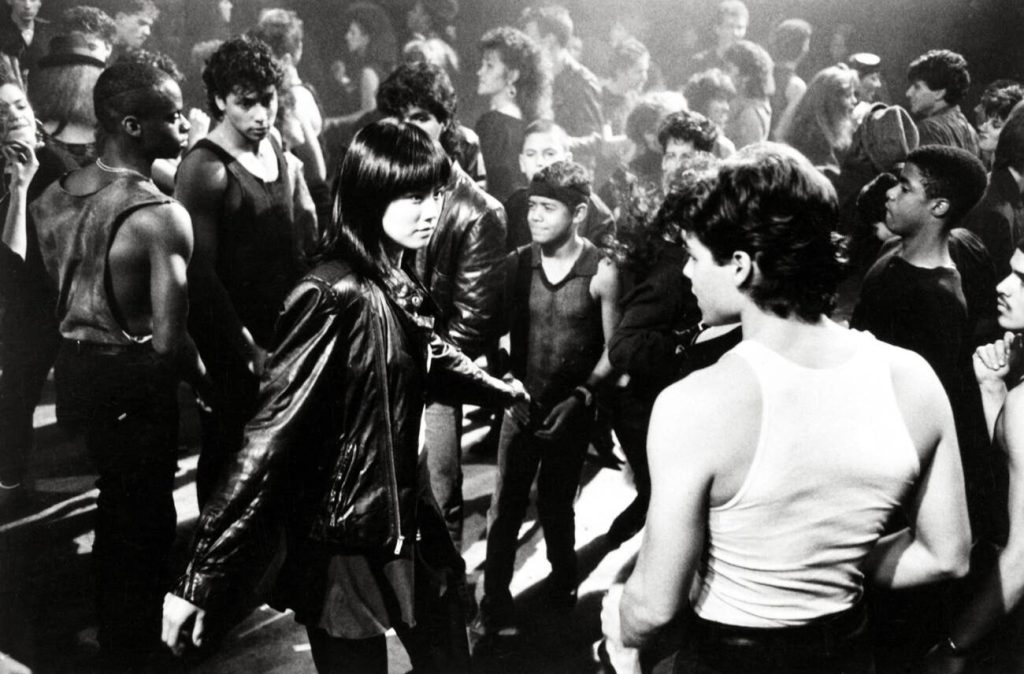
Unfortunately, the movie has a fairly substantial problem at its center: Panebianco and Chang are not strong actors. They are certainly pretty enough, and their inexperience as actors may help them come off as fresh and unschooled characters compared to all the delicious hams emoting around them. And Ferrara is more discreet with them than his exploitation reputation might lead you to expect. Their romantic scenes are photographed with considerably less interest in exposed flesh than the strip-club world of Fear City. He is interested in the lovers as lovers, not as bodies to be displayed. It is another indication that the sensationalism for which Ferrara was noted early on, while earned, was never quite the whole story.
So China Girl is essential Ferrara without being great Ferrara. His intelligence and psychological complexity keep peeking through all the stylized shadowplay and choreographed fisticuffs, but the film is still, finally, Romeo and Juliet in Chinatown.
Then came the movie that should have changed everything.
CAT CHASER
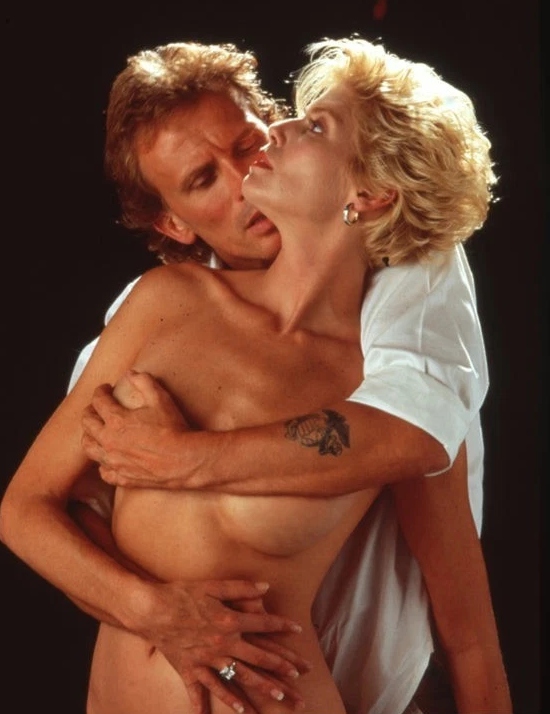
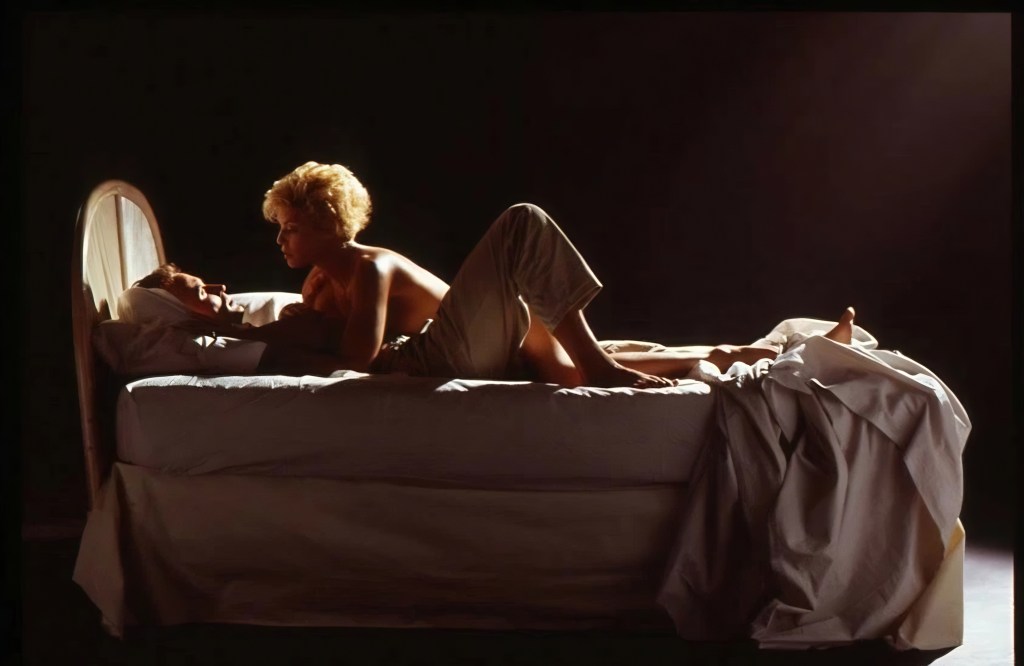
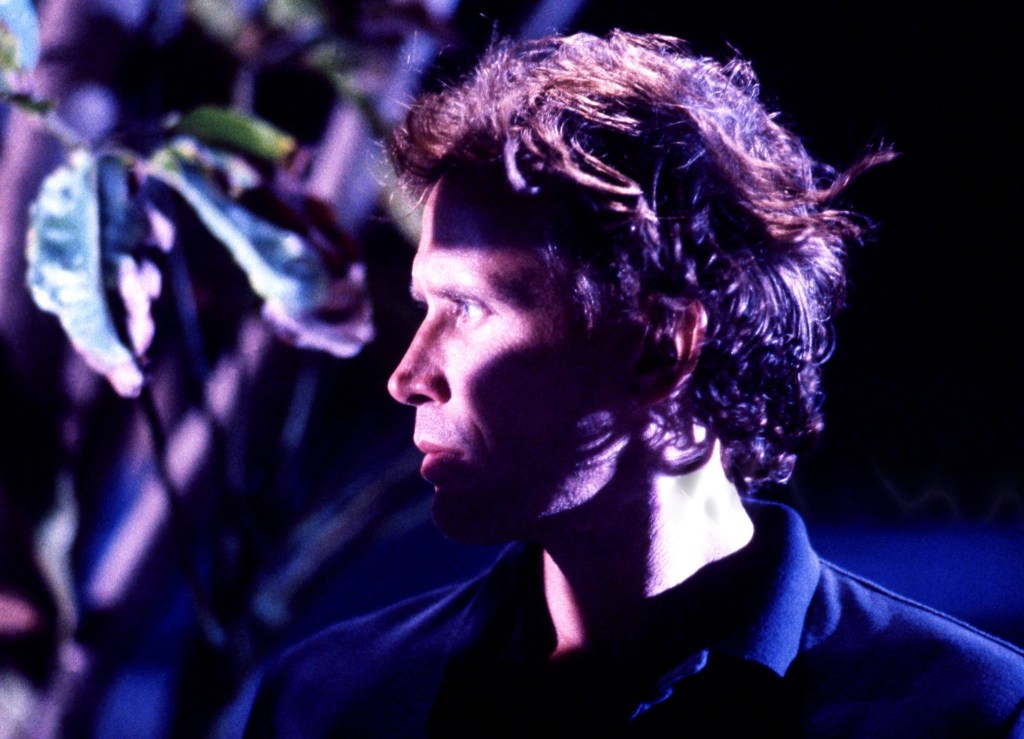
On paper, Cat Chaser looks like the moment when Ferrara finally got everything he had been working toward. A real budget, working with a major American novelist and a formidable group of actors. Elmore Leonard’s novel supplied the source material, and Leonard received screenplay credit. Fresh off of Robocop, Peter Weller played George Moran, a former American soldier haunted by his experiences during the 1965 U.S. intervention in the Dominican Republic and now running a small Miami Beach hotel. Kelly McGillis (from Witness and Top Gun), Tomás Milián, the great Charles Durning, and Frederic Forrest all show up. Anthony Richmond shot it and Ferrara’s regular editor Anthony Redman cut it.
And everything went off the rails.
The production became notoriously unhappy. Weller and McGillis clashed. A succession of accidents plagued the shoot. Plans to shoot extensively in the Dominican Republic were abandoned after scouting because of logistical and safety concerns, with Puerto Rico standing in for Santo Domingo. McGillis later described the production in extraordinarily unhappy terms. The producers were sure they were geniuses, but as Ferrara describes in his recent autobiography, they were Hollywood wannabes who were faking their way through the process, which wouldn’t be fatal if they would just stay out of the way.
Ferrara, meanwhile, gave up on the editing process, moving on to King of New York with Chaser unfinished.
Anthony Redman stayed behind and tried to preserve what he could, but the released Cat Chaser runs about ninety minutes, with essential connective tissue yanked. Most notoriously, Weller refused to record the talky, explanatory narration the producers wanted to add to paper over the removal of large parts of the narrative. Their solution was to hire Reni Santoni (Eastwood’s partner in the first Dirty Harry) who does not otherwise appear in the movie—as a narrator who comments on action he has no part of.
And yet the released version remains worth seeing, if only because there are fragments of a terrific movie trapped inside it. Ferrara’s attraction to Leonard makes perfect sense. Both men are interested in criminals less as engines for plot than as people with jobs, habits, resentments, and peculiar codes of behavior. The plot matters, but watching these people talk around the plot matters more.
Which brings us to the other Cat Chaser.
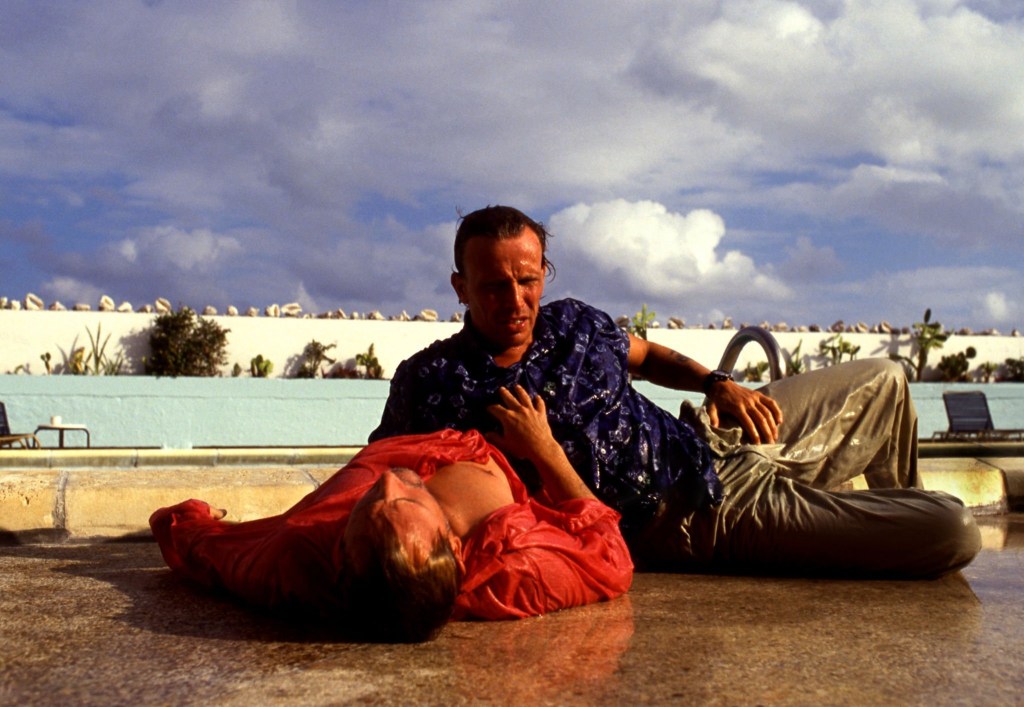
Ferrara has preserved a battered video workprint, complete with burned-in timecode, unfinished sound and no proper credits. It has surfaced at repertory screenings over the years; Anthology Film Archives screened the surviving raw cut in 2014; I saw it at the Museum of Modern Art a few years later. Ferrara and Redman have both emphasized that it should not be mistaken for a wholly finished director’s cut, but it preserves the shape and rhythm of the film they were making before the producers went to work on it.
And in that form, Cat Chaser is something else entirely. It rules, in fact. It’s major.
Long character-driven sequences that seem almost perversely expendable by the standards of an action thriller are allowed to breathe. Weller and Charles Durning can simply stand across from one another and go at it verbally while Ferrara builds the scene around their rhythms. Tomás Milián is permitted to create an actual human being rather than simply supply a villain. Leonard’s dialogue becomes the main event.
Watching it now, the obvious comparison is Jackie Brown. Nearly a decade before Quentin Tarantino demonstrated that audiences might happily sit still while Robert Forster, Pam Grier, Samuel L. Jackson and Robert De Niro wandered through long stretches of Elmore Leonard dialogue, Ferrara did it, equally wonderfully.
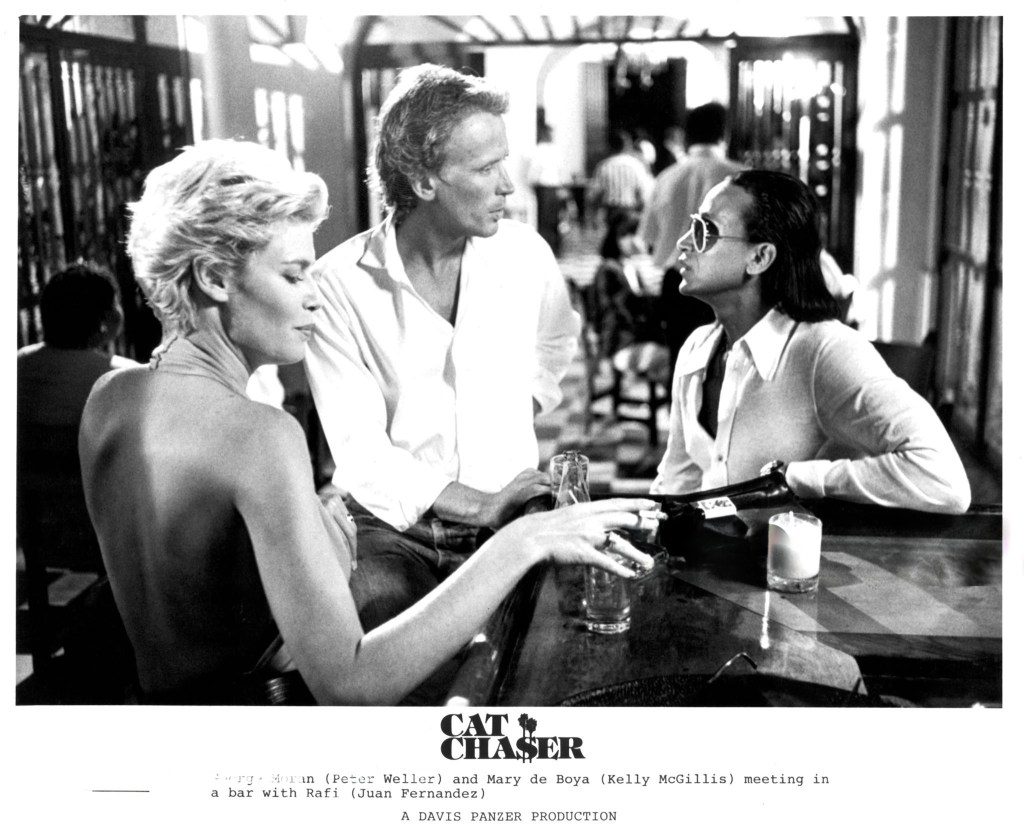
Buried inside that battered tape is an unheralded masterpiece waiting for its final edit. A psychologically rich, funny, sometimes shockingly violent, and strangely relaxed movie in which Ferrara recognized he didn’t need to manufacture excitement because Peter Weller and Charles Durning tensely talking across a table could be the excitement. If you get a chance to see it (it played at N.Y.C.’s The Roxy last year, so it’s still out there), SEE IT.
And that makes what happened to Cat Chaser particularly painful. Ferrara had spent several years proving he could deliver their stuff: Miami Vice, Crime Story, The Gladiator, The Loner. The young man had gone west, worked for powerful producers, hit his marks, and demonstrated that the guy who made The Driller Killer on the streets of New York and achieved Video Nasty status in England could function perfectly well inside the professional machinery.
Then, just as he made the movie that might have justified the whole Hollywood excursion, they wasted it, man. A serious artist like Michael Mann understood what Ferrara brought to the table, but two hacks had to mess with his art.
The machinery won. Temporarily.
Ferrara has said that Cat Chaser taught him the lesson for good: the director’s responsibility is not simply to make the film but to protect it. He had surrendered final cut, and he would not make that mistake again, even if it meant working on limited budgets in tough conditions.
So the Hollywood years proved useful. Ferrara got paid. People now knew his name, even Robert Culp! However, he learned that for him, it wasn’t worth it. He didn’t want Hollywood status. He just wanted to make the movies he wanted to make.
After the disaster of Cat Chaser, Ferrara went back to New York and began work on the indelible, transcendent King of New York. The bullshit was over. Hollywood had had its chance. Class was dismissed.
The masterpieces were about to start piling up.
Stay Tuned for the Ferrara Files, pt. 3: Abel Unbound


Leave a comment