By James Kenney
In 1975, four years before The Driller Killer was unleashed—and around the time our hero, a young and hungry Abel Ferrara, desperate to film anything, was making the kind of pornographic film then associated with New York’s increasing seediness, the delicately titled 9 Lives of a Wet Pussy (ahem)—New York was broke. Coming apart at the seams. With the city facing a catastrophic fiscal crisis and thousands of municipal layoffs, a coalition of police, fire and other public-safety unions calling itself the Council for Public Safety produced one of the strangest pieces of anti-tourism ever devised: “Welcome to Fear City: A Survival Guide for Visitors to the City of New York.” Its cover featured a hooded skull; inside, visitors were advised to stay off the streets after 6 p.m., avoid the subway entirely and, if possible, simply stay away from New York.
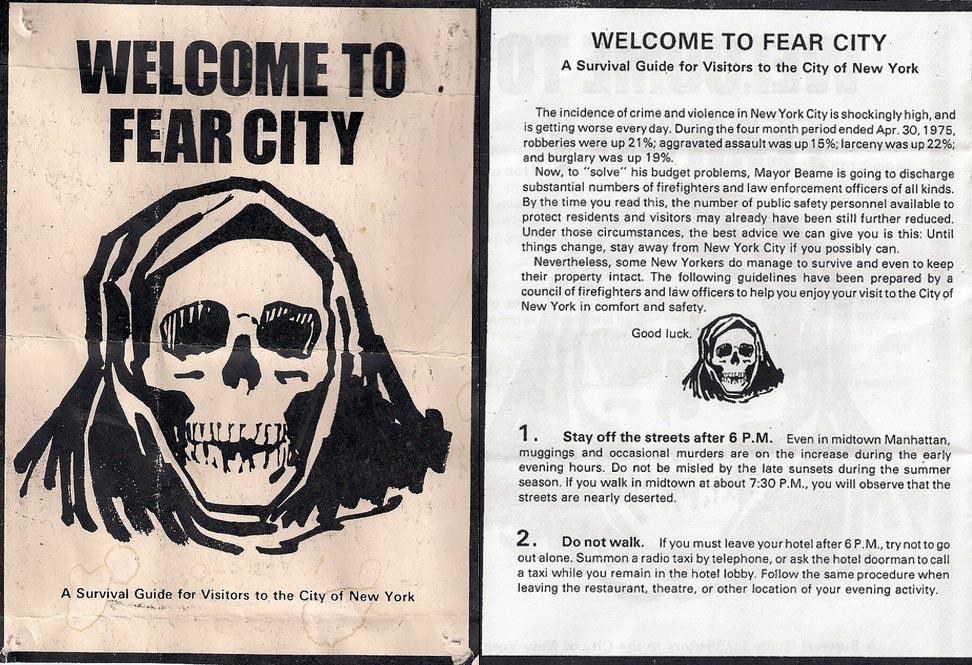
It was union scare propaganda, but just because you’re paranoid doesn’t mean someone isn’t after you; it captured something real about the battered, nearly bankrupt city of the mid-1970s—a New York in which crime (bad!) and urban decay (bad!) existed alongside cheap rents (better!) and thriving underground cultures where artists could still somehow afford to live, congregate and work (great!). This was Abel Ferrara’s New York. Rather than flee Fear City, Ferrara and his collaborators took their cameras into its apartments, clubs, alleys and after-midnight streets, and out of that world came The Driller Killer, Ms. 45 and Fear City. If Welcome to Fear City was intended as a warning by unions trying to pressure City Hall, Ferrara seems instead to have regarded it as inspiring source material.
His first three films could be seen as a trilogy of unauthorized adaptations.
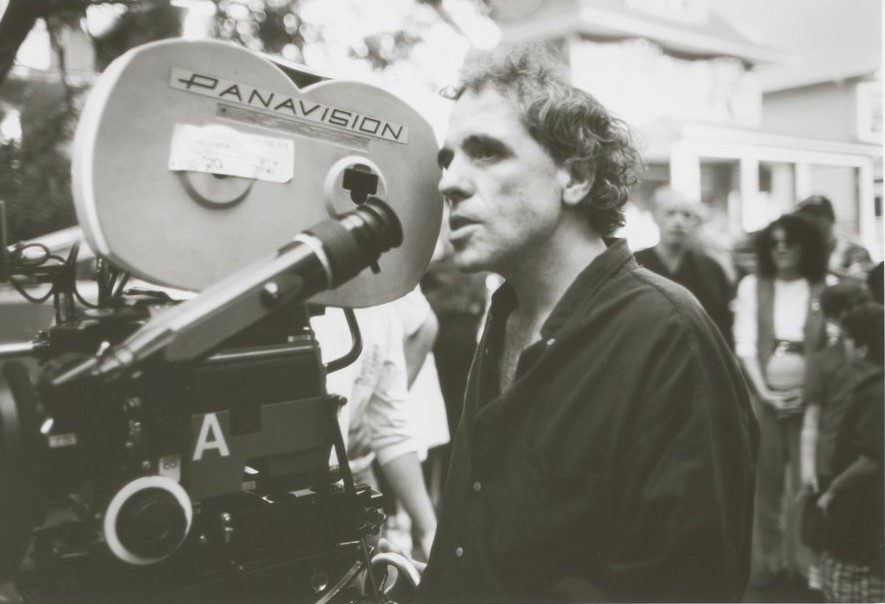
Abel Ferrara is my second-favorite filmmaker of all time, after Peter Bogdanovich (book coming!). I’m certainly not going to argue that Ferrara somehow outranks Martin Scorsese as the central Italian-American, Catholic-raised, New York filmmaker of our time, although I clearly personally prefer his work by a margin wider than I should probably admit. I’m simply more drawn to Ferrara’s world-making, and his worldview, which can be fucked up but also shows deep-rooted love for humanity and all its failings. Scorsese’s movies, for all their violence and moral complexity, remain for me (after Mean Streets, anyway) the work of a master filmmaker exercising extraordinary control over the medium. Ferrara knows and loves movies too, but he has always seemed to be after something messier, more dangerous and less contained: films in which the boundaries between art and life, performance and behavior, sin and redemption have a tendency to break down. Sometimes this is clearly by design; sometimes it was likely a consequence of Ferrara’s own famously destructive lifestyle (which he thankfully escaped).
Their careers also reveal very different relationships with filmmaking itself. Scorsese—and more power to him—eventually learned how to make the Hollywood system work for him, embracing “A” budgets, major stars and increasingly enormous canvases. For decades now, maybe since After Hours, it has seemed impossible for Scorsese to make a movie without first mobilizing an army. They are all Major Undertakings: stars must align, enormous budgets must be assembled, elaborate sets built, armies of craftspeople deployed. There’s something ocean-liner-like about the process: Scorsese films require an enormous amount of machinery simply to leave the harbor. Ferrara, by comparison, will get into a leaky rowboat with three friends and start paddling. As many of his 21st century products have shown, just give him a camera and he’ll film something; a documentary, a museum installation, a film shot in his own Rome apartment (good thing the game Willem Dafoe is a neighbor!)
Many of Scorcese’s oversized projects simply aren’t where my own tastes lie; I suspect I’d like both movies more if Bogdanovich made The Aviator and Dario Argento directed Shutter Island. Ferrara, on the other hand, couldn’t—or wouldn’t—live comfortably inside the system. He was too volatile, too headstrong, too immature, too high, too unwilling to surrender control, maybe all of the above. He essentially got his shot at serious Hollywood money with Body Snatchers and Dangerous Game, after hitting big with King of New York, and then got the hell out of town when neither film landed commercially or critically (both, of course, are masterpieces). The lesson he seems to have taken from the experience was clear enough: he’d rather make a movie for nothing and retain final cut than make one for eight or nine figures and deal with all the crap. The limitations that choice imposed on his career are also part of what makes the career so fascinating. And because Ferrara is brilliant, actors like Christopher Walken, Willem Dafoe and Ethan Hawke have continued to show up for him, apparently willing to forgo a DiCaprio paycheck for the chance to make art on the cheap with Abel Ferrara.
Ferrara is sober now, has been for years, and is a practicing Buddhist, so I will safely declare him the greatest Italian-American Buddhist filmmaker of all time. No one’s going to argue that assessment. But whatever his current spiritual affiliation, there has always been something searching about his work. His movies have an unusually deep understanding of human behavior, especially bad human behavior.
Movies have always allowed us the illicit pleasure of watching rotten people do terrible things, whether it’s Tony Montana in Scarface, Patrick Bateman in American Psycho, or any number of gangsters, junkies, killers and assorted sinners in between. Ferrara understands that pleasure, but he also understands the people underneath it. His later masterpiece The Funeral isn’t powerful because of its gangland violence. What makes it genuinely disturbing is Ferrara’s ability to force us past the violence and into the tortured psyches of the nihilistic, near-psychopathic men committing it, and to understand what drives them even as we watch them march, inevitably, toward their own destruction. Just as importantly, Ferrara and screenwriter Nicholas St. John turn their attention to the level-headed women trying desperately to hold together families built around these damaged, self-destructive men. It’s a brilliant and unusually empathetic focus, one that remarkably few Mafia films have ever seriously explored.
I mean, the guy is just brilliant.
So, in celebration, I’m going to work my way chronologically through his career, offering short, informal and no doubt meandering thoughts on each of his films. These aren’t intended as definitive reviews or an attempt to rank anything. They’re simply an excuse to spend some time wandering through the films of a filmmaker whose work I’ve loved for years: an Artist in the fullest sense of the word, whose films form a deeply personal, searching and continually evolving body of work—a body of work that ranks among the essential achievements of modern American cinema.
The Driller Killer (1979)
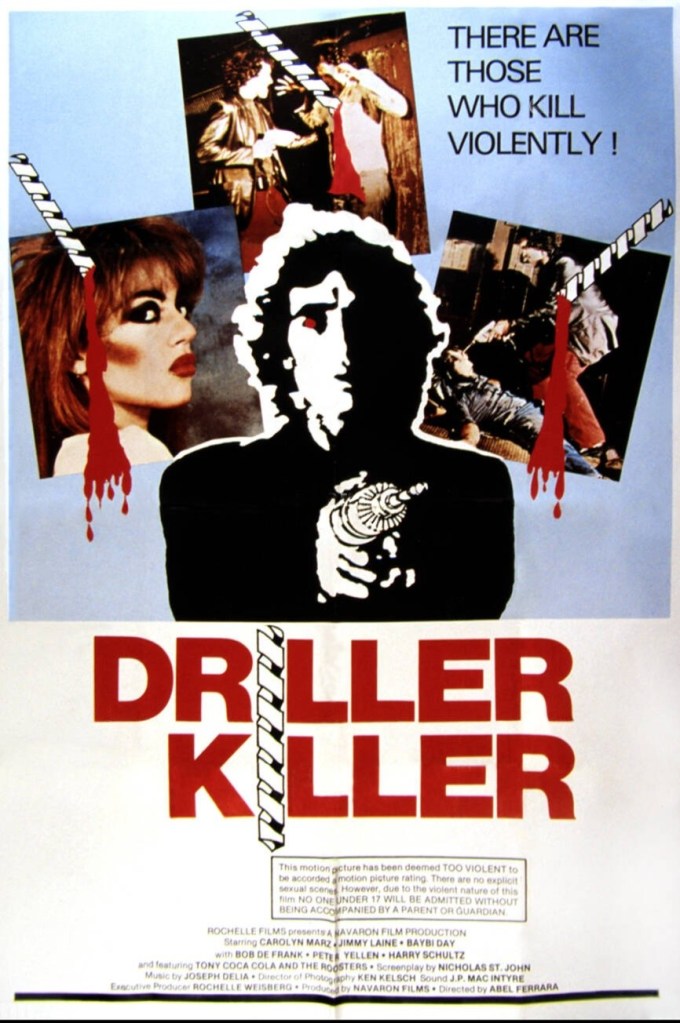
Ferrara’s first feature-length “mainstream” film (i.e., non-pornographic) is fascinating largely because its reputation bears only a passing resemblance to the movie itself. The Driller Killer is famous as a horror film, and particularly as one of the notorious “video nasties” targeted in Britain during the moral panic over violent home-video releases in the early 1980s. Its lurid VHS artwork, featuring a drill apparently entering a man’s forehead, became practically an advertisement for everything campaigners thought was wrong with uncensored video. But the film itself is something stranger and considerably more interesting: a very black comedy about alienation, poverty, frustration, and the desire to be an artist with no money in late-1970s Manhattan.
Ferrara plays Reno Miller, a struggling painter living in a cramped apartment with his girlfriend Carol (Carolyn Marz) and her lover/roommate Pamela (Baybi Day). Ferrara cast himself partly for the eminently practical reason that he knew the film might take forever to finish and needed a leading man he could count on to keep showing up. Reno is perpetually broke, and is increasingly desperate to finish and sell his enormous painting of a buffalo (done by Douglas Metrov, an acquaintance of Ferrara and who proved an important artist but also for some reason wrote the awful Hollywood flop Solarbabies). He is also constantly nagged by—or arguing with—the two women with whom he lives. Meanwhile, a punk band called the Roosters moves into a nearby apartment and begins rehearsing at all hours, adding one more layer to Reno’s steadily deteriorating sanity.
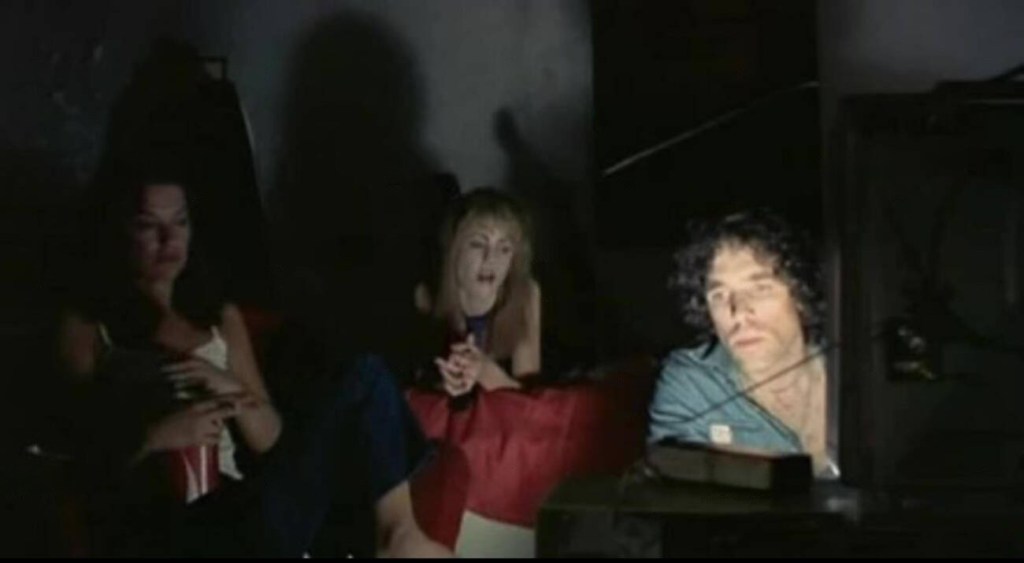
The scene that sums up The Driller Killer for me isn’t one of the gory murders Reno commits as his ultimate form of stress relief. It’s the scene in which he is simply trying to drill a hole in a door for Pamela, who keeps changing—and changing, and changing—her mind about where she wants it. Watching it, you begin to think: it’s enough to make anyone drill.
Combine that domestic aggravation with scenes in seedy late-’70s clubs, Reno arguing with his gallery owner about money and art, and footage of actual derelicts and street people milling around Union Square back when the neighborhood was dangerous, grimy and (perhaps most importantly for an artist like Reno) sort of affordable, and The Driller Killer becomes a remarkably vivid document of a vanished New York. Ferrara and his longtime cinematographer Ken Kelsch shot much of it cheaply and on actual Manhattan streets, often at night, and parts of the movie are so dark you wonder how anyone at the drive-in could even see what’s going on.
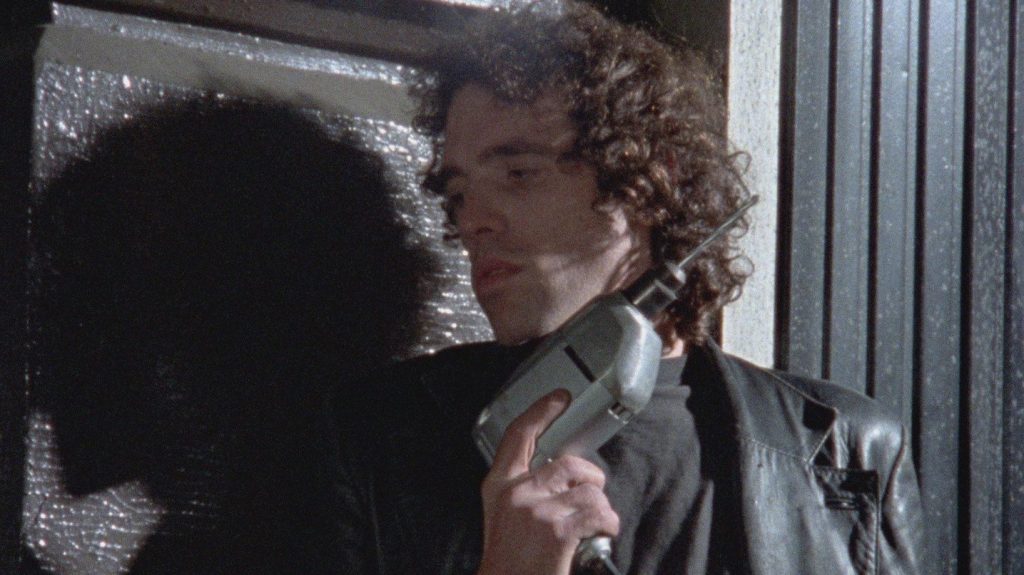
It must have really wowed the grindhouse audiences who wandered into something called The Driller Killer expecting 90 minutes of power-tool mayhem. What they got instead was a no-budget downtown art movie about a painter having a nervous breakdown—with occasional (indeed gory) drill murders.
Ferrara fan note: Ferrara has recorded two different commentaries for the film, one for an earlier DVD release and another for a later Blu-ray restoration. On the first, Ferrara is clearly less sober than he is on the later track, and the result is frequently hilarious. What can I say? Don’t do drugs, kids, but Ferrara in this commentary is in rare form. The second is more lucid and informative and plays like the responsible do-over. It’s also great. Listen to both.
Also worth seeking out is the old two-disc DVD edition containing a selection of Ferrara’s early short films, made around Peekskill, New York, during his formative years — Nicky’s Film, The Hold-up, and Could This Be Love. For anyone seriously interested in Ferrara, those shorts are nearly as essential as The Driller Killer itself (and he provides good commentaries for these as well — for a guy who hates commentaries and stopped doing them, he’s great at it).
Ms. 45 (1981)
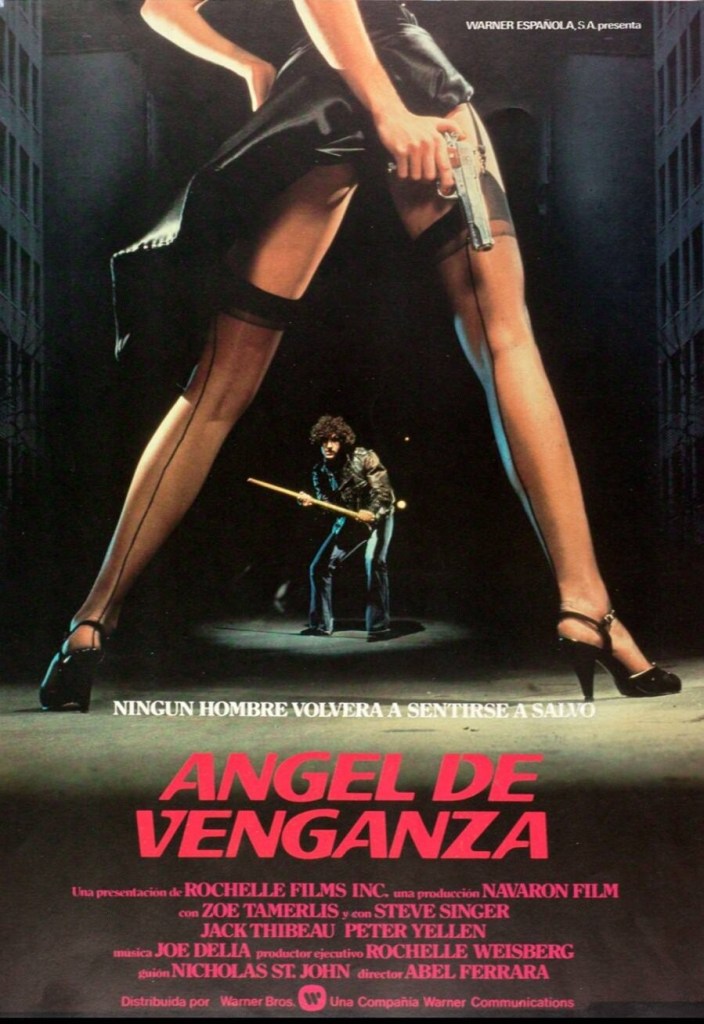
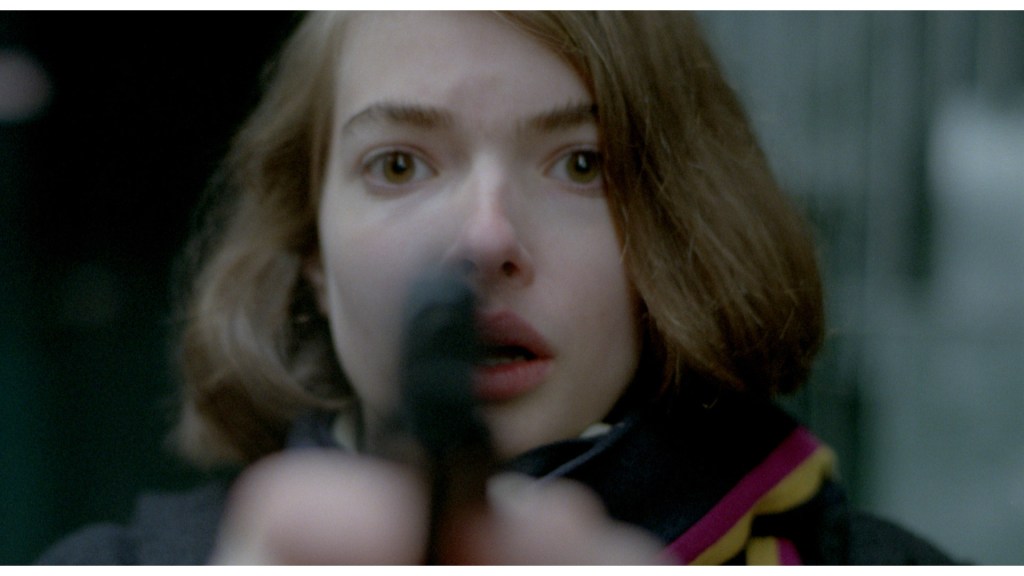
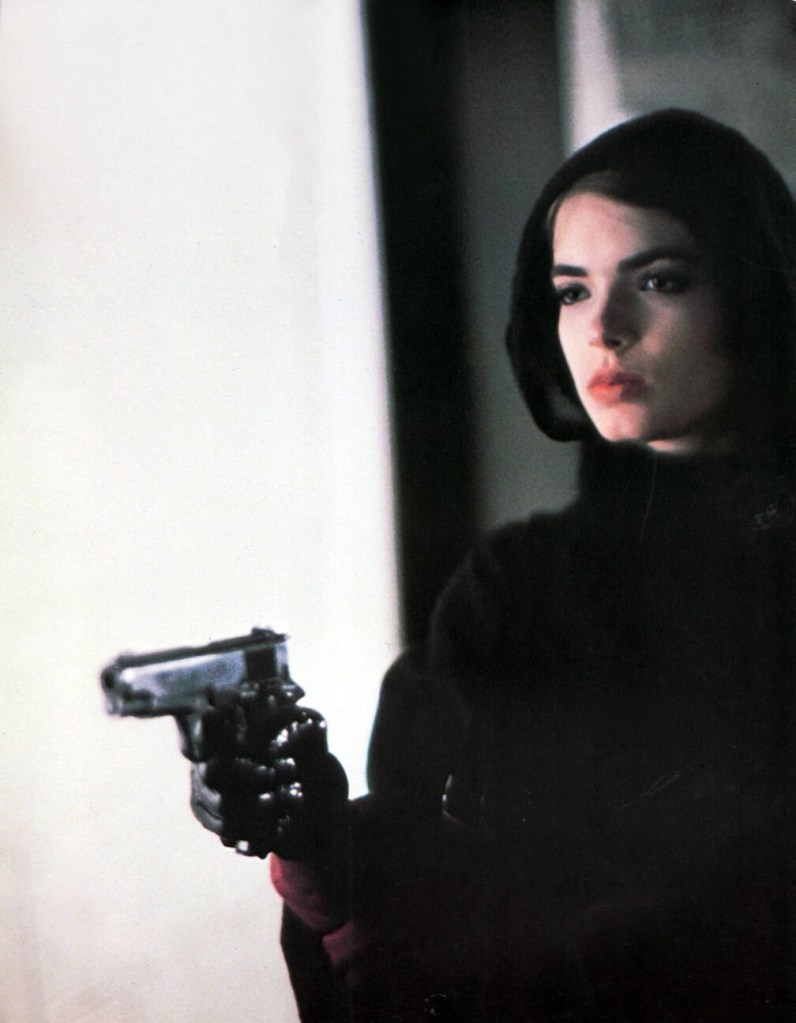
Ferrara immediately became a filmmaker to take seriously with his second feature, Ms. 45, in which the almost otherworldly Zoë Tamerlis plays Thana, a mute young woman working as a seamstress in Manhattan’s Garment District. Walking home from work one day, Thana is raped by a masked attacker; when she finally makes it back to her apartment, she surprises a burglar, who rapes her again. She manages to kill the second man—and something in her snaps. Armed with his .45, she gradually transforms from victim into an avenging angel (Ms. 45!) stalking the men of New York.
It’s about time I stop to discuss Nicholas St. John, Ferrara’s longtime screenwriter, collaborator and coconspirator. St. John—Catholic like Ferrara, but sober, which was increasingly unlike Ferrara—was enormously important to the director’s early career, writing or co-writing most of Ferrara’s major films through The Funeral (1996). Ferrara has made clear that he regarded St. John’s scripts as things of beauty and depth and took the writing extremely seriously. That is worth emphasizing now that Ferrara’s later work has become increasingly improvisational, intuitive and experimental, often with limited, under 30-page scripts: when he was making St. John’s scripts, he largely shot the scripts as is. St. John’s brilliance was already there on the page, and part of Ferrara’s brilliance was recognizing it, protecting it and knowing exactly how to transform it into brilliance at 24 frames per second that we’re still talking about almost half a century later.
Ms. 45, like many of Ferrara’s early films, is unabashedly an exploitation movie as well as an art film. The iconic (an overused word these days, but I think it qualifies in this case) sequence in which Ms. 45 deliberately lures a gang of predatory men into Central Park, lets them surround her and prepare to pounce, then calmly blows them away with remarkable precision (and feminine style!) works as feminist nightmare, urban fantasy and pure exploitation-movie money shot. It is art, but it was also awfully useful for trailers, lobby cards and posters.
Tamerlis is extraordinary. She was only seventeen when Ferrara cast her, and she somehow plays scenes that simply shouldn’t be playable, conveying Thana’s terror, dissociation and eventual transformation without dialogue. There is something genuinely eerie about watching such a young performer command a movie so completely. Her subsequent life also gives the film a sad retrospective dimension. Tamerlis—later known as Zoë Lund—was an unusually intelligent and fiercely individualistic figure who became deeply involved with heroin, spoke about her love of drug use with a frankness that resisted the usual cautionary narratives, and dropped dead in Paris in 1999 at only 37. She co-wrote Bad Lieutenant with Ferrara and memorably appears in it as the woman who shoots up (for real) with Harvey Keitel’s Lieutenant (who didn’t do it for real), delivering an extraordinary monologue about drugs and experience. I saw her once at a Chiller Theater convention behind a table, selling autographs to get some cash to support her habit. No one was coming up to her but I was too scared to, man, despite knowing full-well who she was and her brilliance. I wasn’t worthy.
R.I.P., Zoe Tamerlis.
Don’t do drugs, folks—a message Ferrara himself, after somehow surviving his own adventures, returns to repeatedly in his terrific autobiography from last year, Scene. I’ll just stop to say the book is a must-read, as good and eccentric as Dylan’s Chronicles.
But back to Ms. 45. Like The Driller Killer, it’s a seedy, violent treatise on the alienation of city living, with Ferrara once again finding the comedy in the everyday aggravations of being a New Yorker. Reno has the rock band next door that never stops playing and a roommate who somehow turns the simple act of drilling a hole for a nail into an hour-long ordeal; Ms. 45, already dealing with the minor inconvenience of having a dismembered corpse to dispose of, has a neighbor’s barking, nosy dog that will not leave her alone. These are problems non-homicidal New Yorkers can relate to. Ferrara just allows his protagonists somewhat more extreme coping mechanisms (though what ultimately happens with the irritating dog becomes one of Ferrara’s most unexpectedly beautiful and heartbreaking choices, revealing both something essential about Tamerlis’s character and the tenderness that exists beneath the film’s brutality).
The film received some serious critical attention despite its exploitation trappings. The great Danny Peary championed it in his essential book Cult Movies—where I first read about it before ever seeing it—and over the years Ms. 45 has steadily escaped the grindhouse ghetto to become recognized as one of the key American independent films of its period. It also demonstrated that Ferrara could make something commercial out of his peculiar combination of Catholic guilt, New York grime, genre filmmaking, black humor, sex, violence and genuine moral seriousness.
Fear City (1984)
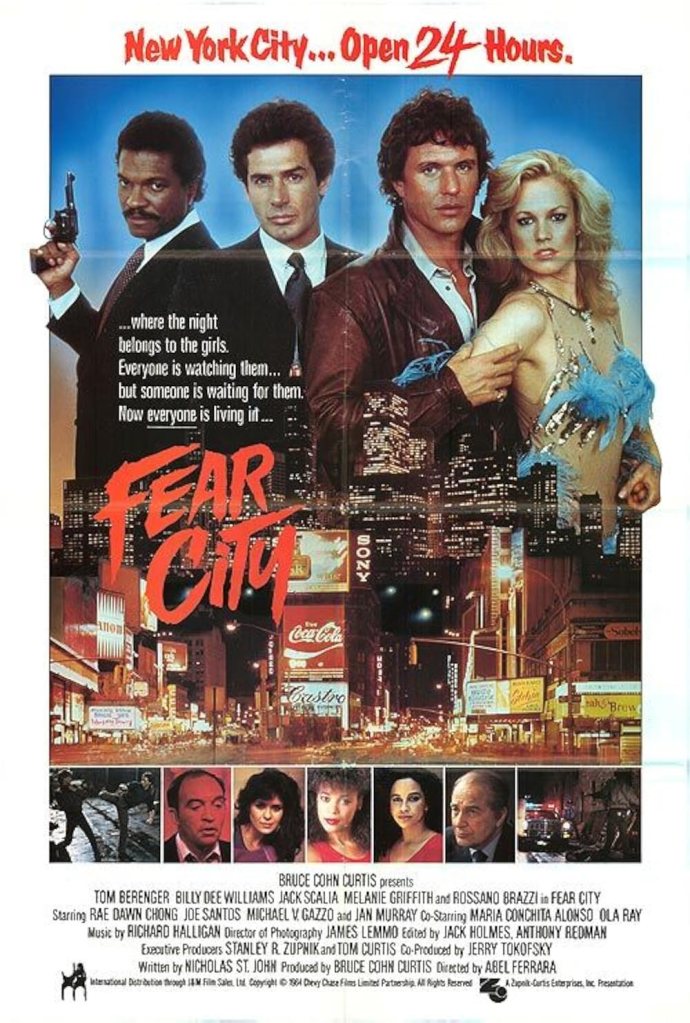
What an odd sledgehammer of a movie. Producers were clearly drawn more to the commercial grubbiness of Ferrara’s work (the sex, violence and disreputable New York settings) than to the stranger artistic ambitions of Ferrara and Nicholas St. John. The result of this pull, I guess, is Fear City, a much bigger-budgeted, fairly straightforward, violent melodrama about two talent agents representing strippers, Matt Rossi (Tom Berenger) and Nicky Parzeno (Jack Scalia), who set out to find the psychopath who is methodically attacking and disfiguring their girls. The attacks create a panic among the dancers, the Mafia (whose businesses are losing both patrons and employees) and the cops, who spend much of the movie grousing about the lowlifes they have to deal with on this case while proving ineffectual at actually stopping the killer.
Ferrara at least gets to film some terrific Times Square locations, including the interiors of the strip clubs that once lined the neighborhood, and the movie now has considerable value simply as a non-judgmental (and in fact appreciative) record of that vanished world. But the filmmaking itself seems oddly staid compared with The Driller Killer and Ms. 45. You sense that part of Ferrara couldn’t help making a Ferrara film, while another part wanted to get paid and “move up the ladder.” And fair enough. Soon afterward he was invited to Hollywood to direct episodes of Miami Vice and TV movies with people like Robert Culp. For a short time, Ferrara would be working recognizably within the machinery of the entertainment industry rather than simply making movies on the streets with his friends. Fear City is kind of the bridge film and feels limited somewhat by that.
As drama, Fear City isn’t particularly deep. Berenger’s tortured Matt—a basically decent, rough-hewn guy haunted because he once killed a man in the boxing ring—could have wandered in from a 1940s fight picture like Body and Soul or Champion. He’s a much simpler creation than Reno Miller or Thana. The killer, meanwhile, is less a character than a mechanism for keeping the plot moving and the violence coming.
But, but, but—the cast.
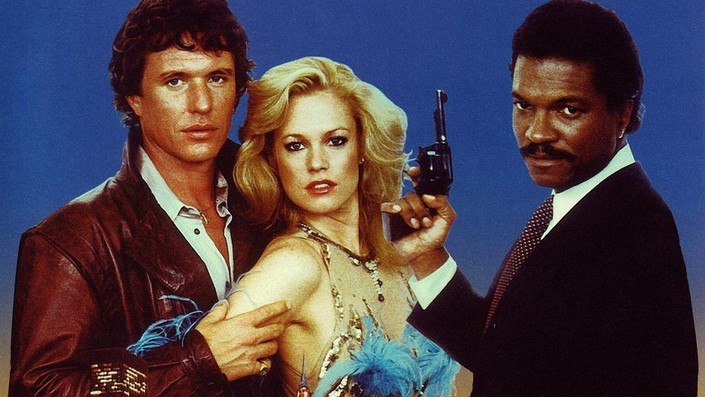
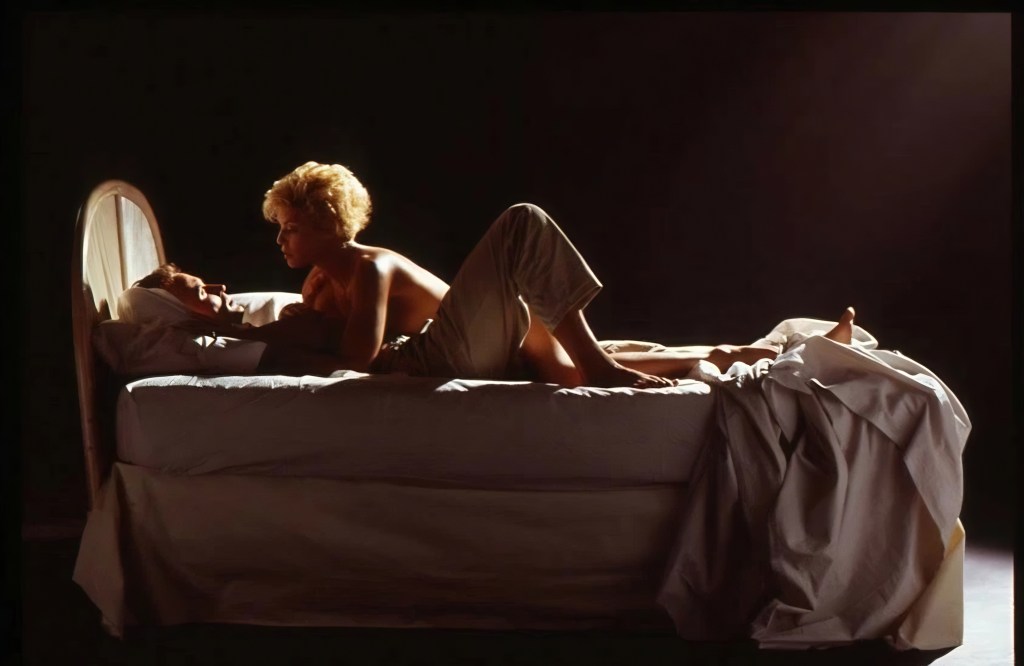
Berenger was already an established Hollywood actor by this point, while Scalia had starred opposite Rock Hudson in NBC’s short-lived The Devlin Connection (which I liked as a kid). Melanie Griffith plays Loretta, Matt’s ex-girlfriend and one of the dancers he represents, who is now involved with fellow stripper Leila, played by no less than Rae Dawn Chong. Joe Santos from The Rockford Files and The Godfather’s Michael V. Gazzo turn up as mobsters. And Billy Damn Dee Williams growls his way through the movie as Al Wheeler, the cop who has very little use for Berenger, and, when you stop to think about it, probably has a point.
Even the women in relatively small roles are startlingly recognizable. Ola Ray, soon to be in Michael Jackson’s “Thriller” video, is the psycho’s first victim, while Maria Conchita Alonso has a small role but makes her star presence felt immediately. In her one really featured bit she’s funny, sexy and completely natural. It’s the kind of performance that makes you wonder why the movie isn’t following her instead. Soon after she’d be in Moscow on the Hudson.
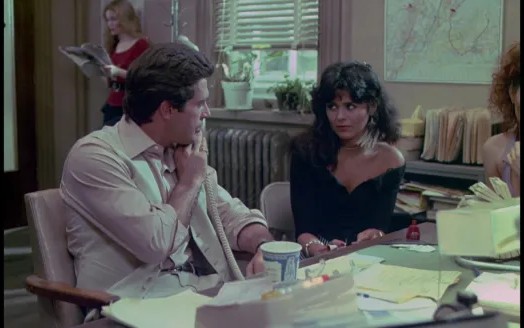
Ultimately, though, Fear City is largely formulaic. What keeps it afloat is Ferrara’s talent, that remarkable cast and the grubby edges of a bygone New York that Ferrara captures: Times Square marquees, strip joints, cramped dressing rooms, neon, mobsters, cops, dancers and assorted nocturnal creatures (including one psychopath) all rubbing shoulders on the same few blocks.
Ferrara fan note: There are two substantially different versions of Fear City: the American theatrical cut and a longer European version. The European cut restores a bit of sex and violence removed from the U.S. release, but the differences are more interesting than simply “uncut versus censored.” It also contains alternate material and takes that change the movie’s tone. As an example, Wheeler’s reaction to Matt after the climactic confrontation differs: the American version has Dee Williams give Berenger something closer to the conventional acknowledgment a movie hero is supposed to receive, while Dee Williams remains markedly more hostile in the European version. It’s a small difference, but an illuminating one. The darker, more ambiguous response feels closer to the Ferrara/St. John mindset than the tidier resolution the American release provides.
Either version is worth seeing, but if you’ve only seen the U.S. cut, seek out the European version at some point. You get a little more sex and gore, certainly, but more importantly you get tantalizing glimpses of the tougher and slightly stranger Fear City that Ferrara may have been trying to make.
With Fear City, Ferrara’s unofficial “Welcome to Fear City” trilogy comes to an end, and so does his first New York period. What shortly followed was an uneasy excursion into the system, as television and Hollywood tried to harness his unruly talent and Ferrara began learning what he could do with bigger budgets and professional machinery—but perhaps learned even more about what he didn’t want to do.
Next: Abel goes Hollywood. Sort of.
To Be Continued



Leave a Reply