By James Kenney
Cristiana Astori’s All That Black, newly published in an English translation by Sticking Place Books, is unquestionably a giallo, though not merely an attempt to reproduce the familiar black-gloved-killer mechanics of the Italian films by Dario Argento, Lucio Fulci and others that made the term internationally famous. Instead, it returns the word to its broader Italian meaning—a mystery-thriller—while gleefully absorbing the voyeurism, eroticism, stylized violence and unstable psychology of the cinematic giallo.
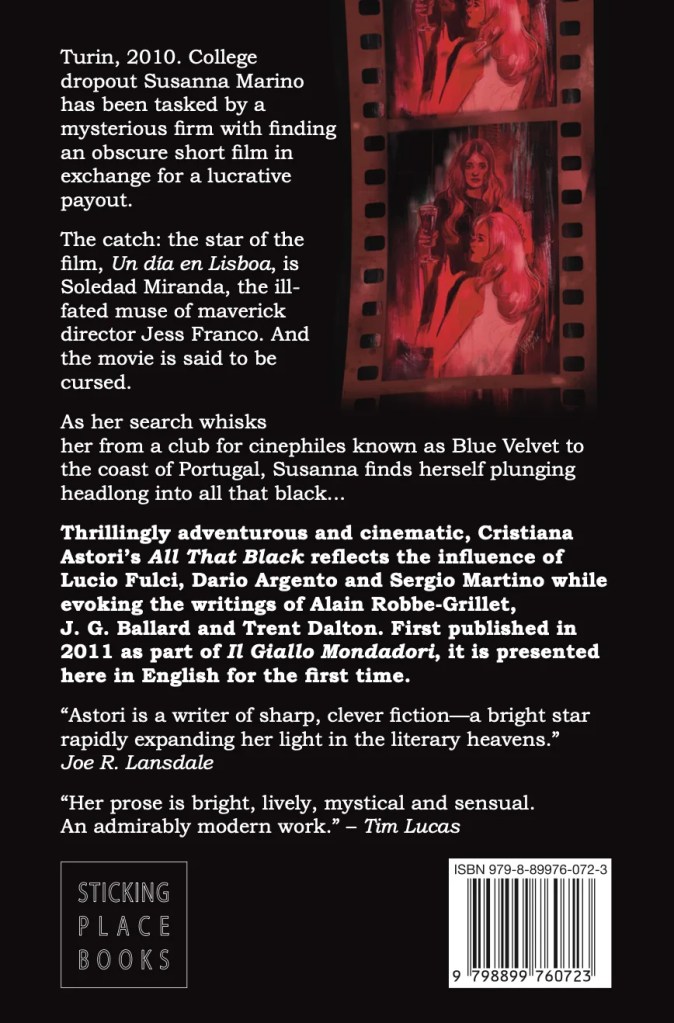
In Turin in 2010, college dropout Susanna Marino accepts a bizarre and lucrative assignment: locate the sole surviving print of Un día en Lisboa, a nearly forgotten 1964 short featuring actress Soledad Miranda, who would later become filmmaker Jess Franco’s muse before her death in a 1970 car accident. What begins as a piece of film-history detective work draws Susanna into an increasingly sinister world of murder, sexual obsession and a supposedly cursed film. Astori combines mystery, movie archaeology and horror effectively enough that I never lost interest and stuck around until the end, which says something, as the book runs over 400 pages(!).
Perhaps the book’s most interesting—and perhaps relatable—element is its exploration of the potentially pathological nature of collecting. Collecting can become a kind of fetishism that turns obsessive and, in this bloody book, eventually violent. Astori clearly knows the world of which she writes. The film prints, archives, collectors, alternate versions, rare-film hunts, fan communities and obsessive taxonomy of genre-film culture are not decorations but integral to the action. The cleverest, and perhaps most controversial, element is that Un día en Lisboa really exists, as do Soledad Miranda and many of the historical circumstances surrounding her; the invented conspiracy grows out of genuine film history.
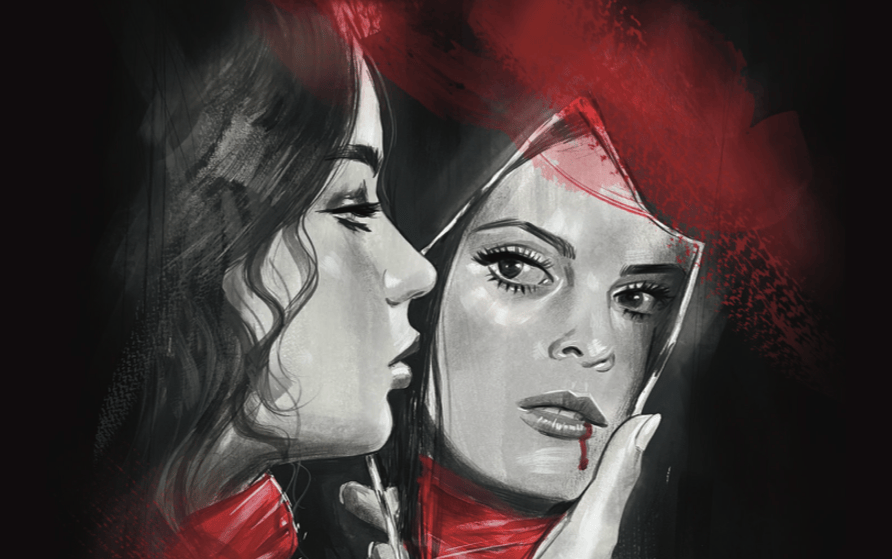
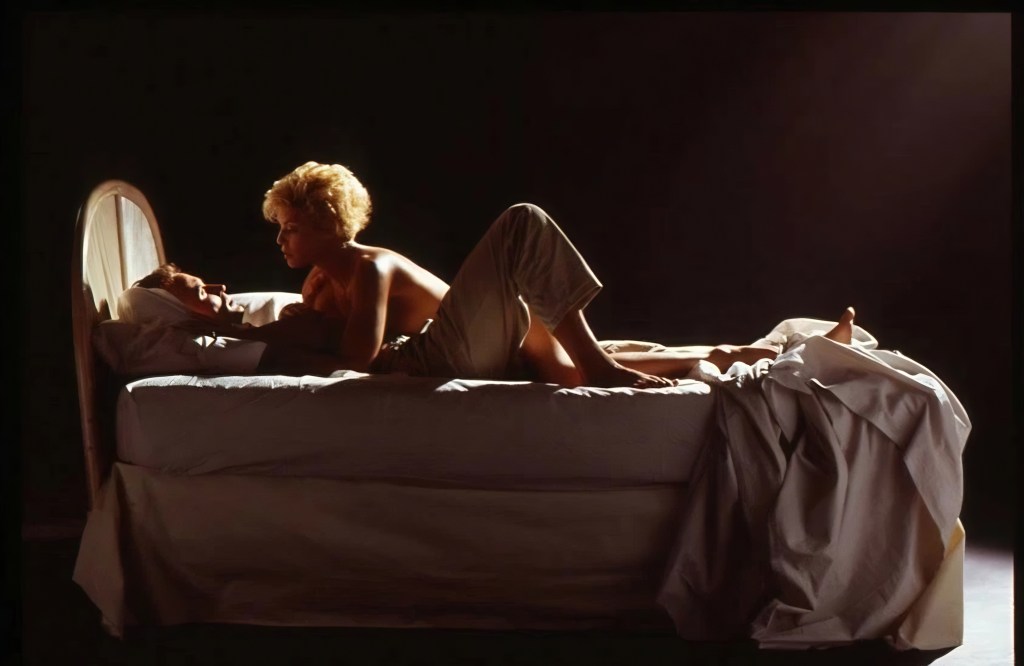
Astori fashions a solid protagonist in Susan. Her suspended education, lousy jobs, unsatisfactory relationship and emotional detachment are not merely bits of rote characterization, but symptoms of something she has buried. And Astori’s novel is intensely visual, befitting its allegiance to the often style-over-content European genre cinema of the early 1970s. She doesn’t simply reference gialli; she writes as though she were cutting one together. Black and scarlet, mirrors, film frames, projector light, distorted reflections, eyes, velvet, blood, glass and screens recur throughout. The murder and suspense sequences feel like elaborate set pieces out of Dario Argento, Sergio Martino or Massimo Dallamano pictures yet to be made, which proved a lot of fun to read.
The border between fact and fiction is enjoyable, particularly for readers who know something about these films and this period. Real figures such as Miranda, Franco, Christopher Lee, Jack Taylor and Carlos Aguilar share narrative space with invented characters and invented films, and Astori seems genuinely affectionate toward Miranda rather than merely exploiting her. That matters, because the premise could easily have become creepy, and I have general reservations about rewriting history for the purposes of fiction. Miranda is nevertheless presented as an elusive presence who exceeds the fantasies projected onto her, and the novel repeatedly returns to the impossibility of ever truly possessing the woman contained in those images.
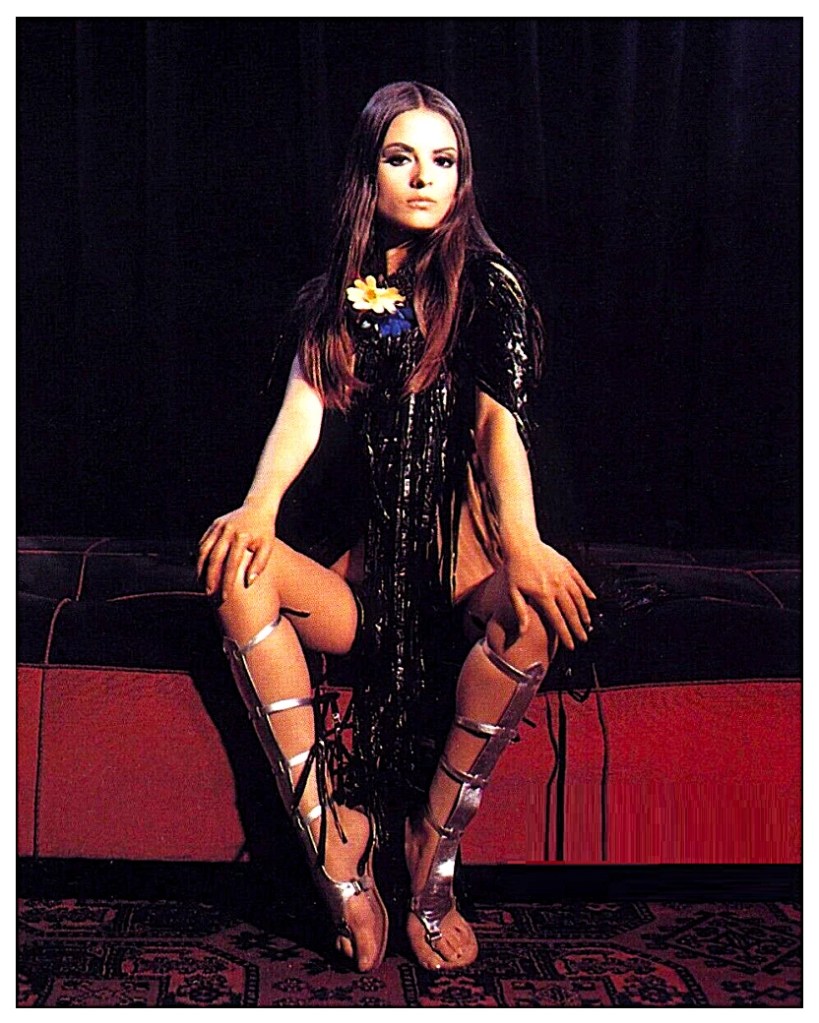
That said, there remains a potentially uncomfortable ethical question. Astori does invent intimate thoughts, situations and meanings around a real woman who died tragically young. I don’t think the book crosses the line into tastelessness, but opinions may vary on that point, and I think the tension is worth acknowledging rather than dismissing out of hand.
The book is, as mentioned, a bit long and occasionally crosses the line from cinephile detail into cataloguing that might have used a little pruning. A reader who knows Franco, gialli and European exploitation cinema will probably have a ball; a reader who doesn’t may periodically feel trapped at a convention with an exceptionally enthusiastic nerd. I myself, as a boundless fan of European exploitation, ran with it, but your mileage may vary. At times, characters sound less like people speaking than vehicles for trivia. The mystery as it unfolds is also somewhat more intriguing than its ultimate explanation, with the villains losing some of their allure once they begin explaining themselves. But as this is true of many a giallo film, it seems fitting, somehow, in its imperfection. Anyway, it’s not a deal breaker.
I enjoyed the over-the-top aspect of the book’s final section, with Astori piling up climax after climax; it delivers, and by that point I was sufficiently on board that the perhaps unlikely developments didn’t put me off very much. Had they formed the climax of a Nieves Navarro or Edwige Fenech film from the early 1970s, I would have been delighted.
In the end, All That Black proves to be more than simply a giallo for film buffs. Its real subject is the danger of confusing films with life, and Astori manages to give all the pulp machinery more emotional weight than I expected. The novel is overstuffed in cinephile references, but it is above all imaginative, energetic and steeped in genuine love for the films it evokes: a cinephile novel whose excesses are simultaneously its minor weakness but also its greatest strength.
-30-



Leave a Reply