By Milan Paurich
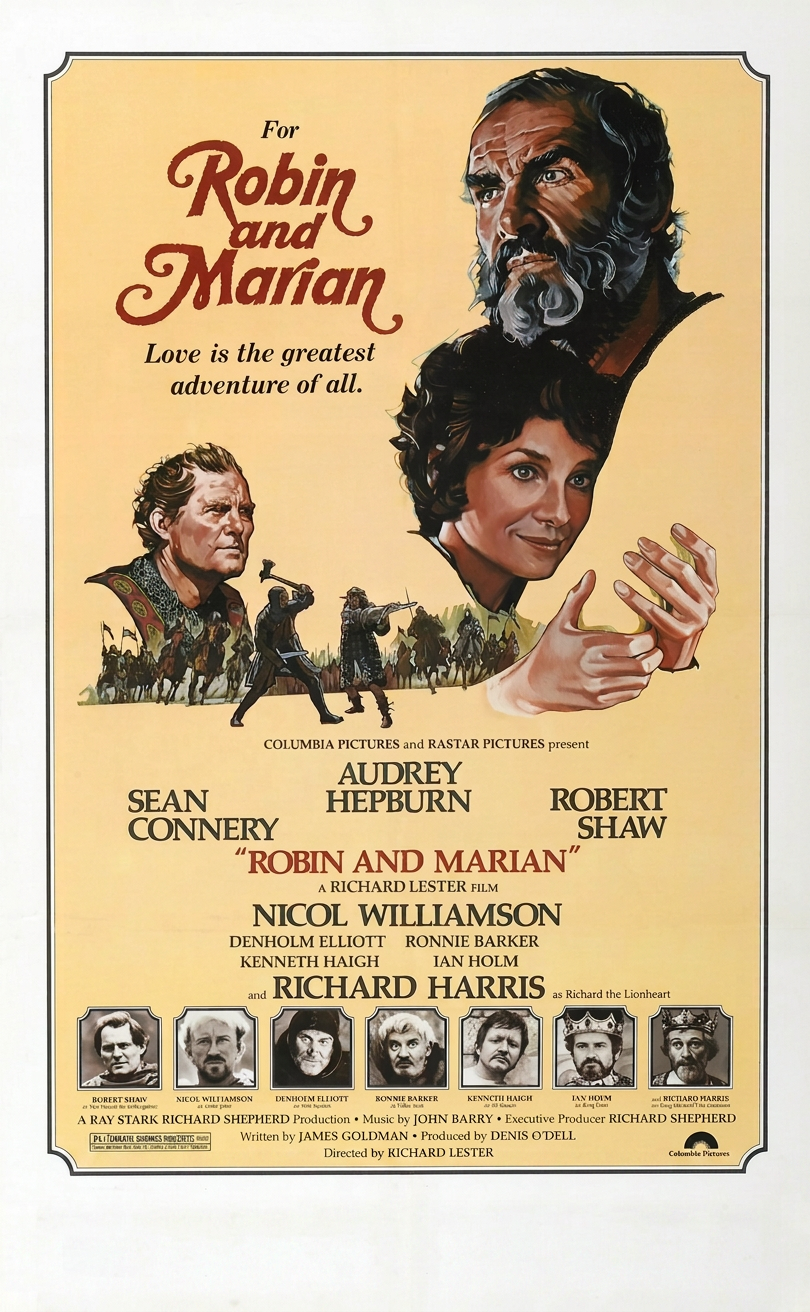
Richard Lester’s Robin and Marian is the rare Robin Hood movie that begins after the legend has ended. The greenwood has been left behind, the Crusades have soured into something closer to a bad memory,and the young outlaw who once robbed the rich and charmed the world has become an aging warrior wondering what exactly all that heroism was for.
Robin of Locksley returns to England to discover that time has not waited for him. Marian, the love of his life, has become a nun. His old friend Little John has grown older. The Sheriff of Nottingham is still there. So is King John. The names are familiar, but the people have changed.
That premise was daring enough. James Goldman’s screenplay makes it profound.
Goldman, whose The Lion in Winter had already demonstrated his extraordinary ability to turn historical figures into complicated, funny, wounded human beings approaches Robin Hood in much the same spirit. His characters may have stepped out of medieval legend, but they speak and behave like people who have actually had to live with one another for decades. The dialogue has Goldman’s characteristic mixture of wit, bitterness, intelligence and emotional candor. Nobody is reduced to a function of the plot.
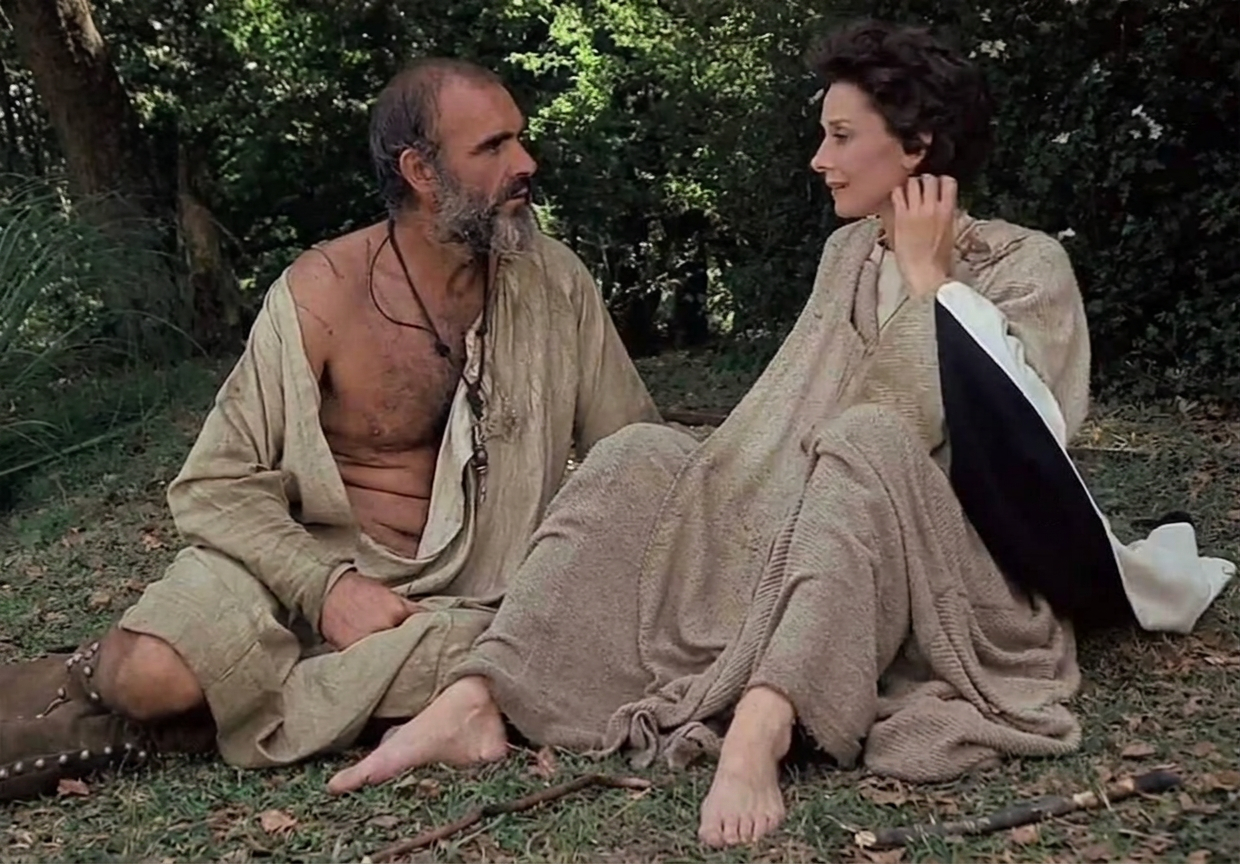
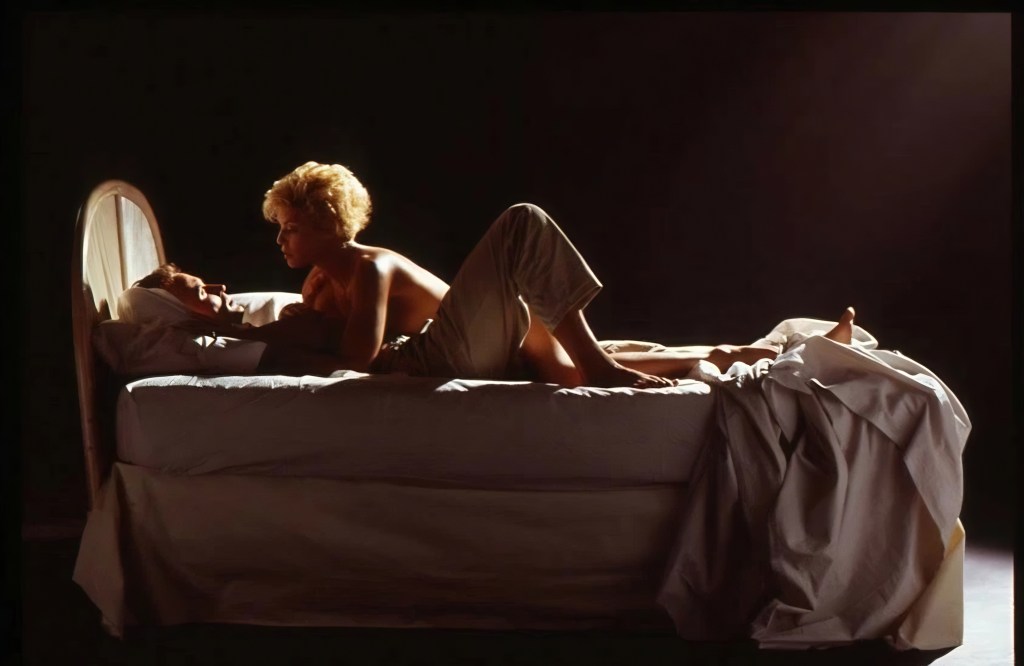
Robin and Marian, especially, have the awkwardness of two lovers who have been separated for twenty years and are discovering that memory has preserved a version of the other person that no longer quite exists. Their reunion isn’t the triumphant restoration of a romance frozen in time. Marian has built a life without Robin. Robin has spent years becoming someone she may not recognize. The love between them has survived, but it has survived as something battered and complicated rather than pristine.
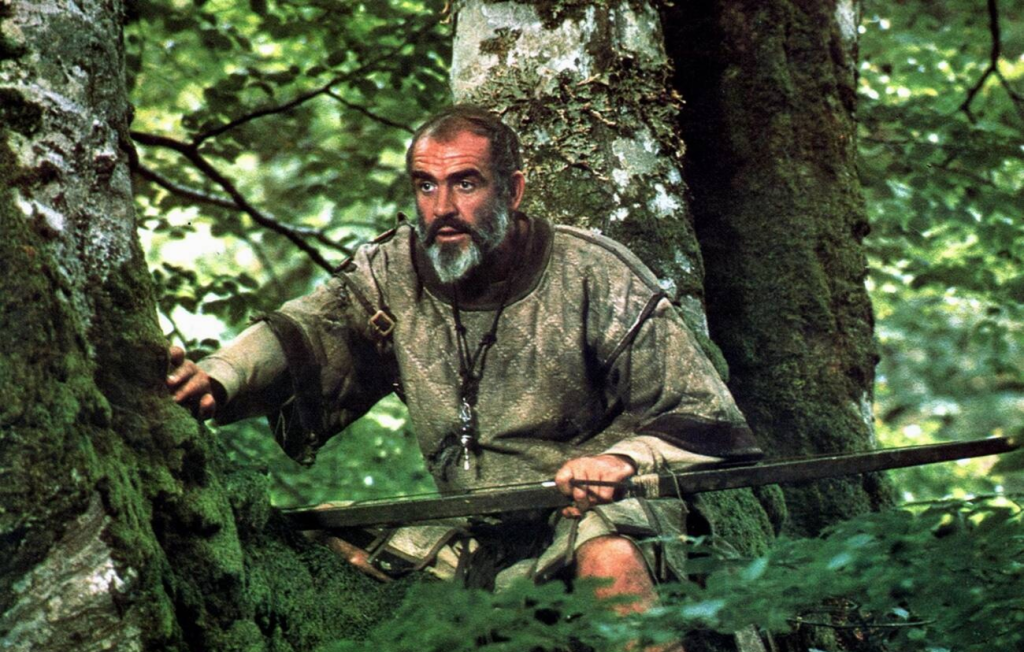
That’s what makes Sean Connery’s casting so inspired. The screen’s great embodiment of masculine invulnerability is playing a hero whose body and spirit have finally begun to reveal the price of all that invulnerability. Connery doesn’t turn Robin into a pathetic old man, nor does he strain to demonstrate that he’s still got it. He simply lets us see the years. There remains tremendous authority in him. Robin can still command a room, still ride, still fight, still make Marian look at him the way she once did. Yet there’s fatigue underneath the swagger, and something else besides fatigue: the uneasy realization that the life he thought he was supposed to lead may not have been worth what it cost him.
Audrey Hepburn meets him on precisely those terms. Her Marian isn’t an idealized medieval sweetheart waiting patiently for her hero to come home. She’s a woman who has had twenty years to think about what his absence meant. Hepburn brings extraordinary emotional intelligence to the role. Her Marian can be tender one moment and furious the next; she can tease Robin and then look at him with a sadness that seems to contain the entire lost interval between them.
The pairing of Connery and Hepburn also gives the film an unusual resonance outside the story itself. Two movie stars who had once embodied youth, beauty and glamour are confronting middle age on screen without disguising it. Their faces have become part of the narrative. Their reunion isn’t merely Robin and Marian finding each other again; it’s the cinema allowing two familiar romantic icons to discover what happens when the years actually pass.
Richard Lester never turns that passage of time into a solemn exercise. His comic instincts remain gloriously intact. People are still ridiculous. Bodies are still unreliable. Old warriors discover that getting out of bed or mounting a horse is not quite the effortless business it once was. Grand medieval gestures have a way of becoming faintly absurd when performed by people whose knees hurt. The humor is essential. Without it, “Robin and Marian” could have been a tasteful, melancholy meditation on mortality. Lester’s comedy keeps the movie alive. The people we’re going to lose are allowed to be funny before they become tragic.
Nicol Williamson’s Little John may be the finest example. His performance is wonderfully human and touching because he never turns John into a monument to loyalty. He’s affectionate, irritable, frightened, amused and occasionally exasperated by his old friend’s capacity for getting himself into trouble. There’s something wonderfully recognizable in their relationship. Little John loves Robin enormously, but he’s also known him long enough to realize exactly how foolish Robin can be.
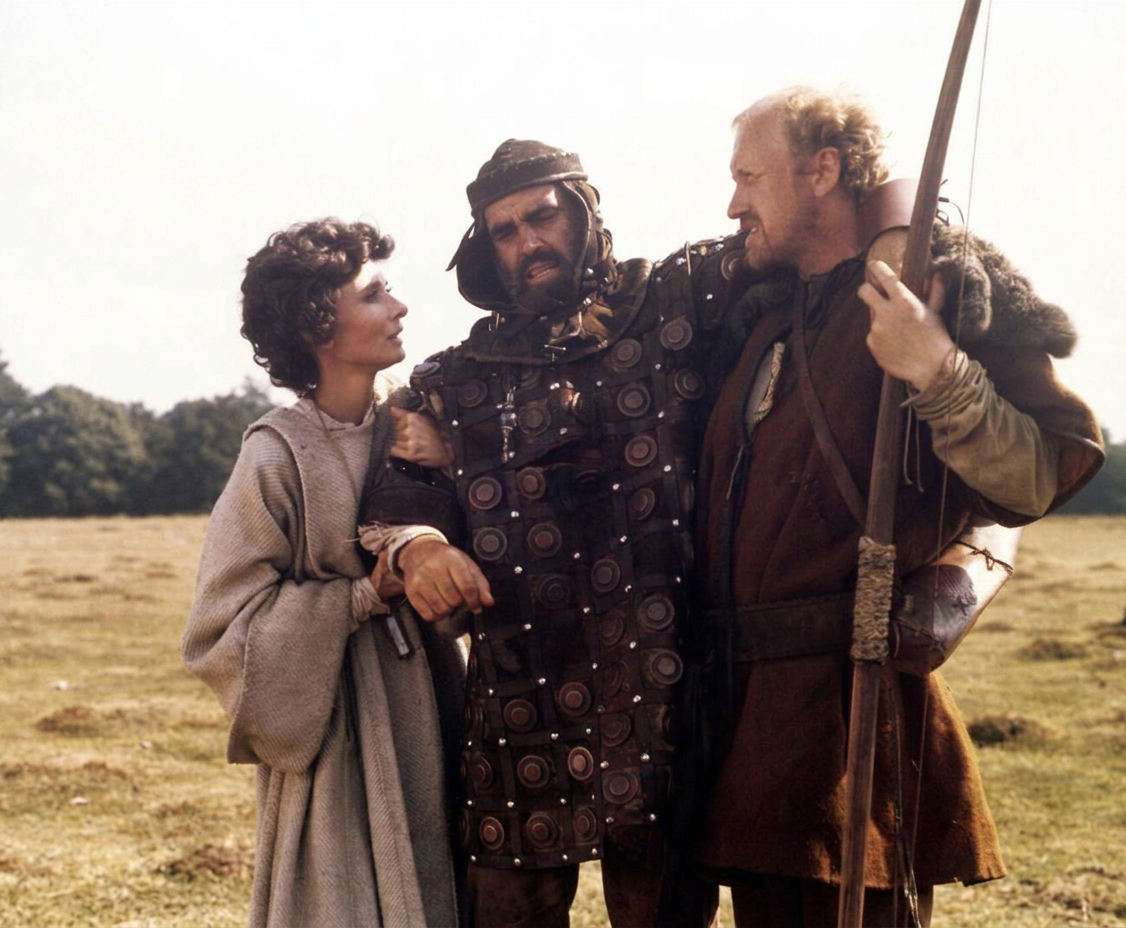
Williamson gives the character the feeling of someone who’s spent a lifetime watching a friend refuse to grow up. He understands the cost of Robin’s heroism. When Robin returns to the old life, Little John seems to recognize almost immediately that the story is heading toward a terrible conclusion.
Robert Shaw’s Sheriff of Nottingham brings another dimension to the film’s portrait of age. Their rivalry has survived so long that simple hatred no longer adequately describes it. The Sheriff and Robin are the last survivors of an old contest, and Shaw plays him with the weary dignity of a man who knows that the world in which their rivalry mattered is disappearing.
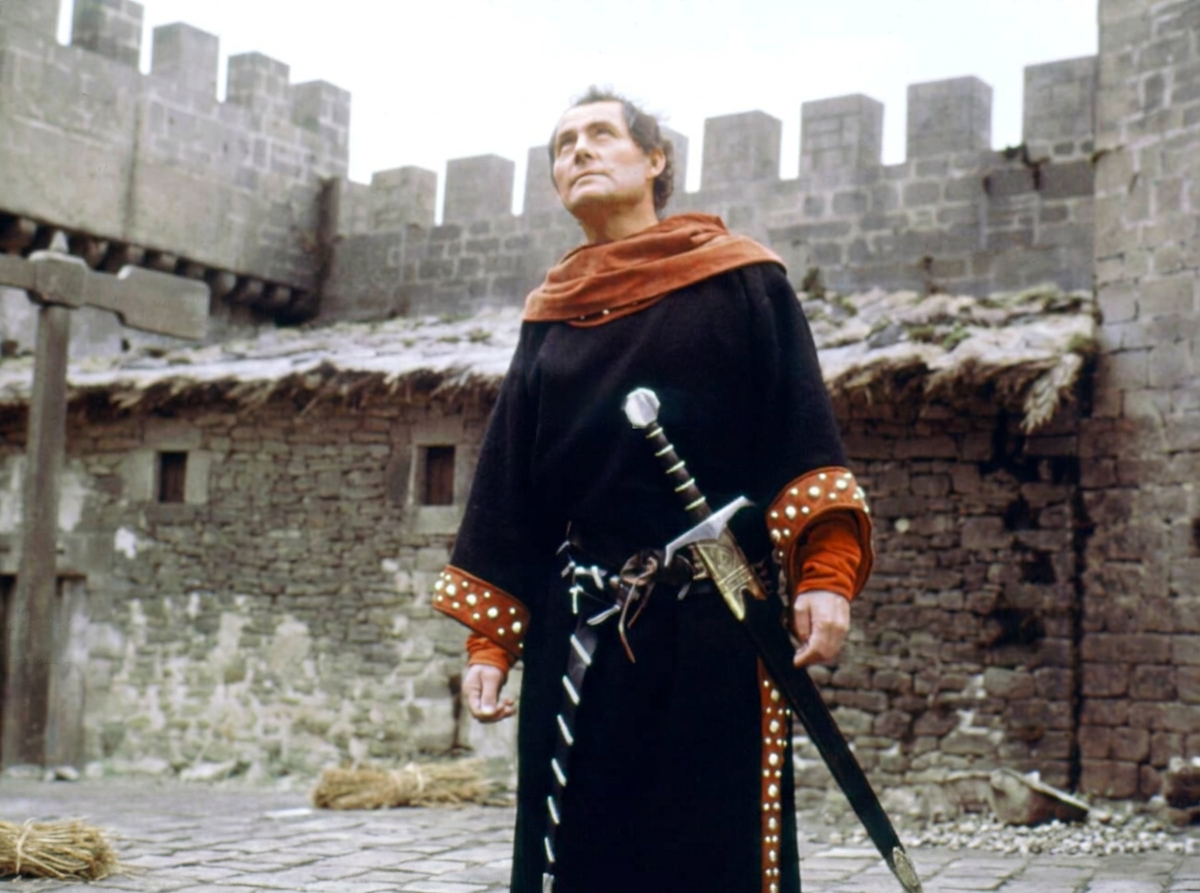
Their confrontation is consequently nothing like the athletic swordplay of a conventional Robin Hood movie. It’s brutal, awkward and exhausting. Two aging men struggle because they have spent their entire lives defining themselves in opposition to one another. There’s almost tenderness in the violence.
Ian Holm’s King John completes the picture in a wonderfully different register. Holm makes him vain, petty and funny without turning him into a cartoon. This is another legendary figure who’s been reduced by time from a character in a heroic pageant to a recognizable human being. He’s remained king, but royalty hasn’t made him particularly wise or impressive. Holm finds the little man inside the crown.
The cumulative effect is remarkable. Lester and Goldman have taken a story built around archetypes and populated it with people. Robin has regrets. Marian has grievances. Little John has anxieties. The Sheriff has memories. King John has insecurities. They aren’t merely inhabiting the legend anymore, they’re carrying its consequences. Time is the film’s true antagonist.
Robin and Marian have both lost twenty years. Their love survived the separation, but their youth didn’t. The movie doesn’t pretend otherwise. When they find one another again, they don’t magically become the young Robin and Marian preserved in our imagination. They become something better and sadder: two older people who have finally realized how much they mean to each other.
For a while, love gives them something like a second youth. They ride together. They laugh. They fight. They rediscover the physical and emotional intimacy that had been denied them for so long. The movie allows them a brief period of happiness without pretending that happiness has erased the years.
Robin’s problem is that he remains Robin. He can’t simply put away the sword and become a retired country gentleman. The heroic identity that’s exhausted him is also the identity through which he understands himself. Marian sees the contradiction more clearly than he does. She knows that the man she loves is incapable of stopping until someone stops him. The final tragedy follows with an inevitability that makes it no less shocking.
Marian poisons Robin, not because she wants him dead but because she loves him enough to understand that he will never voluntarily surrender the life that’s destroying him. There’s cruelty in her decision, but also mercy. Robin eventually understands what she’s done and accepts it.
The final sequence is one of the most devastating in cinema history because Lester refuses to inflate it into melodrama. There are no grand speeches capable of explaining what’s happening. They’re simply two people who have found each other too late, surrounded by the people who have known them longest.
Little John remains with them.
Robin asks him to shoot an arrow into the air. Wherever it lands will be their resting place.
It’s the perfect final gesture for this particular Robin Hood. The legendary archer gets one last shot, but the arrow has become something else entirely: a way of choosing where the story ends.
Then it disappears into the sky.
The image is almost unbearably beautiful because the film has spent so much time separating Robin Hood the legend from Robin the man. The man is dying; the legend, of course, cannot die. The arrow seems to pass from one realm into the other.
That’s the final paradox of Robin and Marian. The movie spends nearly two hours dismantling the myth and then, at the last possible moment, restores it. Only now we understand what the myth has cost.
The Robin Hood of childhood stories is eternally young. He never wakes up stiff, never regrets the years he spent away from the woman he loved, never discovers that courage can become a kind of addiction. He remains forever in the greenwood, forever drawing the bow, forever winning. Lester’s Robin has lived long enough to become mortal.
That makes his death more painful, but also makes the legend more meaningful. We’ve seen the human being inside the heroic image. We’ve watched him fail, regret, laugh, love and grow old. By the time he dies, Robin Hood is no longer simply an archetype. He’s somebody we have come to know.
Goldman’s screenplay is the foundation of that achievement. Lester’s direction supplies the extraordinary tonal balance: irreverence without cynicism, romance without sentimentality, melancholy without gloom. Connery and Hepburn make the central love story credible; Williamson gives the film its aching sense of friendship; Shaw transforms the traditional villain into an aging equal; and Holm finds the human absurdity beneath the crown.
Even the movie’s title tells us what’s happened. It isn’t Robin Hood, it’s Robin and Marian. The legend has become a love story.
Perhaps that’s why the final scene hurts so much. Robin Hood’s adventures are finished, but that isn’t really what we mourn. We mourn the years Robin and Marian lost. We mourn the possibility of the life they might have had. We mourn Little John losing his oldest friend. We mourn the end of a world in which these people knew exactly who they were.
Then the arrow flies, and the sorrow becomes something larger.
The man dies.
The legend survives.
For once, those two things don’t contradict each other, they complete each other.
Robin and Marian isn’t simply the finest Robin Hood movie ever made. It may be the only one that understands that the real subject of the legend was never the hero’s ability to defeat death, it was the impossibility of doing so.
-30-


Leave a Reply