By James Kenney
Gorgeous Europeans:
Notes on a Vanished Cinema (An investigation of commercial European cinema of the second half of the 20th century)
There was a time when the Paris Cinema on West 58th Street — and the ads in the film sections of the New York Times and the Village Voice — were a little boy’s primary clues that a whole other cinema of beautiful people existed. Deneuve. Delon. Cardinale. Adjani. Montand. Belmondo. Huppert. Names that arrived in New York trailing a certain glamour, in films that played for a week or two and then vanished, back to wherever gorgeous, European entertainments went to die. My dad raised a film savvy young’un, and took me to the Paris a few times to see this or that in the late 70s through the 80s. I have always held heightened interest in European movies of the 50s through the 80s, that I’d also learn about in the special Cannes edition of Variety, no doubt because of the preponderance of gorgeous women roaming through them. I’ve been lately tracking them down — the romantic comedies, the capers, the prestige pictures, the programmers — investigating what holds up, what doesn’t, and what they reveal about a particular moment in European popular cinema that doesn’t get much attention lately.
I was getting many of these films, not available in the U.S. for quite some time, via an international DVD seller on eBay, who’d pop some subtitles on films that were released on European DVD without any, a genuinely heroic and somewhat illegal operation, until Trump’s tariffs shut him down.
One more casualty. One more reason to hate Herr Creamsicle.
Anyway. I’m beginning my series with the big guns. Catherine Deneuve. Yves Montand. Jean-Paul Rappeneau.
OK, you might not know Rappeneau, but Rappeneau, still alive at 93, one of the lesser-known-on-these-shores French directors, clearly “commercial” as opposed to Truffaut, Godard, etc.. He is best known to American audiences at this point — if he’s known at all — for his underrated masterpiece The Horseman on the Roof with Juliette Binoche, which unfortunately arrived here via a Miramax/Weinstein hatchet job that shaved off the better part of half an hour, and Bon Voyage, his follow up to Horseman, a breezy, genuinely fun WW II France-in-Peril romp with Isabelle Adjani and Gerard Depardieu.
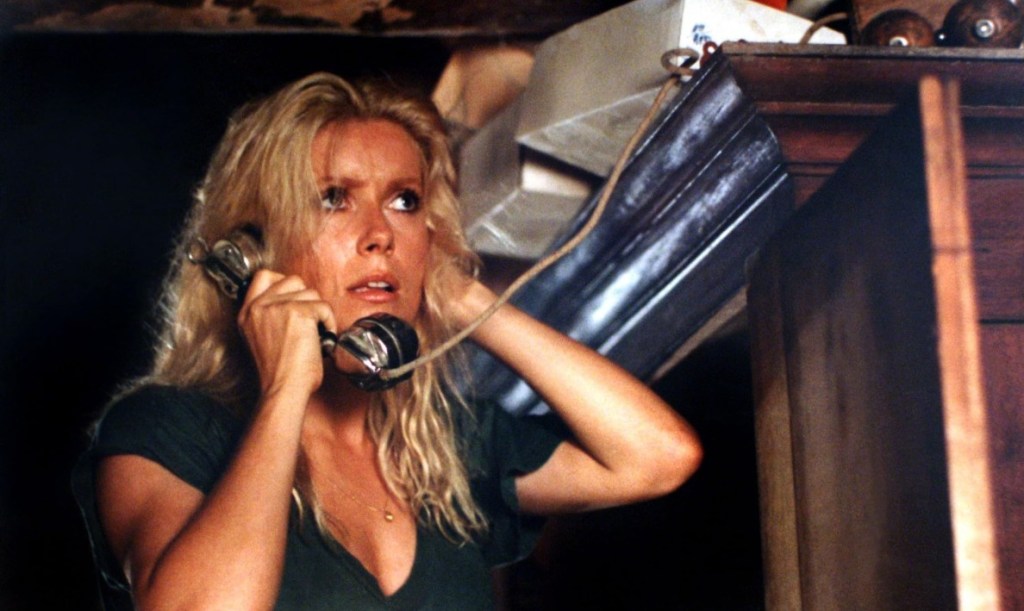
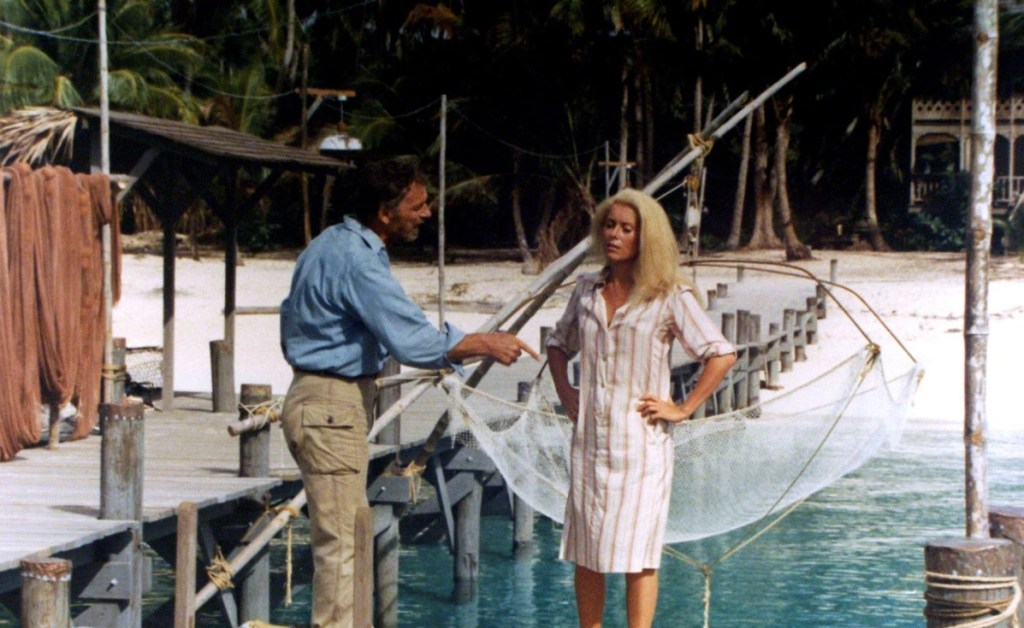
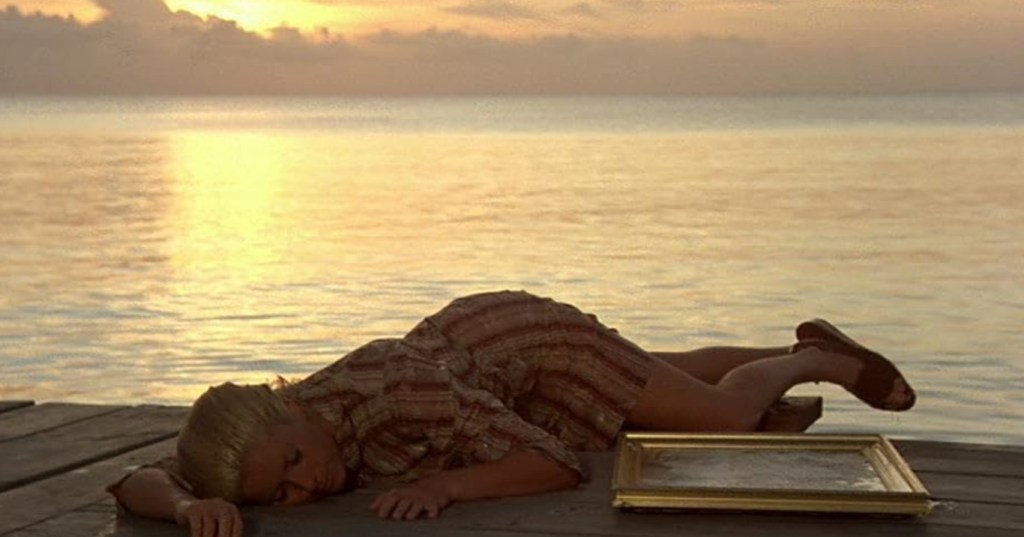
Le Sauvage — not currently available in the U.S., though it was restored and screened in Cannes’ “Classics” section in 2011, released on an out-of-print collection of Deneuve films by Lionsgate, and presented as part of the Film Society of Lincoln Center’s 2012 gala tribute to Deneuve, where I first made its acquaintance before watching it again on the Lionsgate DVD — is from much earlier in Rappeneau’s career, 1975. Deneuve, at the height of her glamour and international prominence, plays against type as Nelly, a runaway, sometimes hysterical mafia bride-to-be in Caracas who barges into the hotel room of Martin (Montand), an eccentric recluse who usually resides on a lushly tropical island nearby where he grows vegetables and runs from his own murky past. Pursued by a relentless, ranting jilted fiancé Vittorio (Luigi Vannucchi) and an ex-employer (Tony Roberts, yes, the guy from the Woody Allen films, who speaks his own French…I think) from whom she’s stolen a Toulouse-Lautrec painting (which is much abused throughout the film), Nelly generally makes life miserable for everyone (at one point sinking Martin’s boat with both of them on it (!)).
Nevertheless, she remains captivating because it’s, you know, Deneuve.
Rappeneau was apparently inspired by Frank Capra’s archetypal screwball comedy with Clark Gable and Claudette Colbert, It Happened One Night, and Deneuve welcomed the chance to play something less icy than her usual persona. The film is certainly broad, fast-paced and a bit odd. Maybe it’s a French thing.
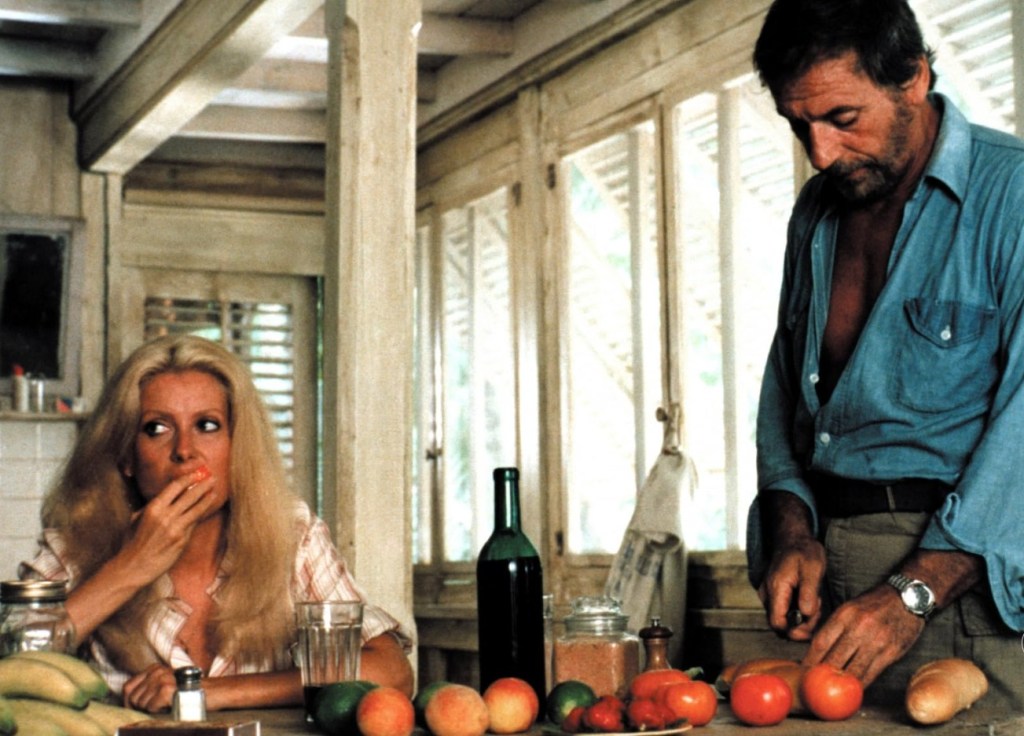
The central question the film poses — and doesn’t entirely answer — is why Montand’s gruff hermit would tolerate a woman who steals his food, sinks his boat and generally treats his island paradise as her personal demolition site. The answer is, of course, Deneuve, and the film doesn’t really pretend otherwise, and the answer will have to do, because it’s good enough for me. Boy, is she beautiful, and Rappeneau deploys that beauty strategically — we forgive Nelly approximately everything because the camera sees what Montand pretends not to, and when after she’s given herself to him, and he rejects her again, we’re on her side. What is he, an idiot? I don’t care how much he’s turning his back on society to hang out with his big ripe tomatoes and penned-up chickens, you don’t lose Deneuve once you’ve gained her (even her hysterical jilted fiancé understands this, chasing her to the ends of the earth after she’s humiliated him).
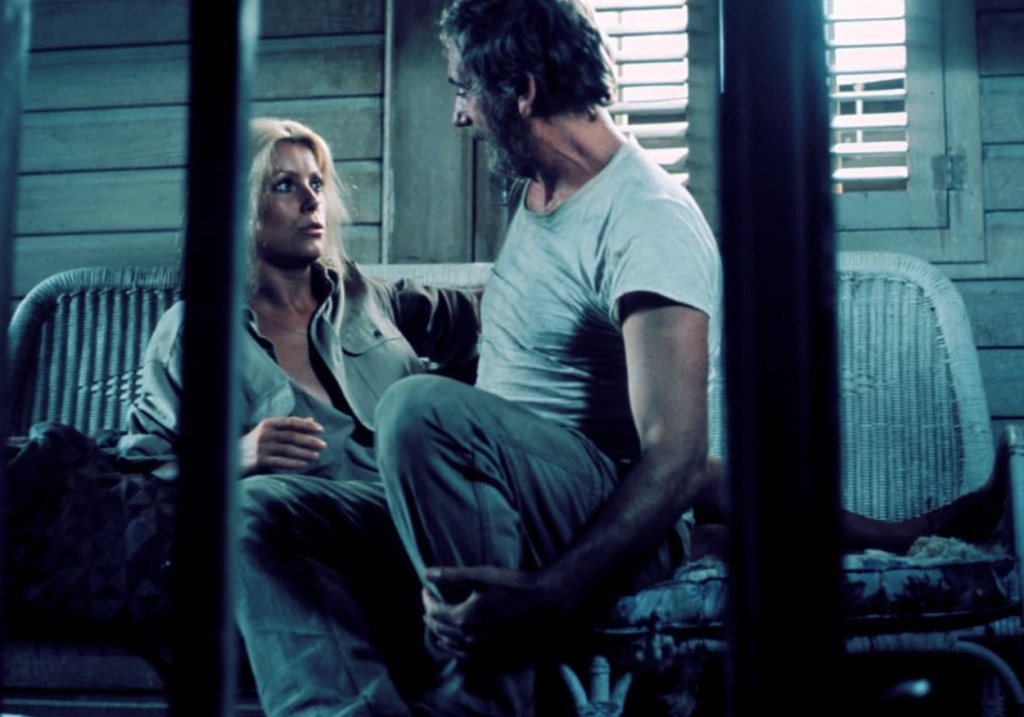
What’s happily surprising is how game Deneuve is, how willing to be physical and silly, a genuine departure from the persona she’d perfected for Polanski, Buñuel and Truffaut. She’s a genuine sport, and the pleasure of watching her get hit on the head by Montand’s thrown pineapple is considerable. Montand is one of the Euro-stars who is hardly conventionally handsome in that Beatty and Redford mode and he doesn’t care; his insouciance is part of his allure.
There’s a car chase through Caracas shot by Rémy Julienne where the actual principal actors are involved in some pretty hairy shots that is actually funny, and the broad farcical energy of the island sequences is fitfully amusing, though there are bits that prove more frantic than funny. The film is constantly working very hard for laughs it doesn’t always earn, save you can’t take your eyes off the sparring Deneuve and Montand. The antics of her crazed fiancé Vittorio and Roberts as her ex-boss/lover teaming up to track her down are fairly repetitive and exhausting after a promising beginning (although Vannucchi as Vittorio has a funny send-off scene). But the film’s best moments have a giddy, almost airborne quality, and the various settings — the Caracas chaos, the paradisiacal island, some bits in France and New York — give the whole enterprise an exotic energy.
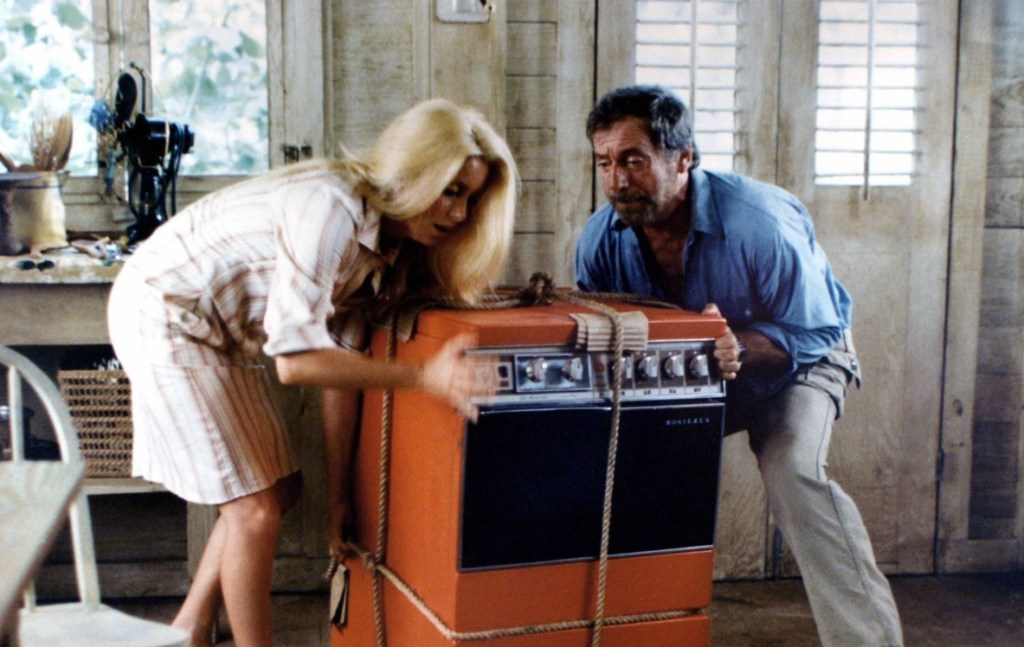
Pierre Lhomme’s cinematography is doing all you could ask; the Venezuelan locations are vividly used, the chaos of the city giving way to water so clear it looks fabricated. The film’s view of Venezuela in 1975 is a caricature, I guess — corruption, noise, mafiosos, everybody shouting — although with recent developments I would imagine people are shouting a lot these days, too, alas. Michel Legrand’s score is a bit over the top, but, shrug, what are you gonna do? It’s more romantically lush than whimsical, which is a plus.
Deneuve’s Nelly is, on the surface, a fairly appalling human being: she steals more than she’s owed, she never says thank you or apologizes, she sinks a man’s boat with an axe. On the other hand, it’s clear the men in her life have all treated her like valuable property which they could dump on the side of the road when it no longer serves them, and her consistent plotting and paranoia is based on the horrid life she sees ahead with Vittorio. She acts equally badly with Montand, who is kinder to her, because she doesn’t quite know how to act any other way with a man. It is noted that Vannucchi slaps her, and Montand clocks her with the aforementioned pineapple, though to be fair she is quite irresponsible and kind of deserves it (Montand only does it after she sinks the boat and strands them on the island, and then steals his dinner while locking him in a basement, which would frustrate the best of us). Nevertheless, she’s living in a tough world where men keep women like her and perhaps the only way out is straight through. Montand does tend to her with care after knocking her flat with the pineapple, at least.
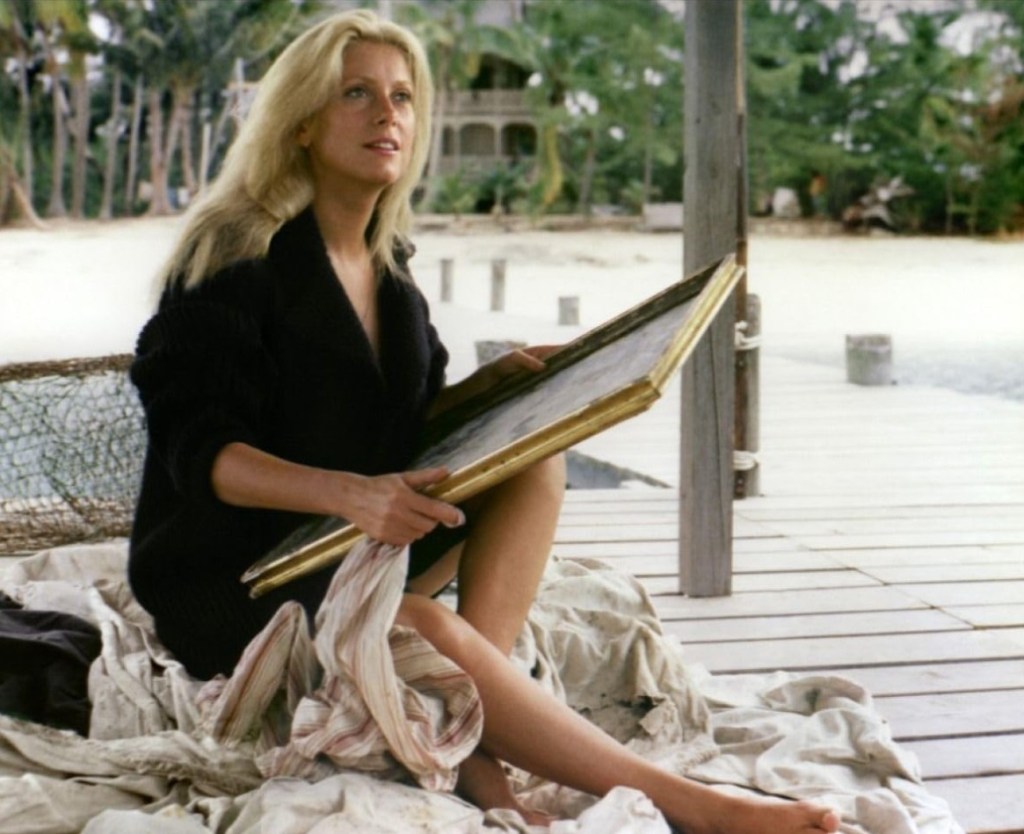
Anyway, the film is operating in a register where moral bookkeeping is largely beside the point, and what matters is the combat, the wit, and the eventual, inevitable capitulation of two equally impossible people. The plot logic doesn’t bear much scrutiny. Montand’s backstory of why he abandoned his life and elegant wife Dana Wynter (Invasion of the Body Snatchers!) is rather intriguing and never developed, and how Deneuve even makes her way towards his island isn’t really coherent or plausible, but, shrug, whatever.
So I heartily recommend Le Sauvage as a humpback movie, an imperfect work that nevertheless has lots of value to offer. Deneuve as a screwball dame has a lot less “aren’t I cute” moments than Goldie Hawn or some other contemporary would offer in a similar role, and wholly avoids trying to earn sympathy through sentimental moments. Montand doesn’t overplay the way Chevy Chase would, also avoids “love me” moments and is all the better for it. So, while the Toulouse-Lautrec doesn’t make it to the end, the film itself does. Track it down.




Leave a Reply