by James Kenney
Hollywood has left me behind!
I can date the exact moment I fell out of step with mainstream American filmmaking: sitting in a theater with my dad watching Antoine Fucqua’s craptastic Shooter (2007). We went because we had admired Mark Wahlberg in Boogie Nights and I Heart Huckabees and certainly liked a good action film; Fucqua had made the basically solid Training Day, seemed like he knew what he was doing. Instead, we watched something that disturbed me in a new way—not because it was bad, but because it was rotten — yet succeeded perfectly at what it set out to do.
The script was dumb, the weaponry mattered more than the characters, and the hero was engineered to be lethally superior to every opponent. From the first action scene onward, the outcome was never in doubt; we simply watched him mow down adversaries for ninety minutes. The movie didn’t misfire. It fired exactly as designed. And audiences liked it, and have continued to like this formula whether it’s Liam Neeson in Taken, Keanu Reeves in John Wick, or Denzel Washington in Fucqua’s godawful The Equalizer, where the “”Equalizer” kills off the Russian bad guys twenty minutes into the film on their turf, so we have to watch another 70 to see him mow down anonymous Russian reinforcements on his turf, the Home Depot where he works. This is the ultimate in reverse-engineering, make the tasks simpler and more impersonal as the film progresses! And it was a hit, spawning sequels that people continue to talk about as if these films matter.
That’s when I realized: modern commercial filmmaking had wholly shifted its priorities away from anything that I was really interested in. Any time the public shows it will put up with idiocy, Hollywood certainly responds — takes less script development to be idiotic! Suspense no longer required vulnerability. Character no longer required development. The protagonist was now a mechanism.
You can tolerate this when Arnold Schwarzenegger storms through Commando because the premise is comic-book absurdity and he’s a walking visual punchline. But contemporary action cinema often presents these unstoppable figures with straight-faced seriousness. Even a clever premise like John Wick—revenge for a murdered dog—eventually collapses into a parade of anonymous henchmen whose only narrative purpose is to be eliminated by the stone-faced Reeves. Once you know the hero can’t lose, the movie can’t win, for me, really. Arnold knew this; Predator is great because Schwarzenegger is allowed to show fear, and Total Recall is great because the situation is so outlandish even behemoth Schwarzenegger is vulnerable.
What does any of this have to do with Ella McCay, you might ask?
Enter Ella McCay, a movie about people instead of mechanisms
So in an era where everything is remakes, reimaginings, reboots, extended universes, and Marvel bullshit, the aging James L. Brooks arrives with a character-based comedy drama, Ella McCay, a film that critics have largely not just rejected but piled upon (I’m sure its Rotten Tomato score is very very low, not that I’ll ever go near that hellsite) and that has flopped mightily at the box-office. It’s already available on Hulu for those who dare.
And yet—I liked it fine. Dare, friend, dare!
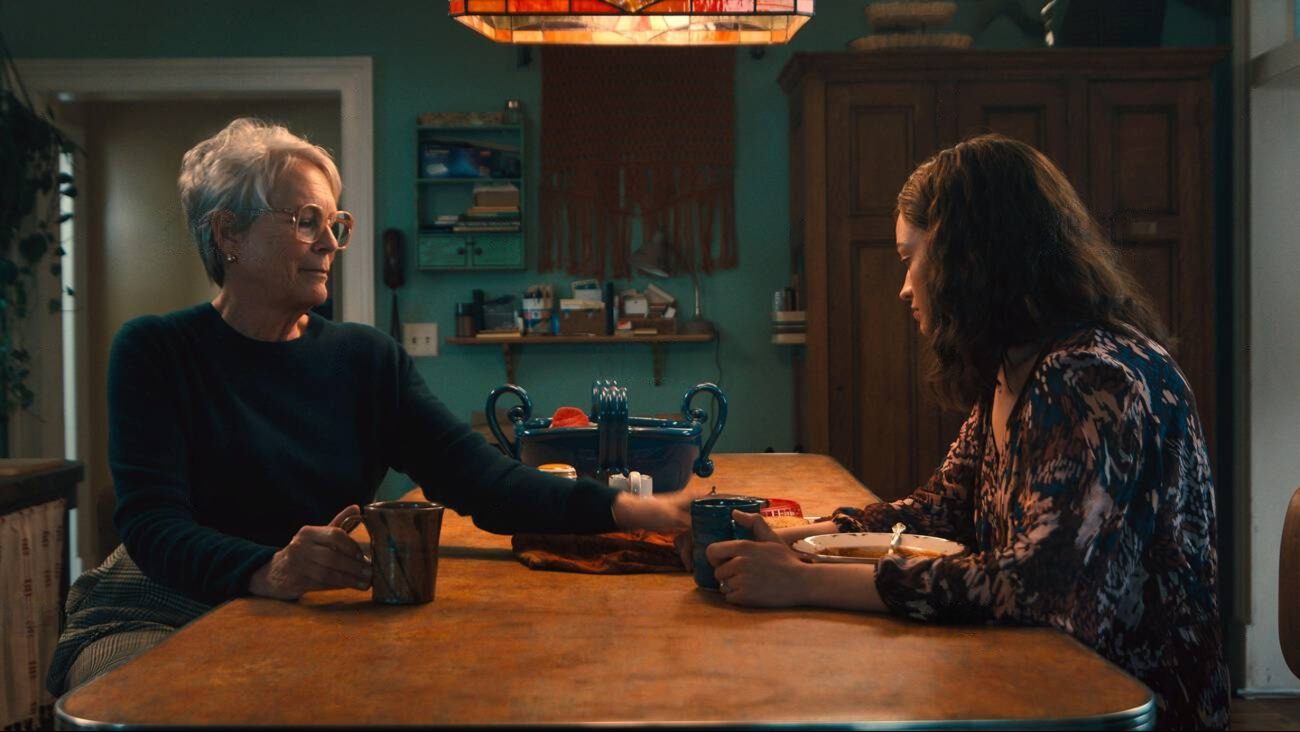
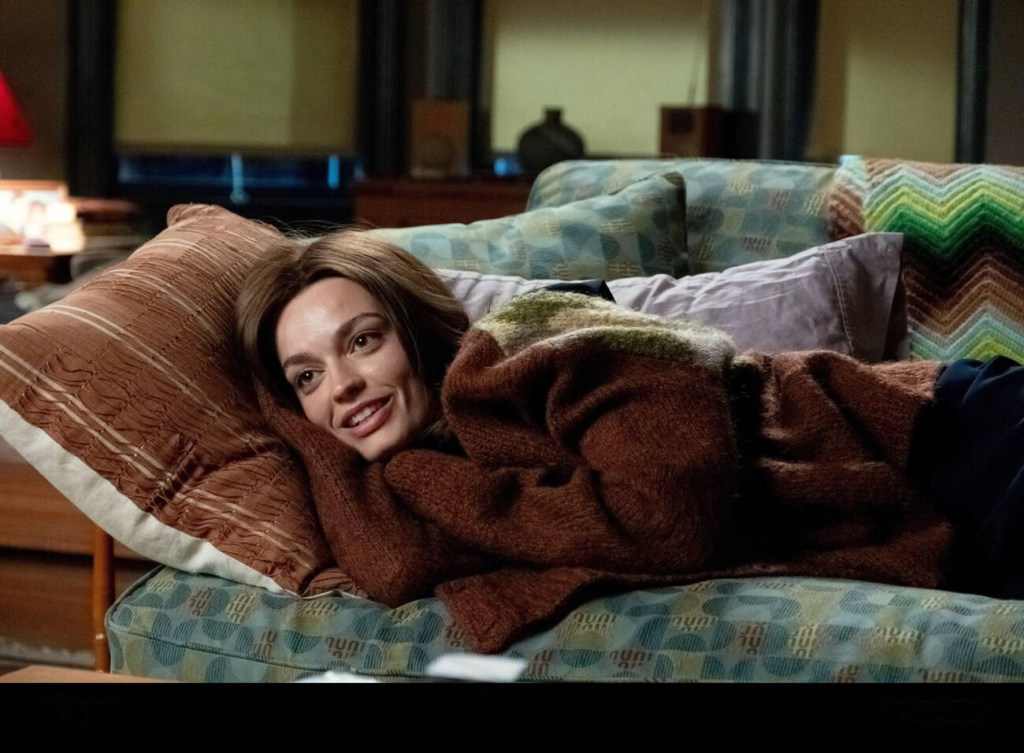
The premise is classic Brooks, and by that I mean its not that different than Broadcast News: an idealistic young politician whose professional competence collides with emotional chaos. Emma Mackey plays Ella, a thirty-something lieutenant governor suddenly elevated to governor when her boss played by Albert Brooks leaves for a Cabinet job.
Like many Brooks protagonists, she’s brilliant in public and bewildered in private (this goes all the way back to his indelible Mary Tyler Moore show of the 1970s). Critics who dismissed the film as “tonally misjudged” or “overly sentimental” may not be wrong about a certain looseness or interest in emotion, but they’re judging it by the wrong metric, and I think the “tonal musjudgement” is by design and quite interesting. Brooks has never been a structural engineer, which puts him on the Hollywood extinction list as it looks like films will increasingly be made by pushing buttons on a computer and letting A.I. do all the work. He’s a humanist.
The Brooks tradition: messy people worth caring about
Nell Minow neatly summarizes Brooks’s artistic DNA in his RogerEbert.com review: he loves stories about “complicated women with messy lives” who succeed professionally while fumbling romantically. Brooks’ films are less about plot propulsion than about emotional crosscurrents.
Ella McCay belongs squarely in the lineage of Broadcast News, Terms of Endearment, and As Good as It Gets, and his television shows like Moore and Taxi): it is built around damaged people, propelled by sharp dialogue, and structured so that small emotional crises are treated (respectfully) with the gravity of life-and-death events. Like those earlier works, it cloaks a deeply felt moral concern inside the rhythms of comedy, allowing Brooks to examine vulnerability, pride, and longing without ever surrendering his lightness of touch
Performances that hold the movie together
The cast is uniformly strong, starting with the British Mackey, who makes Ella simultaneously abrasive, intelligent, anxious, and appealing—a tricky cocktail. Jamie Lee Curtis plays her aunt Helen, a domineering presence who means well but bulldozes everyone emotionally. Curtis has taken heat in some reviews, but I recognized that personality type instantly: the tyrant powered by love.
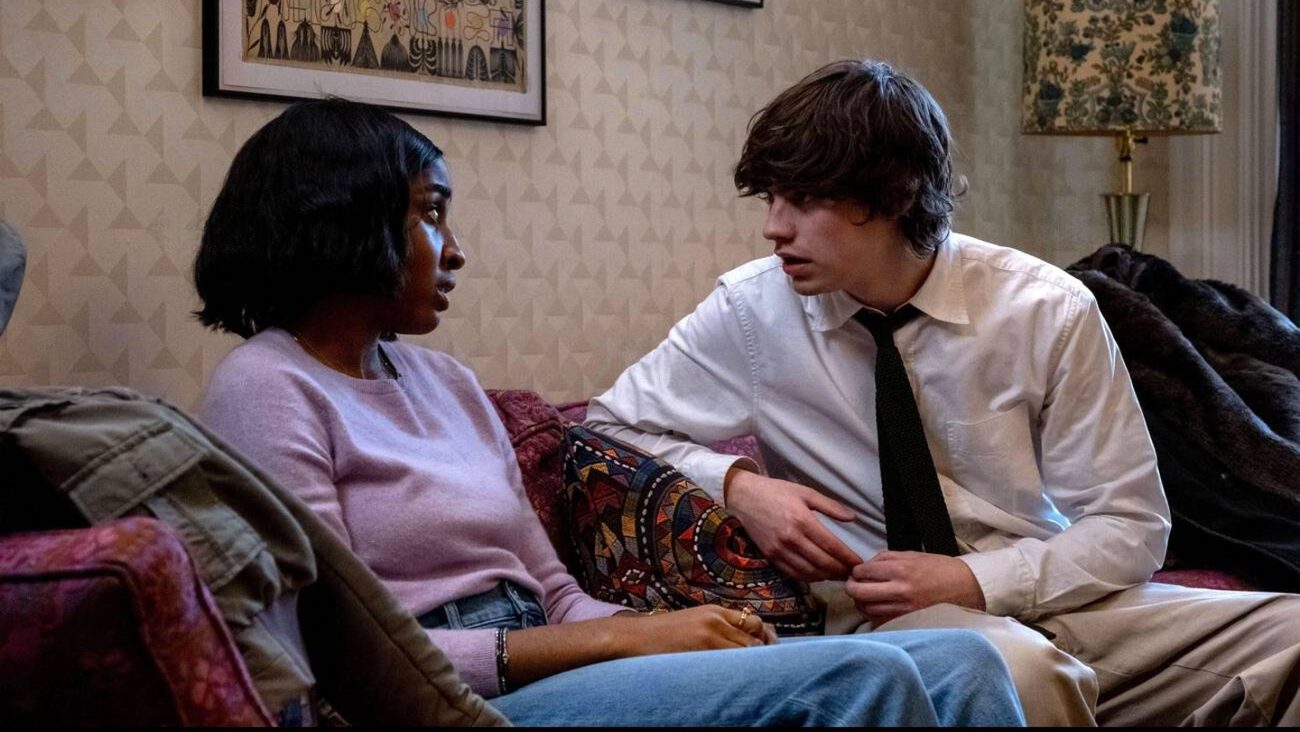
Albert Brooks, Ayo Edebiri, Rebecca Hall, Woody Harrelson, and Spike Fearn round out a family and friend ecosystem of wounded, needy, contradictory personalities. Each have their moments. And that’s key. This is a movie of moments. Some don’t land. But the ones that do feel unique, different, and not engineered.
Yes, the third act wobbles
The resolution is the weakest stretch. There’s a late-film shift involving Ella’s husband (Jack Lowden) that feels narratively rushed, as if a rewrite or reshoot tried to retrofit certain moral clarity onto an initially ambiguous, and intriguing, interpersonal conflict between him and Ella. The whole film his family is described as “normal,” which makes sense; McCay has run to someone whose lifeforce is utterly different than her own, whether it is a feasible choice or not. But the one time we see his family they are broad caricatures. The movie briefly turns wholly sitcomish when dealing with his family and ultimately his character’s resolution, and you can feel the machinery.

Brooks’s films risk ungainliness because they prioritize feeling over design, and they risk ridicule because who cares about people anymore, anyway? When they work, they enrich. When they don’t, they certainly wobble—but they’re rarely cynical. And Thank God Mark Wahlberg doesn’t show up with a sniper rifle to mete out justice.
Why I recommend it
In a film culture dominated by algorithmic spectacle, Ella McCay is almost radical in its focus on temperament, family grudges, emotional inheritance. That may not sound cinematic, but human behavior is action.
Yes, the film is uneven. Yes, it sometimes strains for effect. But it’s also warm, sincere, observant, and genuinely interested in people. That makes it more engaging than much modern cinema that refuses to risk embarrassment by caring. I was wholly involved, engaged and intrigued watching Ella McCay. We as a race should be more embarrassed by our obsession with finding new cool, cinematic ways to represent bullet trajectories.


 Tremble...Sigh...Wonder...
Leave a comment