By James Kenney
(The filmmaker interviews & production background info liberally referenced throughout are drawn from the Twentieth Century-Fox press kit prepared for the film’s original release in 1979)
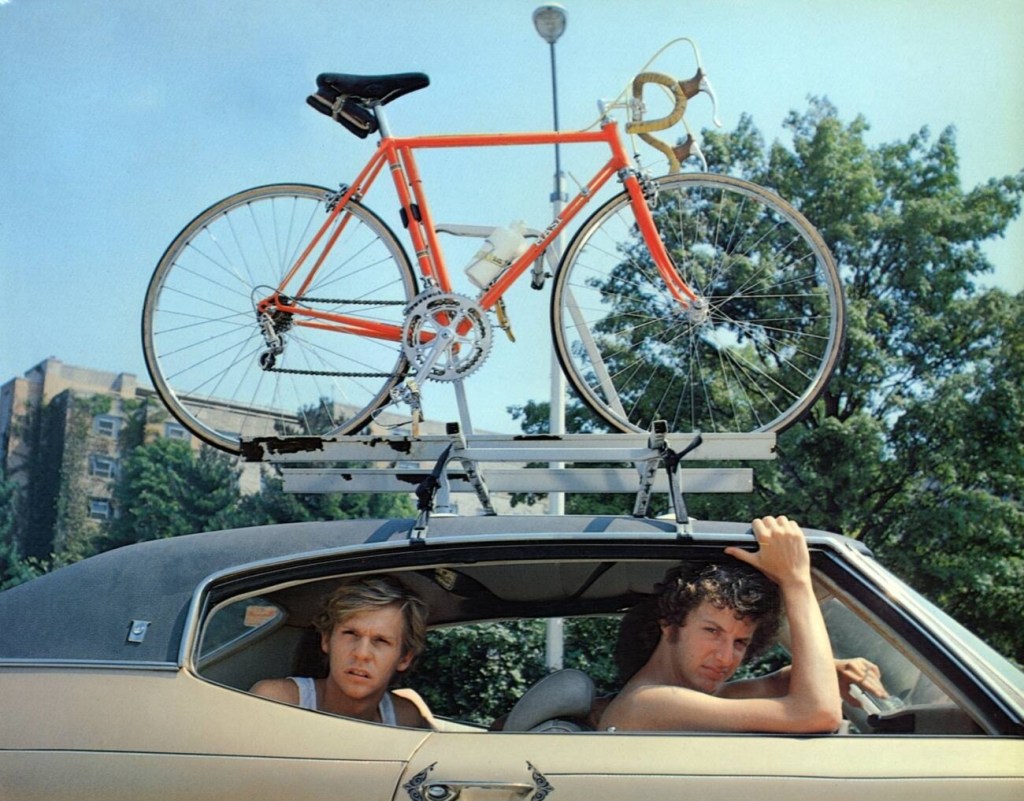
“I want to make films that audiences wish were longer.”
— Peter Yates, director
(from the Breaking Away press kit)
Peter Yates made this lovely remark in the late 1970s, long before the 21st century fashion of “epic creep”: before 135-minute romantic comedies, before 150-minute endurance-test dramas, before films sliced into two parts and released six-months apart to “double our fun” (and double the box-office), and before four-hour director’s cuts became de rigeur, sometimes announced before a film in its “compromised form” has even left theaters, such as Ridley Scott’s Napolean.
In 2026, Yates’s remark lands, unbeknownst to the late director, as a rebuke—one I’m happy to cosign. Contemporary cinema often seems animated by the opposite principle: if a film is serious, it must be long; if it is long, it therefore must be important. Bloat mistaken for depth. Taut, two-hours-or-under 20th century films like Three Days of the Condor, The Ipcress File, and Fatal Attraction have resurfaced, metastasized into twelve-hour, made-for-streaming behemoths—projects that demand prolonged concentration in exchange for insights that might once have arrived briskly, decisively, and with far greater force.
Some of this material is good, sure; much of it isn’t. And too damn much of it is perfectly respectable but too damn long, as if screenwriting manuals (and now A.I. script analysis?) have convinced an entire industry that every beat must be paid off, every thread exhaustively tugged, every idea proven rather than felt.
Yates in the above quote wasn’t talking about expansion, of course, but desire. A film you wish were longer is one that has earned your attention so completely that it hasn’t exhausted its welcome or you. Films should end not because they have run out of material, but because they understand when to stop.
I don’t find this happening especially often these days. Even a master manipulator of Spielberg’s caliber often lingers well past the point of necessity, bolting on an extra half hour to underline ideas that have already taken a perfectly serviceable victory lap—Minority Report and Ready Player One, I’m looking in your direction—until the experience becomes less about resolution than endurance. One eye on the screen, the other drifting, traitorously, toward the watch.
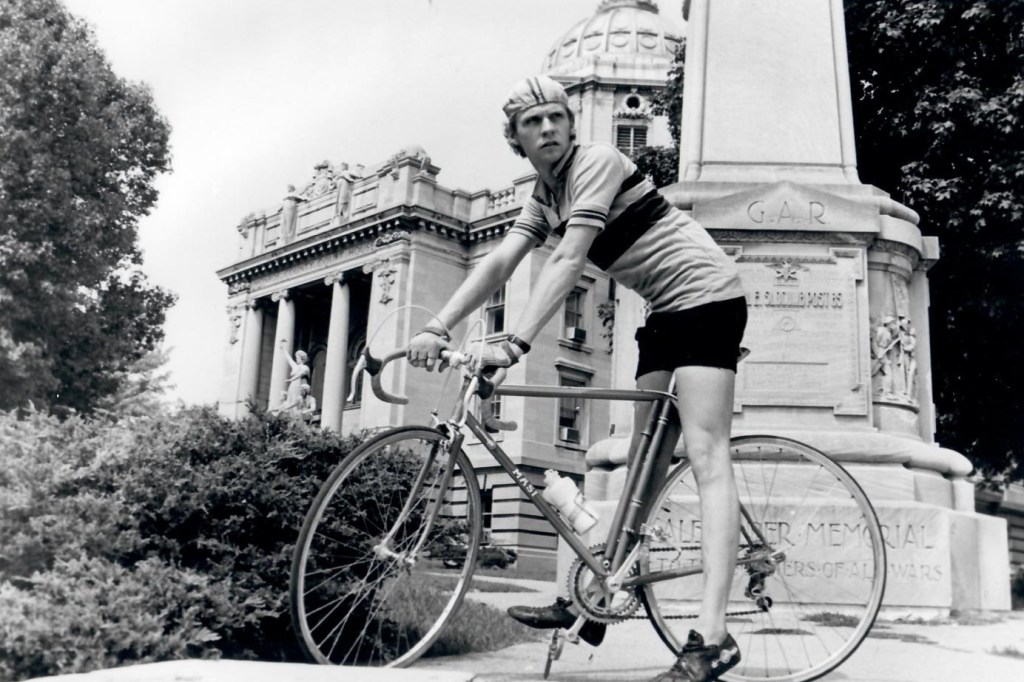
Breaking Away—a film that runs well under two hours and yet feels fuller than most contemporary movies—doesn’t linger, nor does it inflate moments to announce their importance. Themes aren’t announced in heavy-handed speeches. It moves generously and with grace through characters in motion and leaves them alive in our minds long after it ends.
It is a truly great film, shaped by attention and specificity rather than spectacle. There are many ways movies now insist upon their own importance, and almost all of them are noisy. Importance is measured in ordeal in films like the fairly worthy but rather exhausting Marty Supreme (this tale of a ping pong competitor is about two and a half hours long, by the way). Breaking Away announces its importance differently. It is modest where other films are swollen, relaxed where others strain, serious but never solemn.
What’s startling, more than forty-five years on, is not that the film still holds up, but that it feels quietly corrective viewed today—a reminder of what American movies once trusted audiences to recognize without being shouted at.
One of the greatest American films ever made also turns out to be one of the least interested in telling you so.
(Time out for a quick plot summary for those who might want it!):
Set over the course of a summer in Bloomington, Indiana, Breaking Away follows four nineteen-year-old friends—Dave, Mike, Cyril, and Moocher—who have graduated high school but remain suspended between adolescence and adulthood. Living in the shadow of Indiana University, they work dead-end jobs, drift through lazy afternoons, and struggle to imagine futures that feel attainable. Dave, a once sickly kid, is obsessed with Italian bicycle racing, adopts an exaggerated Italian persona and dreams of escape through sport; Mike grapples with his loss of athletic identity as a high-school quarterback who wasn’t recruited; Cyril masks uncertainty and strained family relations with humor; and Moocher, whose family is in dire financial straits, denies his growing relationship with a local girl while showing heightened awareness that the friends’ bonds may not hold. Their uneasy encounters with IU students, particularly a fraternity cycling team, sharpen long-standing class tensions and push the four toward the Little 500 bicycle race, where their friendship, rivalries, and sense of self are tested under public pressure.
(End plot summary!)
Released in 1979, Breaking Away arrived without the trappings of a prestige picture or the swagger of a generational manifesto. Yet from the beginning, the film was conceived with unusual clarity of purpose and an equally unusual commitment to place, authorship, and physical reality.
The project marked a deliberate pivot for Peter Yates, who returned to Twentieth Century-Fox after the commercial success of The Deep—a waterlogged spectacle feeding off author Peter Benchley’s previous aquatic success with Jaws, and undeniably a hit, but one he clearly had no interest in repeating.
Good for him. Rather than move on to helming Benchley’s The Island or something similar for a hefty paycheck, Yates spent his temporary Hollywood currency more wisely, choosing to make something smaller, quieter, and unmistakably human.
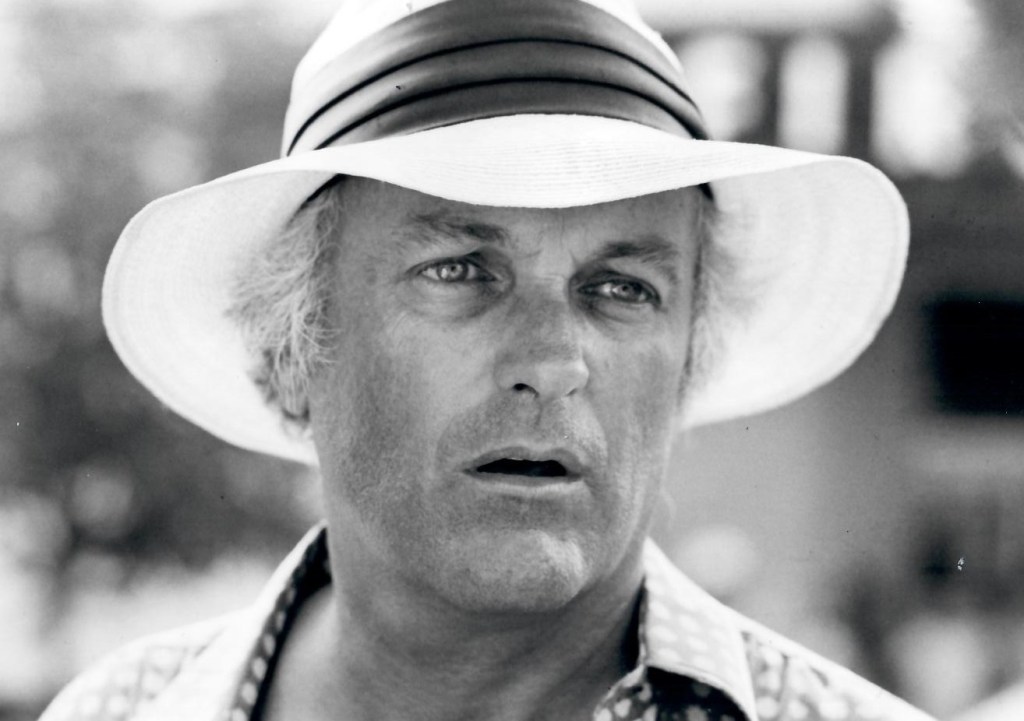
Working from a screenplay by Steve Tesich, a playwright, graduate of Indiana University and one-time Little 500 bicycle racer, Yates set out to tell a story rooted not in “high concept” but in lived experience—shaped by the social geography of a college town and the invisible borders between those who belong and those who merely orbit it, with the quiet irony that it is the locals, the ones who will likely spend their entire lives there, who have the hardest time finding their place, especially with local industry dying. More than ever, the college IS the town.
Shot entirely on location in and around the photogenic Indiana University campus, Breaking Away places its confused but decent characters inside a larger community that is vibrant, exclusionary, aspirational, and indifferent all at once. What ultimately distinguishes Breaking Away is that its realism is not cosmetic. The quarries where the boys swim and congregate are not nostalgic backdrops; they are industrial scars.
And the film’s structure resists easy categorization with recent successes it held superficial similarities to.
Though it culminates in a race, Breaking Away is not a sports movie in any conventional sense, despite loosely following a Rocky-like arc in its own unassuming way.
Though it concerns youth on the cusp of adult life, it is not nostalgic, like American Graffiti.
Though it is very funny and similarly stages a slobs-versus-snobs conflict,, it refuses mockery like National Lampoon’s Animal House.
Yates’s background as an action director—most famously Bullitt with its historic, world-class car chase through the hilly streets of San Francisco—informs the bicycle sequences, but the film’s real momentum comes from attention rather than velocity: to faces, bodies, labor, and shared space.
From the start, the film inspired an unusually broad critical embrace. Roger Ebert, writing in the Chicago Sun-Times, awarded it four stars and called it “a wonderfully sunny, funny, goofy, intelligent movie that makes you feel about as good as any movie in a long time.” It was, he wrote, “a treasure”—one of those rare films that, when made this well, becomes “a precious cinematic miracle.”
At The New York Times, Janet Maslin initially approached the film with skepticism. The ingredients, she noted, were hardly promising: “the cast is unknown, the director has a spotty history, and the basic premise falls into this year’s most hackneyed category.” And yet the finished film disarmed her completely. “The finished product is wonderful,” she wrote, praising a movie “so fresh and funny it didn’t even need a big budget or a pedigree.” Shot in Bloomington, Indiana—about as far from Hollywood’s gravitational pull as a studio film could land—Breaking Away struck her as “a classic sleeper.”

That sense of modesty concealing real craft was echoed by Vincent Canby, also writing in The New York Times. Canby described the film as “deceptively simple” and “exhilarating,” praising Yates for directing “with uncommon tact” and noting that the Little 500 succeeds not as spectacle but as the culmination of character.
Even curmudgeon Pauline Kael, rarely a pushover for earnest crowd-pleasers, was charmed. Writing in The New Yorker, she praised Breaking Away as “a modest classic that never states its themes,” one that “stirs the emotions by indirection, by the smallest of actions and the smallest exchanges of dialogue”—in short, “a graceful, unpredictable comedy that pleases and satisfies audiences.”
Critics weren’t the only ones paying attention. At the 1980 Academy Awards, Breaking Away received five nominations, including Best Picture, Best Director (Yates), Best Original Screenplay (Tesich), Best Supporting Actress (Barbara Barrie), and Best Original Score (Adaptation) for Patrick Williams. Tesich ultimately won for Best Original Screenplay, a notable upset for a first-time screenwriter, beating out, among others, Woody Allen for Manhattan and James Bridges for The China Syndrome.
Welcome to Indiana
Breaking Away was the first film to be shot in Bloomington, Indiana, and its commitment to the reality of it was absolute. Indiana University’s campus buildings, town streets, and limestone quarries appear as they were, without cosmetic polish or the use of studio recreations. The film treats Bloomington not as backdrop but as a living, pressuring presence—one that shapes behavior, opportunity, and self-image.
Yates worked hard to capture that presence. The film began production before the fall semester to film interiors and quarry locations without crowds, then waited for students to return so the Little 500 could unfold before a wealth of genuine spectators. The quarry sequences were shot at real student swimming holes, and the Little 500 itself was filmed over four consecutive days with dozens of real student cyclists, many of whom had competed in the race. Aside from the principal actors, nearly every rider on screen was an IU racer. The actors trained for weeks on one-speed bicycles over Southern Indiana’s hilly roads to meet the race’s demands, and protagonist Dennis Christopher performed much of his own riding, weaving through tight packs at speed.
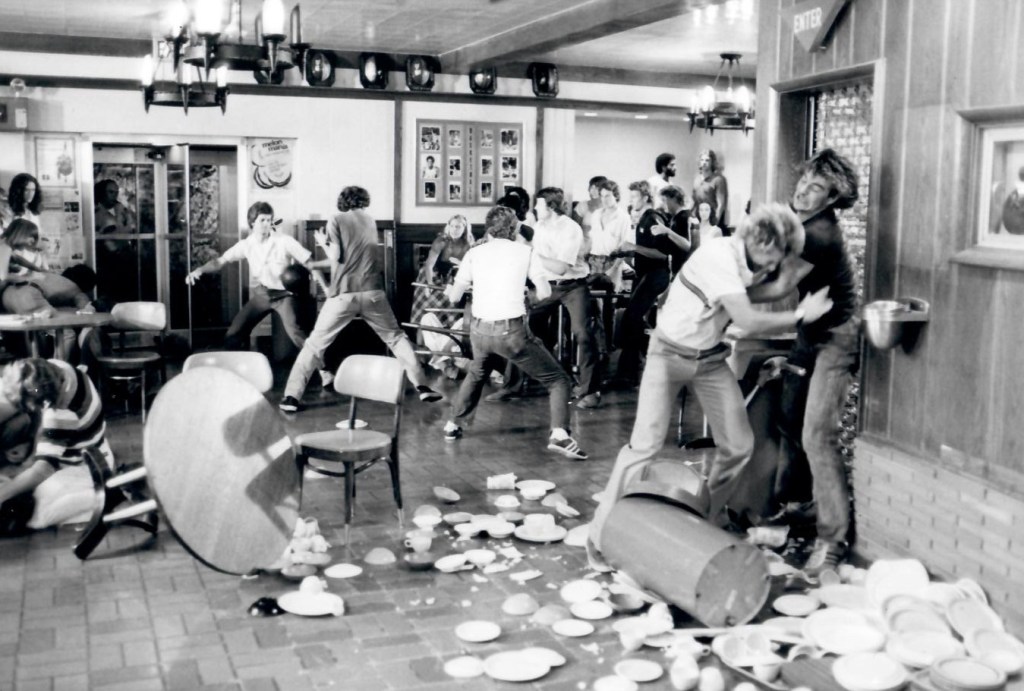
Yates, shaped by an earlier career in auto racing and stunt coordination, approached the bicycle race as a motorsport event rather than a novelty sequence. To capture the action, Yates and his brilliant cinematographer Matthew F. Leonetti mounted cameras perilously close to the race: a camera operator rode on the back of a speeding motorcycle just behind the cyclists, while Yates himself frequently filmed handheld from track level as riders passed within feet of him. Despite the scale and danger of the shoot, no serious injuries occurred—an outcome production notes treated as nearly miraculous. Four straight days of clear weather also defied Southern Indiana’s late-summer reputation.
The Gods clearly smiled on the making of Breaking Away.
What gives the racing spectacle its meaning are the quieter, more intimate decisions made around it, the casting choices, performances, and bits of lived-in texture that root the film emotionally and socially.
Christopher and Paul Dooley reunited as father and son only a year after playing the same relationship in Robert Altman’s AWedding. Jackie Earle Haley, still closely associated with the brash Kelly Leak of The Bad News Bears, shifted into a very different physical and emotional register. Hart Bochner, cast as their fraternity antagonist, spent downtime revising a screenplay of his own—an offscreen echo of the film’s fixation on young men trying to imagine their futures. Even institutional authority enters without irony: Indiana University president John Ryan was persuaded to play himself only after being jokingly assured that Charlton Heston was unavailable.
These production anecdotes matter not because they are charming, but because they describe a film assembled through engagement rather than imposition. Breaking Away did not arrive in Bloomington to extract atmosphere or manufacture folksy sentiment. It embedded itself. Listened. Adapted.
Four Bodies, One Frame: Group Geometry in Breaking Away
With Breaking Away, Yates thinks rigorously in terms of groups rather than individuals. Repeatedly, he insists on seeing the Cutters together, not as a unified block, but as four bodies negotiating proximity, hierarchy, and drift.
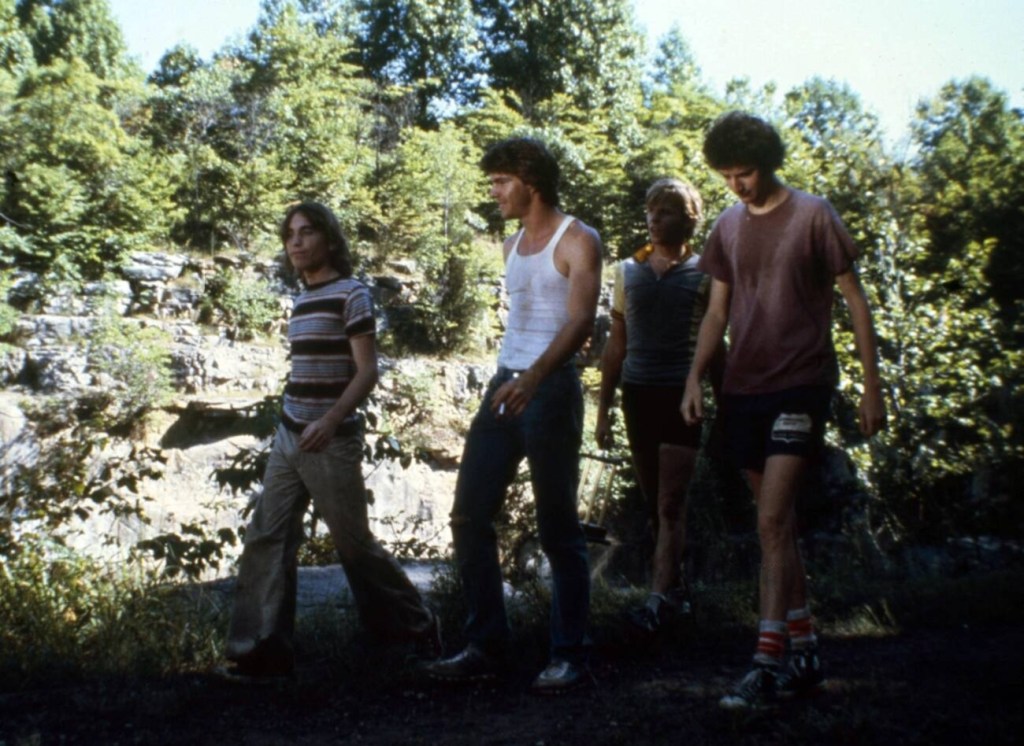
The blocking is rarely symmetrical. The Cutters are almost never arranged in clean lines or balanced compositions. Instead, Yates favors loose diagonals and uneven spacing: one figure lags behind, another surges forward, a third hovers uncertainly between the two. Leadership within the group is never fixed; it shifts from scene to scene, sometimes from moment to moment. The frame registers these shifts before the dialogue does.
This geometry is not “style,” it does narrative work.
Yates frequently stages conversations while characters move through space instead of facing one another squarely. Arguments unfold sideways, jokes are tossed over shoulders.
Equally important is Yates’s use of silence. The film has an unobtrusive score, and he allows long stretches with only diegetic sound—bikes clicking, water lapping, nearby traffic, footsteps on pavement. The sounds of Bloomington. These silences are not empty; they are communicative. The characters know one another well enough not to fill every gap, and Yates trusts that familiarity. The camera respects it by often holding the group in medium or wide shots rather than cutting in to manufacture intensity.
The result is a film that understands friendship as shared navigation. Yates’s blocking makes visible what the dialogue rarely articulates: emotion emerges from shared space, not editorial pushiness.
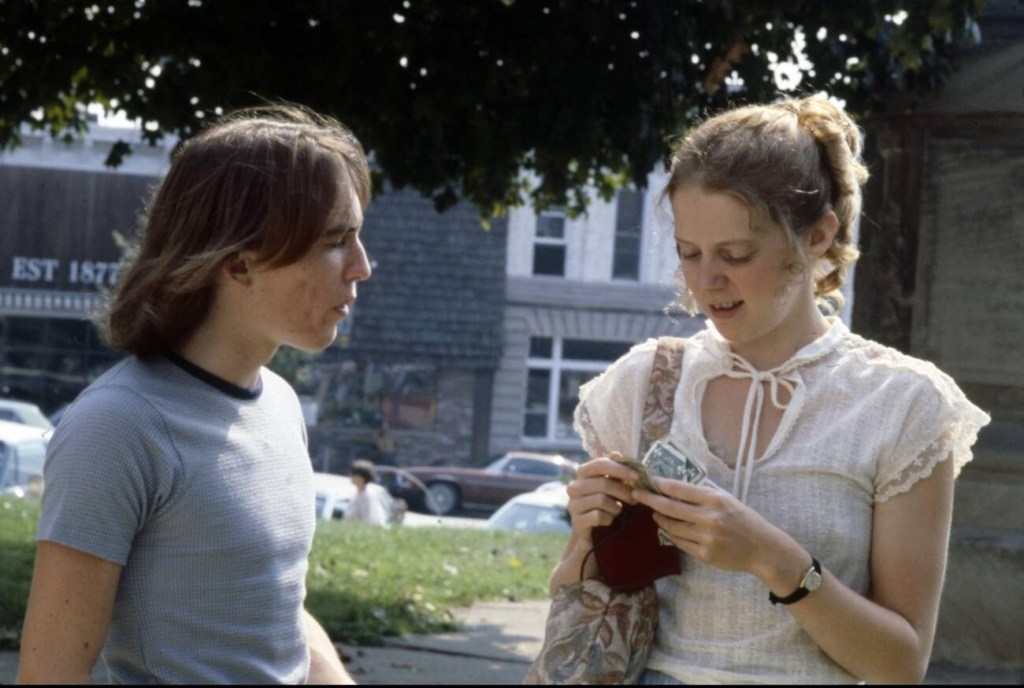
It is one of the film’s quietest insights: adulthood begins not when the group dissolves, but when the camera can no longer hold everyone in the same frame. Perhaps what held the group together was shared experience in high school, and their fathers working together in the quarries. Increasingly, they separate, without rancor; there are one-off scenes with Cyril and Dave, or Dave and Moocher, or Moocher with Nancy, the local supermarket cashier he’s embarrassed to admit loving—whom he then quietly marries in a civil ceremony attended by none of his friends (although he tells Dave). The separation is not dramatic or cruel; it is simply how lives begin to arrange themselves.
Peter Yates at Work
If Breaking Away feels unusually secure in its values—confident without being programmatic, sincere without pleading—its success flows directly from Yates. Yates created the conditions in which people, performances, and places reveal themselves honestly.
Yates arrived at Breaking Away with a résumé that pointed elsewhere. By the late 1970s, he was known primarily for muscular genre filmmaking a la Bullitt and The Hot Rock—commercial successes, kinetic bravura, stars and spectacle, and sometimes overcooked misfires like Mother, Juggs & Speed. And he was explicit that Breaking Away indeed a correction of sorts. After completing The Deep, he made a conscious decision not to follow success with repetition. “I said to myself that I had to do what I wanted,” he explained, “and that was not to follow The Deep with another action picture.”
That resistance to momentum is foundational to the film. Yates warned against allowing one’s work to be dictated by agents, accountants, or the echo of past success. He spoke about how easily “the fun you remember about making your first feature movie disappears if you are not careful,” and Breaking Away was conceived as a way of reclaiming that original seriousness of purpose. Shot on location in Bloomington, the film returned him, by his own account, to the excitement of his early years in British filmmaking, when scale was modest and attention paid to the small details.
When Yates spoke to students during production, he placed Breaking Away in the lineage of British social realist films he had worked on in the early 1960s—A Taste of Honey, The Entertainer, The Loneliness of the Long Distance Runner. These were films that treated ordinary lives with structural rigor and moral weight, and Yates was clear that Breaking Away belonged to that tradition. It was, as he put it, “a people’s picture”—not a youth movie, not a sports movie, but a story about four nineteen-year-olds confronting a deceptively simple question: who really owns and runs the town?
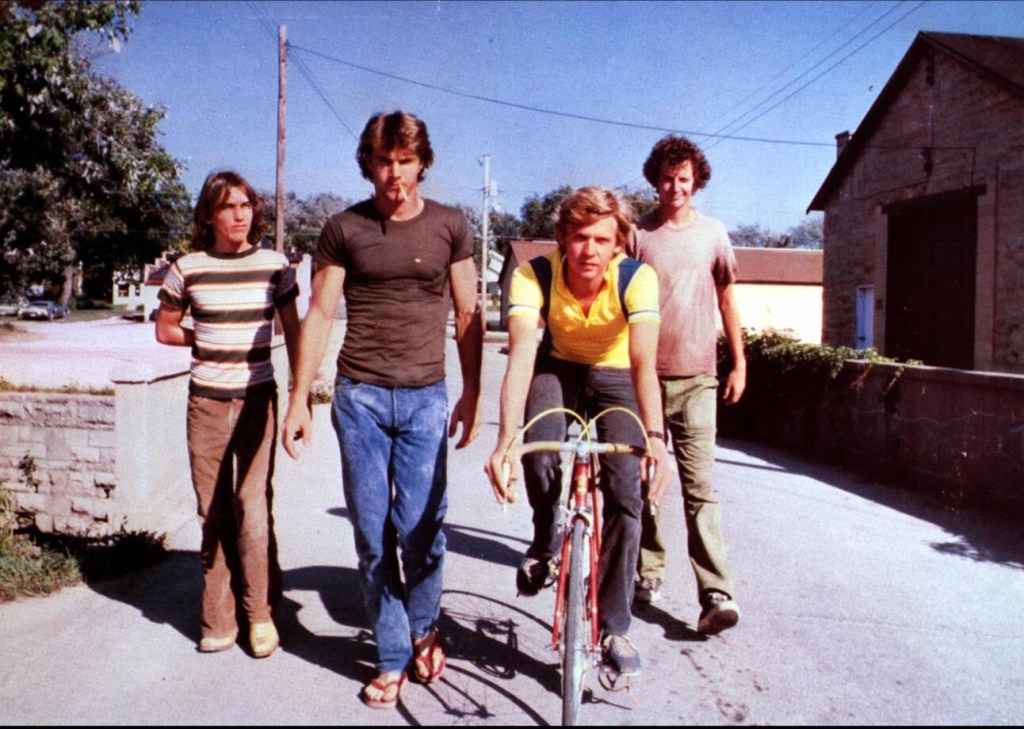
Age, for Yates, was never a novelty. “Being nineteen is a difficult age,” he observed. “You are not a full-fledged adult, yet you are no longer a child.” What interested him was transition—the moment when inherited identities no longer suffice and new ones have not yet been earned.
That sensibility helps explain his decision to cast relatively unknown actors in the four lead roles of Breaking Away, a marked departure from his work with established stars such as Steve McQueen, Dustin Hoffman, Raquel Welch, and Robert Mitchum. Fame, Yates believed, brought its own distortions. With younger performers, the work remained open—provisional, responsive, alive.
Some later Yates projects, like Suspect and An Innocent Man, arguably faltered because they feel less like expressions of conviction than a return to assignments shaped by, well, agents and accountants. Both are briskly made but most unconvincing as star vehicles, asking Cher to pass as a public defender and Tom Selleck as an everyman swallowed by the prison system—roles that strain against their established screen identities. (At least Suspect afforded Yates a reunion with Breaking Away’s Dennis Quaid.)
That contrast helps clarify what Yates was always most attuned to when things did work. His understanding of authority—on set and on screen—was precise but humane. “A director wants to feel he has complete control over his subject,” he is quoted as saying in the 20th Century Fox press kit, before qualifying what control actually meant. It did not require ego or tyranny. It required atmosphere: “the power to control and create an environment in which crew and actors can work,” and, crucially, the ability to listen. That ethos is legible throughout Breaking Away.
His sensitivity to class emerged the same way: earned, not abstract. When Yates first came to America, he believed it was a country without class divisions, in comparison to his native England: “That was, until I moved into Connecticut.” What makes the film work is Yates and Tesich found a way to dramatize class, as class becomes spatial: who belongs on campus, who lives nearby, who passes through, and who remains. “By bringing the university into the film,” Yates noted, referring to a decision made early to combine two different scripts Tesich was working on, “it made for a better balance, and a more interesting film.” The conflict is geographic, habitual, lived.
Equally important was Yates’ determination to portray the Midwest without condescension. “I wanted to portray the Midwest as a scenically beautiful place filled with Americans who still have respect for each other,” he said— “not as a place to escape from.” Bloomington in Breaking Away is neither romanticized nor diminished, just keenly observed.
This is why Breaking Away does not feel like a charming minor work by a capable craftsman. It feels exact. Deliberate. Considered. And that attention, exercised quietly and consistently, is present in every frame.
Writing Breaking Away
If Breaking Away feels unusually whole, secure in its tone, patient with its characters, resistant to unearned melodrama, that coherence owes much to writer Steve Tesich. Tesich’s working relationship with Yates was, by studio standards, highly unusual. He did not hand over a script and retreat, nor was he treated as a tolerated presence on set. Tesich was invited fully into the filmmaking process—on location in Bloomington, at dailies, and in the editing room. “We do not have the typical writer-director relationship,” he noted, describing a collaboration in which he sat beside Yates watching footage, offering thoughts on what should remain and what could go. The emphasis was not on authorship but on outcome. “In our collaboration,” Tesich said, “the best ideas prevail.”
Although Tesich was an Indiana University graduate and a former Little 500 racer, Tesich understood himself less as a confessional writer than as an observer, attentive to social patterns, rituals, and pressures. What he carried from Bloomington was not memory, but structure: the rhythms of town–grown tension, the symbolic weight of the Little 500, the quiet humiliations of proximity without access.
The screenplay does not argue about class; it simply places characters inside it. It does not editorialize about masculinity; it observes how young men behave when their inherited models no longer fit. His script trusts that meaning will emerge from honest, unspectacular, human interaction.
The Cutters
One of Breaking Away’s quiet radicalisms is that it is a male ensemble film that refuses mythic masculinity altogether and does so not in theory, but in lived behavior. What ultimately gives Breaking Away its authority is not simply that it understands young men on the cusp of adulthood, but that it cast actors negotiating that same unstable threshold, professionally, emotionally, philosophically.

Daniel Stern (later in City Slickers and Home Alone), making his screen debut as Cyril, arrived from the New York stage and never pretended to be at ease with film acting. “Movie acting is so frustrating,” he said bluntly. “I have a real love-hate relationship with the medium.” What troubled him was not exposure but authorship. “There is no control over your characterization,” Stern explained. “Your performance is ultimately created in the editing room under the director’s supervision.” In theater, he noted, the role becomes yours; on a film set, “the actor is not the most important person.” That ambivalence—rarely articulated so plainly by a young performer—finds its way directly into Cyril, the Cutter who clowns because clowning is the only space he controls. Stern understood the difference between occupying attention and owning it, and Breaking Away builds a character around that awareness.
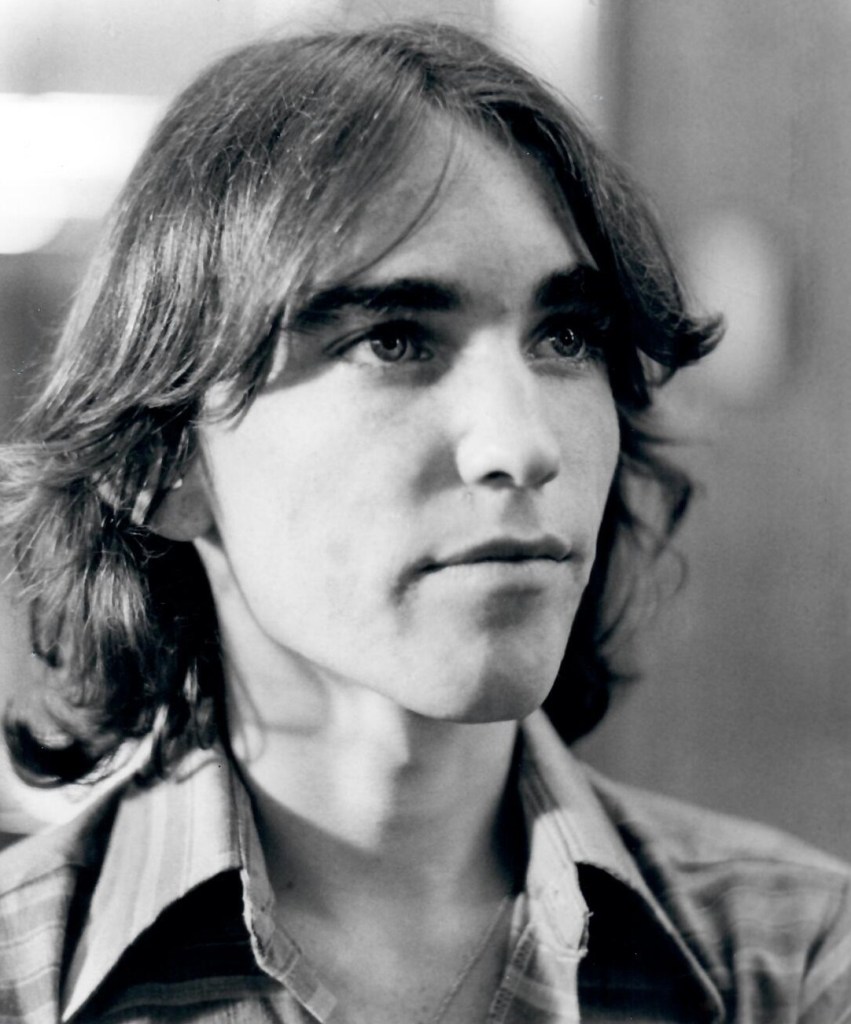
If Stern’s Cutter resists the system, Jackie Earle Haley as Moocher embodies someone already shaped by it. Haley had been famous since childhood (for the Bad News Bears films and Day of the Locust), and he spoke openly about the cost of that visibility. “It’s not easy being an actor before you are even in your teens,” he said. “I had problems with school. The other kids were jealous of me and somebody was always trying to beat me up.” Moocher’s volatility and vulnerability—his physicality, defensiveness about his height, his embarrassment at being in love—feels less like performance than a kind of residue from having to carry the Bad News Bears in Breaking Training and now trying to transition to adult roles despite not having classic Hollywood looks or height. While Janet Maslin praised his performance, saying Haley “has grown into an odd actor and a gifted one too,” she also noted his “almost dwarfish physical presence,” the kind of compliment that can put a guy in therapy, and a reminder of how at odds Haley’s presence was to traditional Hollywood archetypes.
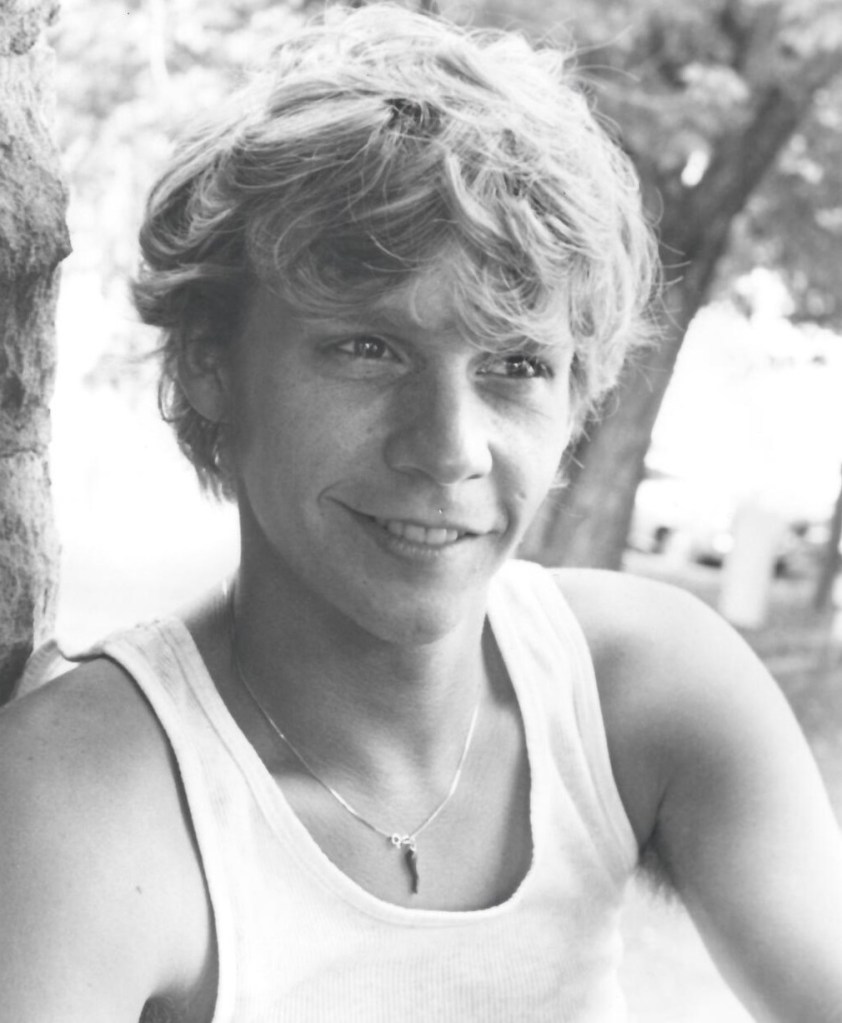
Where Haley had been defined too early, Dennis Christopher, playing the lead Dave Stohler, was struggling to escape definition altogether, almost thirty without much to show for it as an actor (he had starred in John Hancock’s California Dreaming the previous year). Christopher spoke candidly at the time about his lack of athletic confidence—“I was never very sports-minded in school… and I had never learned how to swim”—and about the genuine panic he felt during the quarry rescue scene. “Every stroke I take in water is in panic,” he admitted. That unease aligns precisely with Dave’s posture throughout the film: a young man attempting to will himself into a new identity through repetition, imitation, and sheer desire. His brilliant performance is rooted not in cleverness, but in embodying someone wanting something badly enough to risk embarrassment, exposure, or failure.
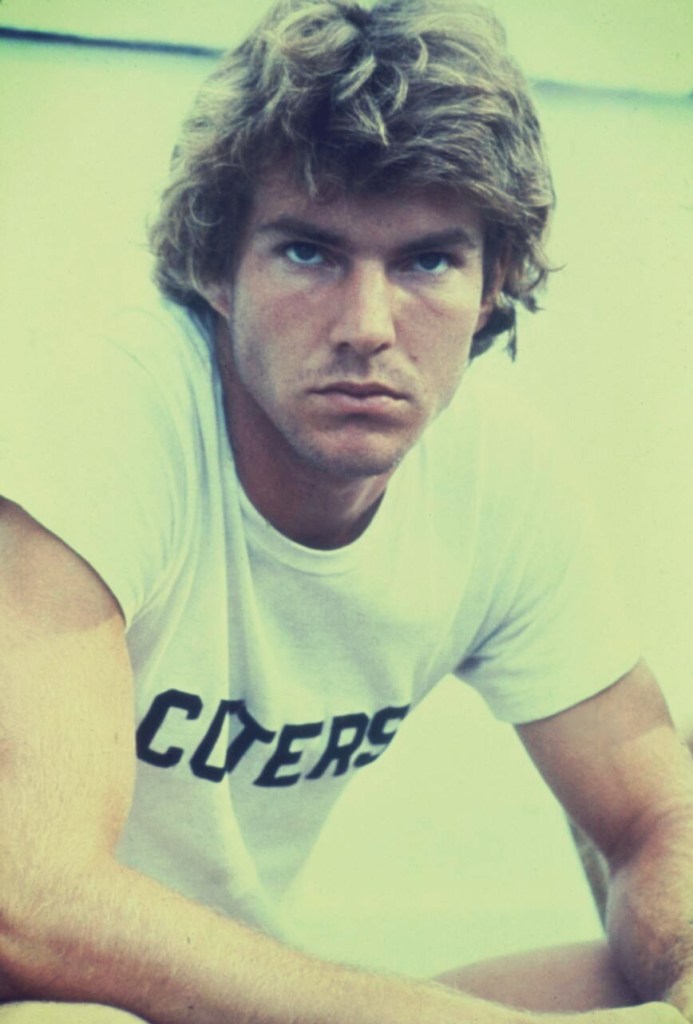
Dennis Quaid as Mike brings yet another version of becoming. At the time of filming, he was acutely aware of financial uncertainty and the pressure of comparison (his brother Randy had already had success in films such as Hal Ashby’s The Last Detail and Peter Bogdanovich’s Paper Moon). He admitted that his initial resistance to Mike came from the character’s jock identity. “When I first read the script, I hated Mike,” he said. “He could play a sport but was not much of a person in his relations with others.” What changed was his understanding of Mike’s emotional blockage. “Throughout most of the film his problem is that he is unable to express his feelings to his friends,” Quaid observed. “But at the end he’s able to let go.” Mike’s resolution comes not through escape but through repair: after muscling the Cutters forward when Dave is injured for a portion of the Little 500, he ends the race in an embrace with the brother he has spent the film butting heads with, the local policeman (played by Beverly Hills Cop’s John Ashton) charged with keeping the peace—a moment of earned harmony rather than triumph.
The Parents as the Film’s Secret Anchor
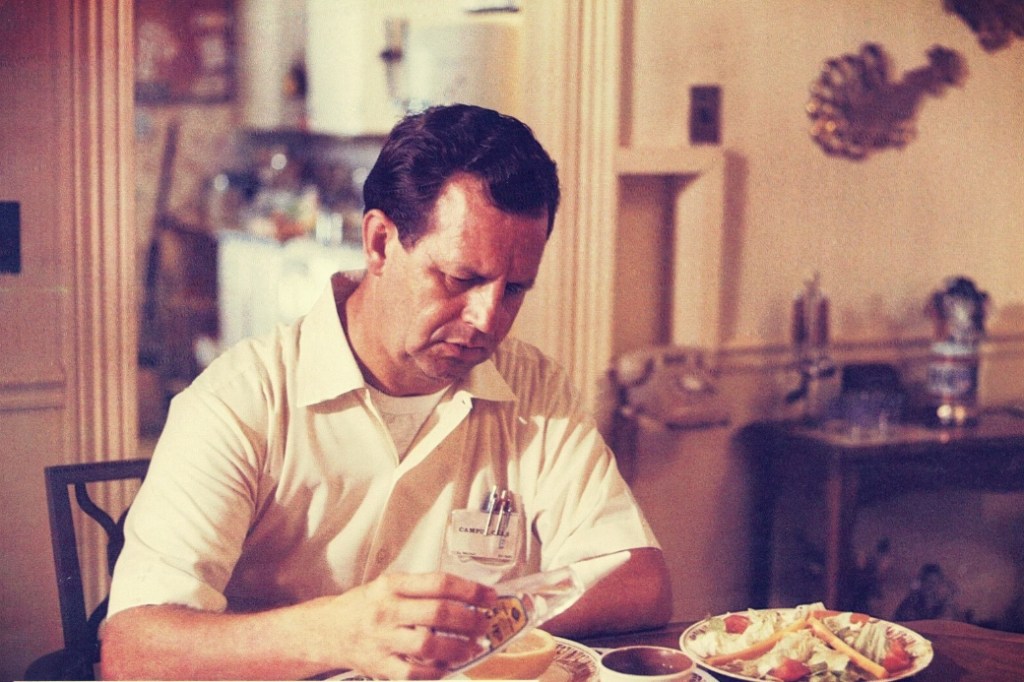
The emotional realism and gentle humor of recognizable family conflict in Breaking Away depend as much on Dave’s parents, Mr. and Mrs. Stohler, as on its protagonists. They don’t represent one-dimensional limits to be escaped, but because they embody what it means to keep living after dreams have been tested by time. Dave’s mother and father are not embittered or diminished figures; they are affectionate, teasing, and visibly bonded. They inhabit the world Dave is postponing, but they do so with little resentment. Their love is neither naïve nor exhausted, it is practiced, generous, concerned, aware of disappointments, facing challenges (Mr. Stohler’s heart is a concern) and yet open to evolution.
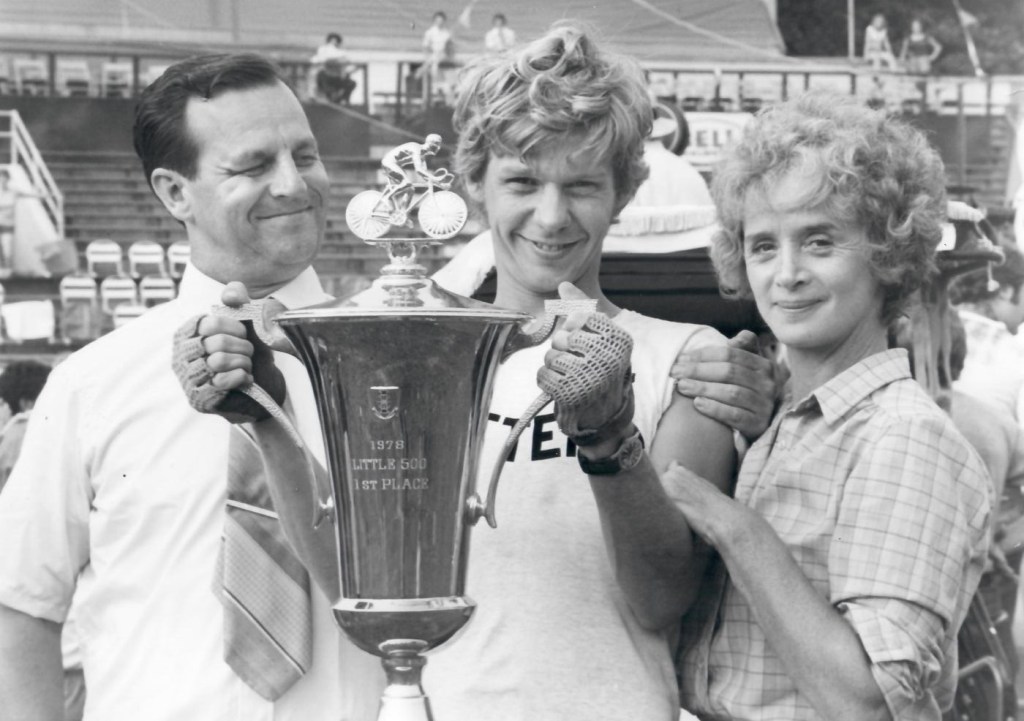
What the film understands, with a generosity you won’t find in John Huges’ ouvre, is that aspiration does not move in only one direction. As Dave’s obsession sharpens into discipline and his success becomes tangible, something reawakens in his parents. The Italian records once angrily dismissed by Mr. Stohler are taken down and played. A romantic evening unfolds not as nostalgia, but as rediscovery. The pregnancy that follows is not an ironic twist or grim reminder of responsibility, but a sign of renewed vitality. Even Dave’s father, so wary of Dave’s bicycle early on, takes up riding himself, not in competition with his son, but in quiet alignment with him.
This reciprocity—between Dave and his parents, between youthful yearning and lived compromise—gives Breaking Away its temporal depth. Moocher’s parents relocate to Chicago out of economic necessity; Mike’s brother finds stability by working within the system Mike resents; Cyril’s father offers understanding while quietly expecting defeat—a tension made visible in the film’s most poignant aside, when Cyril has no one to celebrate with after Little 500 victory because his father never bothered to attend. Against these partial, uneasy models, Dave’s parents stand apart—not as limits to be fled, but as proof that a life can endure disappointment without surrendering warmth, humor, or the capacity to keep going. Dave’s parents are neither cautionary tales nor moral arbiters. By refusing to sentimentalize them or turn them into archetypes, the film arrives at a bracingly humane insight: family bonds do not necessarily harden as life narrows.
Paul Dooley’s father is often remembered for his comic frustration, and his slightly angled, quietly ironic perspective defines the performance. The brilliant Dooley does not play the father as a joke; he plays him as a man whose intelligence has learned to coexist with compromise. “I consider myself a comic actor, not a comedian,” he explained. “I like getting into a character and letting it take me over.” Comedy here is not a bid for attention, but a way of absorbing disappointment without surrendering dignity.
Barbara Barrie brings a different, complementary authority. Classically trained and widely honored, she nonetheless gives a resolutely unshowy performance, rewarded with an Oscar nomination. Barrie plays a woman whose emotional intelligence has been refined by observing rather than directing, by absorbing conflict rather than escalating it. If Dooley’s father vents frustration outwardly, Barrie’s mother practices a quieter vigilance—monitoring the emotional weather of the household, registering shifts before they announce themselves.
Here, Peter Yates’s direction is essential. He does not frame the parents as obstacles to be overcome or values to be rejected. Their behavior doesn’t come off as scripted lines necessary to move forward a plot, but as habits, developed over decades of marriage. Youth may feel infinite, but adulthood is what remains when infinite choices become finite. The film neither romanticizes youth nor condemns maturity.
The College Students: Performance, Privilege, and the Illusion of Arrival
If the Cutters in Breaking Away live in a state of becoming, the college students appear, at first glance, to embody arrival. They move easily through sanctioned spaces and project the confidence of people who assume the world will continue to accommodate them. Yet one of the film’s subtle achievements is how thoroughly it demystifies that confidence, revealing it as another kind of performance.
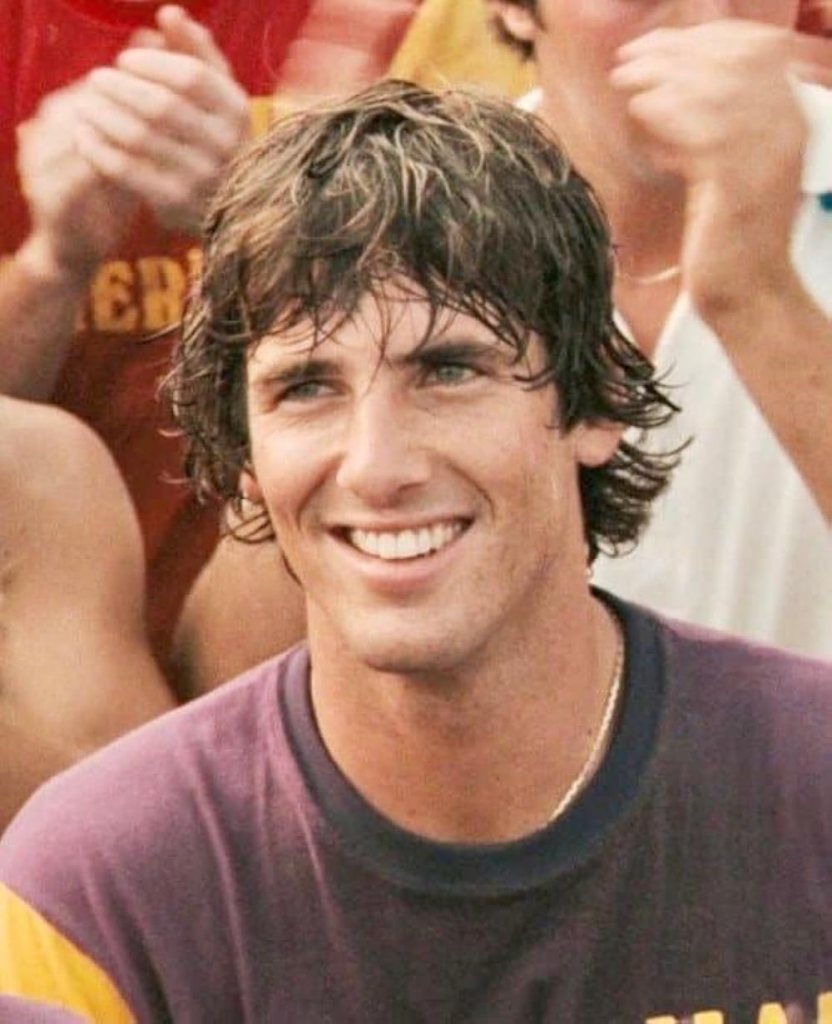
This is clearest in the figure of Rod, the fraternity leader played by Hart Bochner (best known as the coke-fueled Ellis in Die Hard). Handsome, wealthy, and assured, Rod functions as the Cutters’ primary antagonist, yet Bochner resisted playing him as a caricature. “I guess Rod could be called the villain in the movie,” he acknowledged, “but I tried to play him not as the typical college snob. He has to have some redeeming qualities to make him somewhat sympathetic.” That instinct aligns precisely with the film’s ethic. Rod’s authority derives less from cruelty than from ease—the ease of someone buffered by systems designed to absorb his missteps and keep him unknowing about people like the Cutters and the challenges they face. Rod’s swagger is maintained through ritual, peer affirmation, and exclusion, not any kind of self-knowledge.
And when he shows respect for Dave’s achievement at the end, it lands not as a transformation but an involuntary acknowledgment that merit can briefly outrun entitlement. Rod does not suddenly understand the Cutters, nor does the film pretend that one race overturns the structures that favor him. What matters is the momentary suspension of ease: the recognition that something has occurred outside the rituals and protections that usually organize his world. In that pause, Bochner gives Rod a flicker of grace without letting him off the hook.
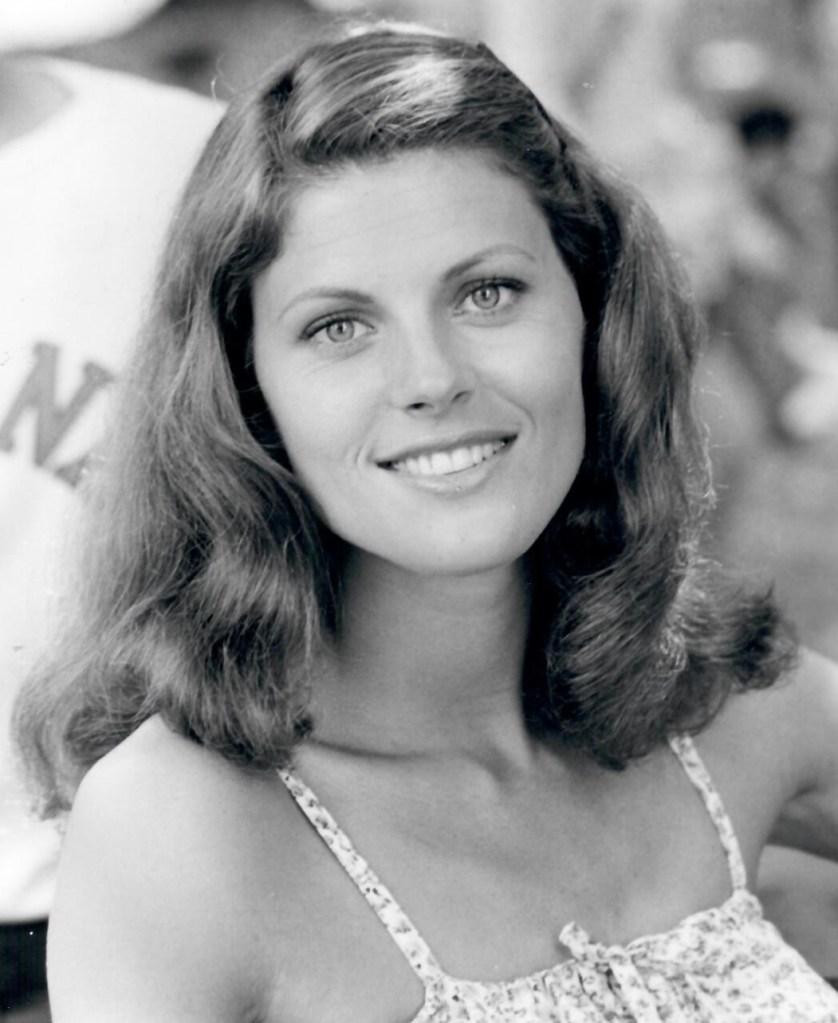
Robyn Douglass’s Katherine occupies a generous middle ground. The wealthy sorority girl who falls for Dave under his Italian ruse, she is neither cruel nor calculating, neither especially reflective nor malicious. Katherine is drawn to Dave not to who he is, but to how he performs—his accent, his affect, his romance—and when that performance collapses, so does the relationship. The film observes this without condemnation. You fully feel for her when Dave exposes his deception; he earns the slap she gives him. Yet Katherine proves more generous than Dave expects. She owes him nothing at the end and could easily meet him with distance or contempt. Instead, she tells him she has reconciled with her parents and is going to Italy (both ideas were suggested to her by Dave). His spark, however borrowed, helps loosen something in her. More importantly, she leaves him with a quiet faith he cannot yet claim for himself, making clear that she believes he is going somewhere, even when he does not.
What unites Rod and Katherine is not villainy, but insulation. Their futures feel expandable, their mistakes correctable. The Cutters, by contrast, experience consequences immediately and bodily. The students are not portrayed as monsters, but they are buffered.
Moments of Grace
From their first encounter, Dave and Katherine’s relationship is built on a fragile, winning contract of imagination rather than deception. When Dave nearly risks his life bicycling through traffic to return her dropped notebook and addresses her as “signorina,” Katherine does not expose him; instead, she listens, smiles, and asks, “What’re you… an exchange student or something?” She gives him the chance to define himself, when his whole life he has been defined as a “cutter,” which is not even an accurate description (the quarries have mostly closed). Dave chooses Italian not as a prank but as a shield—an aspirational identity that allows him to step briefly outside Bloomington’s rigid social hierarchy, where “townies” and cutters remain invisible to people like her.
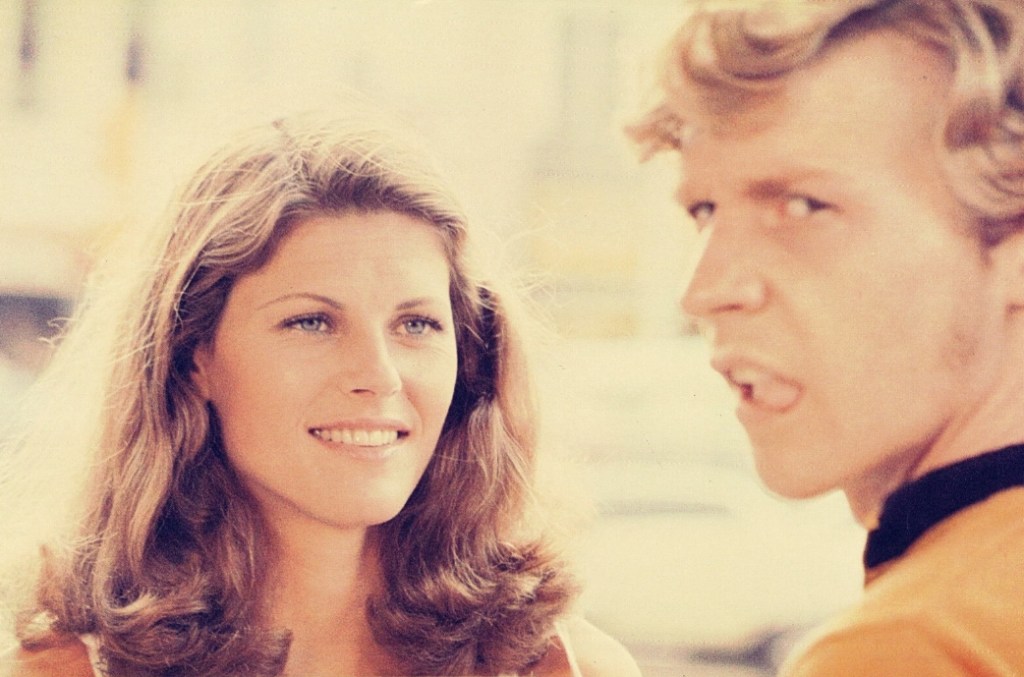
If Dave’s story explores imagination as survival, Mike’s arc confronts time as something cruelly uneven in its distribution. His speech about high school football and the erosion of possibility is one of Breaking Away’s most quietly devastating moments, and it performs essential emotional labor for the film:
MIKE
I really thought I was a great quarterback in high school. I still think so. I can’t even bring myself to light a cigarette, ’cause I keep thinking I should stay in shape. And you know what gets me? Living here and reading in the papers how some hotshot kid is the new star on the college team. Every year there’ll be a new one, and it’s never going to be me. I’ll just be Mike. Twenty-year-old Mike. Thirty-year-old Mike. Old, mean old man Mike. But the college kids will never get old, never get out of shape, ’cause new ones come every year. And they’ll keep calling us “cutters.” To them it’s a dirty word—but to me it’ll just be something else I never got a chance to be.
“I really thought I was a great quarterback in high school,” Mike says, watching the Indiana students practice from a distance, admitting not arrogance but a belief that still governs his body, his habits, even his inability to light a cigarette “’cause I keep thinking I should stay in shape.” What he articulates is not jealousy but terror of replacement: the knowledge that every year there will be a “new star,” while he himself will simply age: “Twenty-year-old Mike. Thirty-year-old Mike. Old mean old man Mike.” Against that steady erosion stands Indiana University, which never grows old because it continually refreshes itself with new bodies and new promise. The word “cutters,” hurled as a slur by students, becomes for Mike something more painful still: “just something else I never got a chance to be.”
The speech condenses the film’s quiet preoccupations of class, masculinity, time, and social invisibility into a single, aching confession. Its ultimate placement in the film, near the beginning, is crucial. After shooting the sequence, Yates moved the moment to much earlier in the film than it is found in the script, positioning it during the group’s first visit to campus after the rich kids invade the quarry, rather than after Cyril receives a black eye from some fraternity brothers later in the film and our four leads have returned to campus looking for the culprits.
The effect is humanizing. We understand the often angry Mike immediately, ensuring that even his volatility reads as fear rather than cruelty. Just as importantly, the scene insists that these young men are capable of painful self-diagnosis; they are not simply resentful townies but thinking people struggling to articulate what has already begun slipping away. If you view the film again, you’ll see the boys are wearing the clothes they will wear later in the film, and Cyril already bears the black eye, though he is kept in the background of this scene. I’ve called the film unflashy, but that restraint should not obscure how brilliantly—and precisely—it is edited, as Yates’ movement of this scene makes clear.
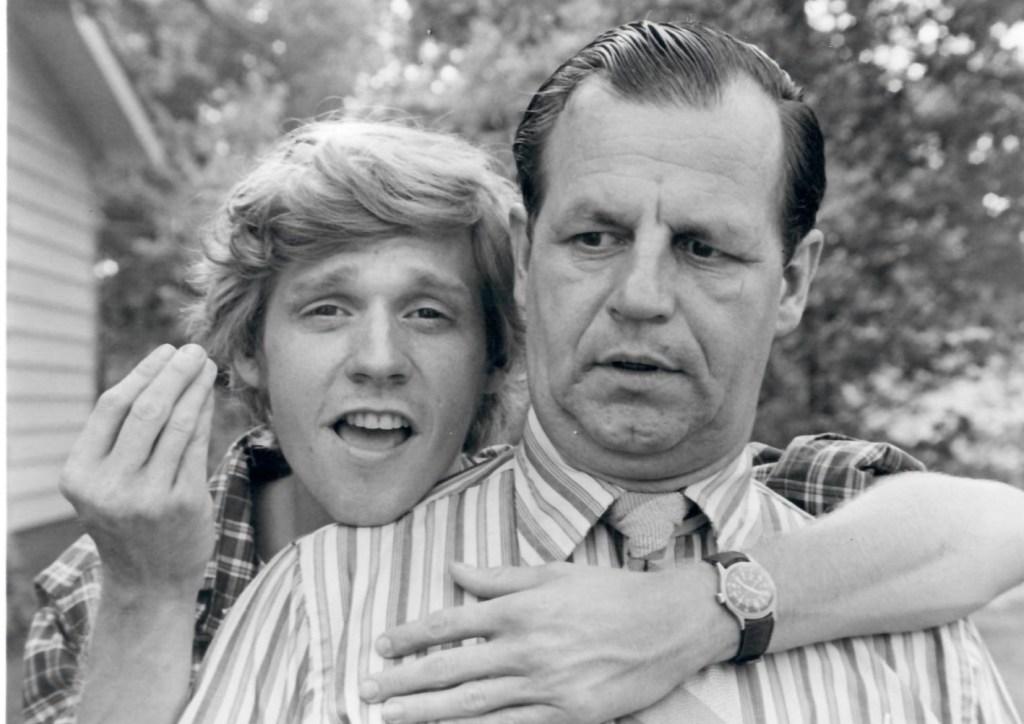
The film’s concern with family inheritance, what is passed down, and what can’t be, comes to the fore in one of the film’s most humane exchanges: a nighttime conversation between Dave and his father on the Indiana University campus itself. It is a space Mr. Stohler helped build but no longer feels entitled to inhabit. He explains that he sometimes returns to revisit the labor that once defined him. “I was one fine stonecutter,” he says, recalling not just skill and pride but youth itself: “young, slim and strong and damn proud of my work.” Yet what follows is not nostalgia so much as gentle dislocation. As the buildings rose, Mr. Stohler recalls, “it was like the buildings were too good for us.” No one explicitly has told the cutters they no longer belonged; the exclusion has been absorbed emotionally.
Dave listens without interruption. When Mr. Stohler laments that twenty years of labor have left behind only “the holes we left behind,” Dave replies simply, “I don’t mind,” only for his dad to reply “I do.” The lines are deceptively gentle. Dave has grown up inside those absences; the quarries are not symbols of loss to him, but places of freedom and play. Where Mr. Stohler sees erasure, Dave sees origin.
Their conversation turns, almost awkwardly, to the college entrance exam Dave and Cyril took. Mr. Stohler circles the subject cautiously—“how did…how did both of you do?”—afraid of hoping too much. Dave hedges in return, noting that “one of us did all right,” reluctant to claim success outright. When he finally blurts, “I won’t go, Dad. The hell with them. I’m not ashamed of being a cutter,” the declaration sounds like defiance but reads as confusion: an attempt to reconcile ambition with loyalty, future with past.
Mr. Stohler’s response is the moral pivot of the exchange. “You’re not a cutter. I am,” he says—not denying his own identity but refusing to let his son inherit it as fate. When he asks, “What, you afraid?” Dave answers honestly: “Yeah, a little.” The fear is not of failure, but of separation. Mr. Stohler offers no lecture, only affirmation. When Dave admits he did well on the exam, Mr. Stohler responds haltingly, “Well, that’s…that’s good,” and ends the conversation not with advice, but with care: “Your mom…she’s waiting.”
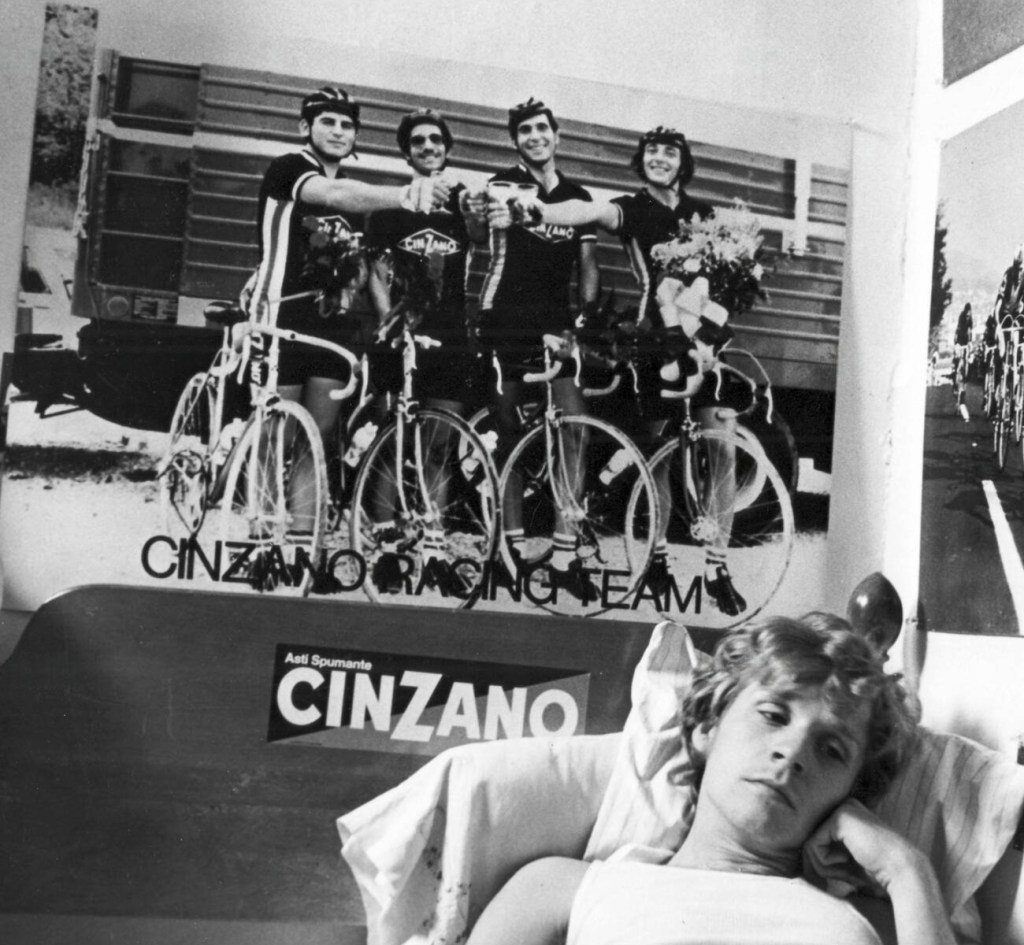
The scene’s power lies in its refusal of clarity, a quality that defines what is quietly one of the greatest father–son relationships in American cinema—achieved with remarkable plainness and without pretense. Mr. Stohler wants his son to have choices he never had yet cannot fully imagine what those choices demand. Dave senses that he may belong to another world but does not yet know how to enter it without loss.
That uncertainty is given concrete form in a sequence where the simmering tensions among the four Cutters are articulated during a conversation among Dave, Mike, Cyril, and Moocher at the quarry—a space once defined by escape, now marked by unease. Ostensibly, the argument concerns whether to enter the Little 500 bicycle race. In truth, it marks the beginning of the end of their shared adolescence. The fantasy sustaining them, that they might remain suspended together between youth and adulthood, can no longer hold.
Cyril, the most emotionally vulnerable of the group, clings hardest to permanence. When Mike explodes, declaring that the only thing he fears is “wasting the rest of my life with you guys,” Cyril’s tearful reply—“I thought that was the plan. We’d waste the rest of our lives together”—lands as one of the film’s most devastating admissions. It is not naïveté but desperation. For Cyril, who has no home life of quality to speak of, the group is not merely friendship; it is shelter. Mike’s cruelty, by contrast, is entirely consistent with his character. His anger is directed not at the race but at time itself, and he converts fear into dominance because it is the language he knows best.
Moocher and Dave register the shift more quietly. Moocher repeatedly attempts to widen the conversation— “Look, the time comes when we all…”—only to be shouted down, his instinct toward acceptance drowned out by resistance. Dave’s excuses about work, his reluctance to ride, his reflexive turn to humor and Italian endearments all suggest that he already understands what the others are resisting: that the bond they share is real but cannot hold. When Mike snaps, “Just drop that Italian shit,” the rebuke lands not as teasing but as exposure. Friendship alone cannot hold off adulthood.
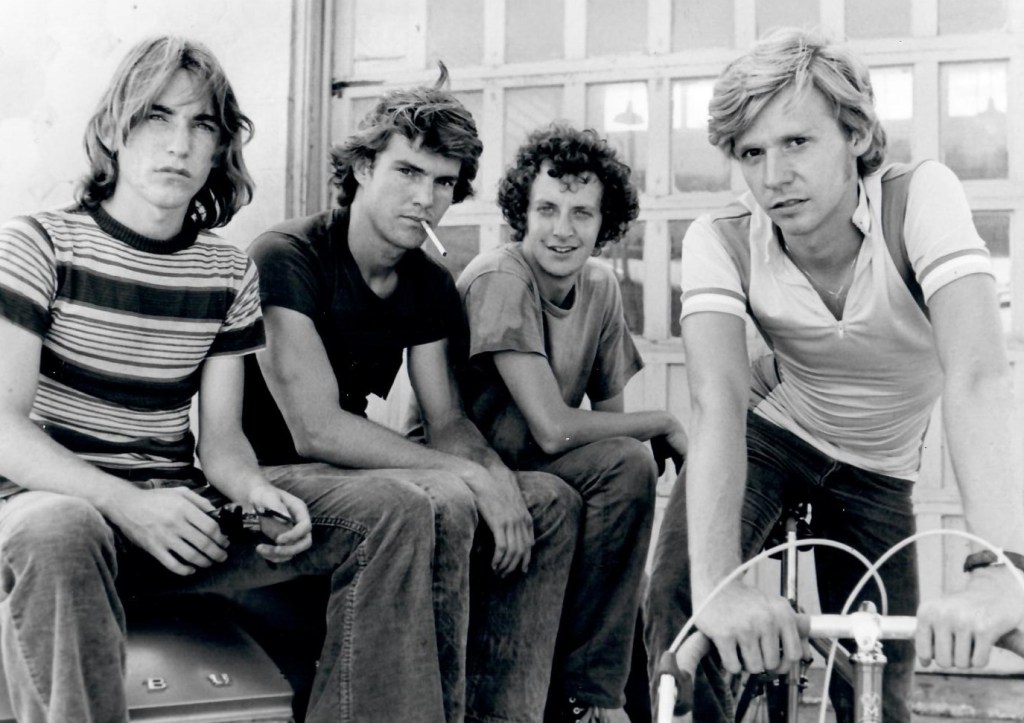
Crucially, the film refuses the fantasy that winning the Little 500 resolves anything. Victory does not grant the Cutters automatic admission to the university, nor does it erase class boundaries; instead, it completes Dave’s passage into the next phase of his life. Having already taken the entrance exam earlier in the film—tentatively, without confidence, but successfully—the win supplies what the test alone could not: recognition, leverage, and, one imagines, a cycling scholarship, turning possibility into reality (the charming resolution of the film finds Dave attending now attending the university, and suddenly spouting French to a pretty French exchange student he meets — by moving forward, he lives to dream again).
For the other three, the reward is more limited. They receive temporary recognition. For one afternoon, the Cutters occupy the center of a space that usually excludes them. They are visible, competent, coordinated. The Little 500 is neither a ladder out of town nor a myth of social mobility. It is a ritual that confers dignity without transformation. The Cutters’ triumph is real but finite. When the race ends, the structures that shaped their lives remain. The film neither mourns this nor posits it tragedy. By grounding its climax in a real event with real limits, Breaking Away avoids the falseness that plagues so many sports narratives. The race is not a miracle cure. It reflects the institution’s values—competition, discipline, visibility, controlled access—and allows the Cutters to test themselves against them.
That the film ends here is just one more act of beautiful restraint. The race does not close the story; it clarifies it. The Cutters have proven something—to themselves, to the town, to the audience—but not what movies usually promise. They have not arrived. They have only earned, for a moment, the right to be seen.
And that, Breaking Away suggests, is often how adulthood actually begins. They are no longer buried by an inherited past. But they still have to build their futures.
Why Breaking Away Endures
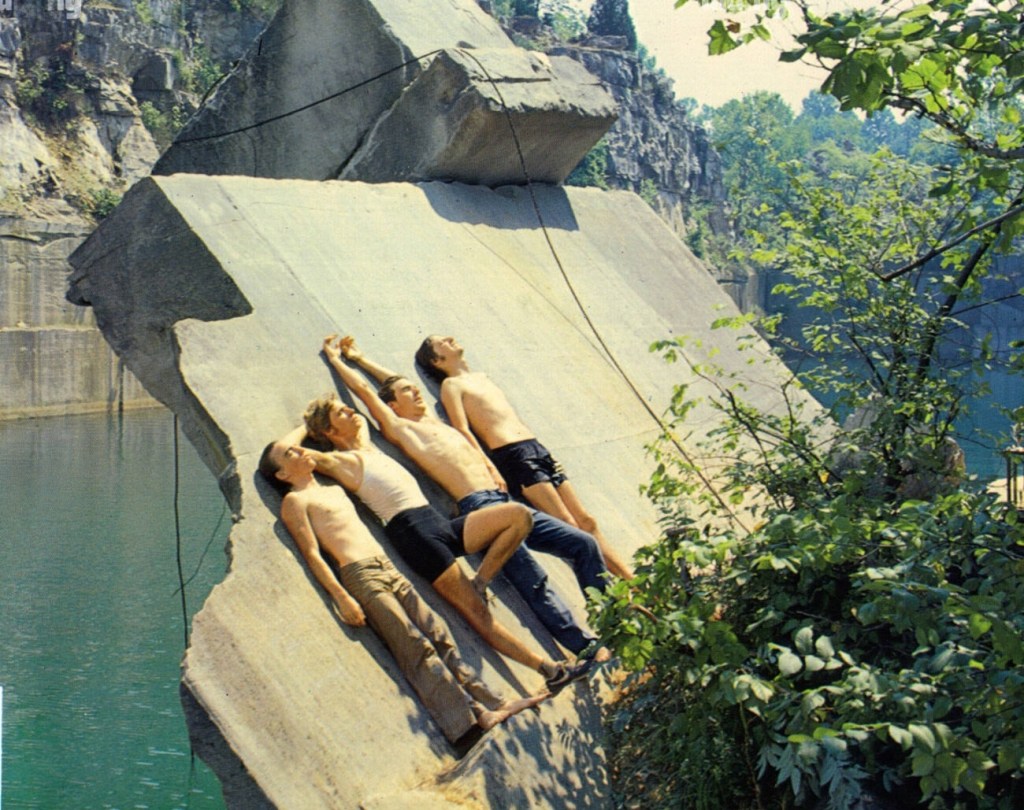
In reflecting on Breaking Away’s legacy, Peter Yates returned repeatedly to what he saw as the film’s central virtue: that it “does not condescend”—to its Midwestern setting, its characters. He believed the film endured because it was “very much about hope and possibilities,” a sensibility that stood in quiet contrast to the darker, more corrosive strain of much 1970s American cinema..
That accuracy is not accidental. What finally distinguishes Breaking Away from the long line of coming-of-age dramas and sports films it superficially resembles is that it is realistic without being cynical. Formally, the film follows a familiar arc: underdogs train, tensions rise, a climactic competition promises resolution. Yet nothing about Breaking Away feels prefabricated. This is why Breaking Away can depict a world that might otherwise feel dead-end without tipping into nihilism. It understands how dignity is continually negotiated under pressure. But it also allows for humor, pleasure, and fleeting victories, not as delusions, but as sustaining forces. The quarry swims, shared family meals, bicycles in motion, jokes tossed mid-stride—these are not fantasy escapes from hardship, but part of living itself, no less real than the bad stuff.
Auteurism, Judgment, and the Case of Peter Yates
At its strongest, the auteur theory does not insist on stylistic sameness or thematic repetition across every film in a director’s career; it argues instead for a governing intelligence, a set of instincts that recur when conditions allow them to surface. By that measure, Peter Yates presents a particularly instructive case—one that tests the limits of auteurism without discrediting it.
Yates’s filmography is famously uneven. He is responsible for many excellent films of the late 1960s and early ’70s—Robbery, Bullitt, The Friends of Eddie Coyle—works marked by procedural rigor, moral restraint, and an almost documentary respect for professional competence. Yet he is also associated with glossy miscalculations and compromised studio projects, including The Deep and Mother, Jugs & Speed, films whose tonal confusion and commercial calculation sit uneasily alongside his best work.
If auteurism were merely a matter of surface consistency, Yates would pose a problem. Breaking Away looks nothing like Bullitt. It shares little obvious DNA with Robbery. It has none of the hard-boiled masculinity or genre scaffolding that define The Friends of Eddie Coyle. And yet, this difference does not weaken the auteurist claim—it clarifies it.
What connects Yates’s finest films is not subject matter, but judgment: an instinct for when to hold back, when to let behavior speak, when not to editorialize. In Bullitt, that judgment manifests as an action sequence stripped of music and spectacle, allowing physical reality to carry meaning. In Eddie Coyle, it appears as a refusal to glamorize criminal life, insisting instead on its banality and exhaustion. In Breaking Away, the same intelligence operates in a different register, social rather than procedural, but the principle is identical.
This is why Breaking Away does not read as an anomaly or a lucky accident. It reads as a film made under ideal conditions for Yates’s sensibility, which he likely knew, as he spent six years trying to get it made. Where The Deep required him to film adventure at sea with ridiculously pretty people (Nick Nolte and Jacqueline Bissett), Breaking Away demanded something he had always excelled at: restraint.
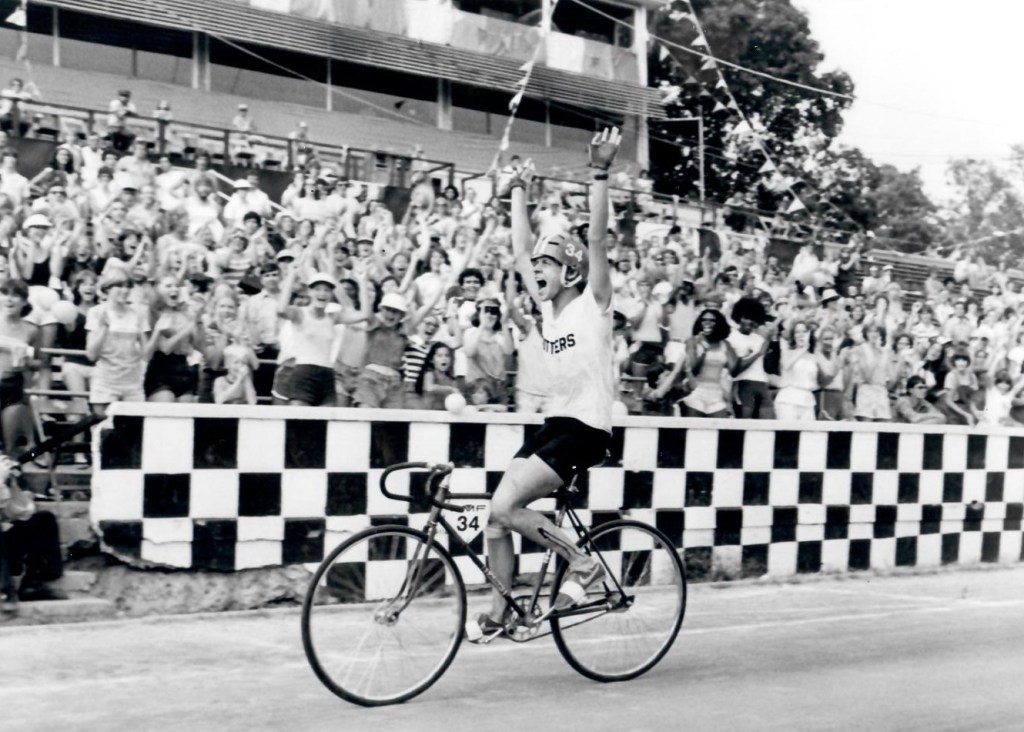
Seen this way, Breaking Away is not a contradiction of Yates’s career but a crystallization of it. Strip away genre expectations, commercial pressure, and star machinery, and what remains is a filmmaker deeply attentive to behavior, space, and consequence. In auteurism terms, Breaking Away is what happens when Peter Yates is allowed to direct without interference or outsized commercial considerations. By that standard, Breaking Away is not merely Yates’s best film, it is the film that makes sense of all the others.
Seen this way, Breaking Away clarifies not only Peter Yates’s authorship but the particular historical moment that allowed such judgment to register on screen. The film arrives at the tail end of a 1970s American cinema that still trusted realism, and behavioral truth—qualities that would soon be reinterpreted, amplified, or even resisted, as youth-centered stories moved into the 1980s era of Tom Cruise and The Brat Pack. The contrast becomes especially vivid when placed alongside the work of a filmmaker as formidable as Francis Ford Coppola, whose early 1980s explorations of young male identity in The Outsiders and Rumble Fish take a markedly different path.
The contrast is telling. Coppola’s The Outsiders and Rumble Fish approach similar thematic terrain through excessive stylization and myth, populated by impossibly photogenic stars (Tom Cruise, Rob Lowe, Patrick Swayze and Matt Dillon make for some mighty handsome “Outsiders”!). Fascinating as these films are, they strain toward transcendence, as if the basic subject matter required apology. Yates never makes that mistake. He refuses to elevate his characters into symbols or stage youthful conflict as opera. His confidence is quieter, and, to me, braver. He trusts that ordinary bodies, ordinary faces, and ordinary disappointments are enough. In doing so, he makes a film that feels not only more grounded than Coppola’s youth epics, but truer to lived experience—and far more enduring.
What ultimately makes Breaking Away canonical, though, is its worldview. It occupies a rare middle ground between bitterness and sentimentality. In this sense, it shares an unexpected kinship with Bruce Springsteen’s Born in the U.S.A., as described by Robert Christgau, who wrote:
“And while [Springsteen’s previous album] Nebraska’s one-note vision may be more left-correct, my instincts… tell me that this uptempo worldview is truer. Hardly ride-off-into-the-sunset stuff, at the same time it’s low on nostalgia and beautiful losers.”
That sensibility describes Breaking Away almost perfectly. The film refuses the purity of despair, understanding that relentless bleakness can distort as much as false optimism. the Cutters are not romanticized losers, nor are they a group of Rockys. They are people who find meaning inside limits they did not choose.
The film’s humor is not incidental—it is ethical. Comedy becomes a way of telling the truth without cruelty, of acknowledging hardship without aestheticizing despair. This is what makes Breaking Away not merely a great sports film or a great youth film. It captures how ordinary lives are actually endured: nothing in it is inflated, and no moment is wasted. I trust Breaking Away completely. Simply and without strain, it remains one of the greatest and most truthful American films ever made.
-30-





 Tremble...Sigh...Wonder...
Leave a comment