By James Kenney
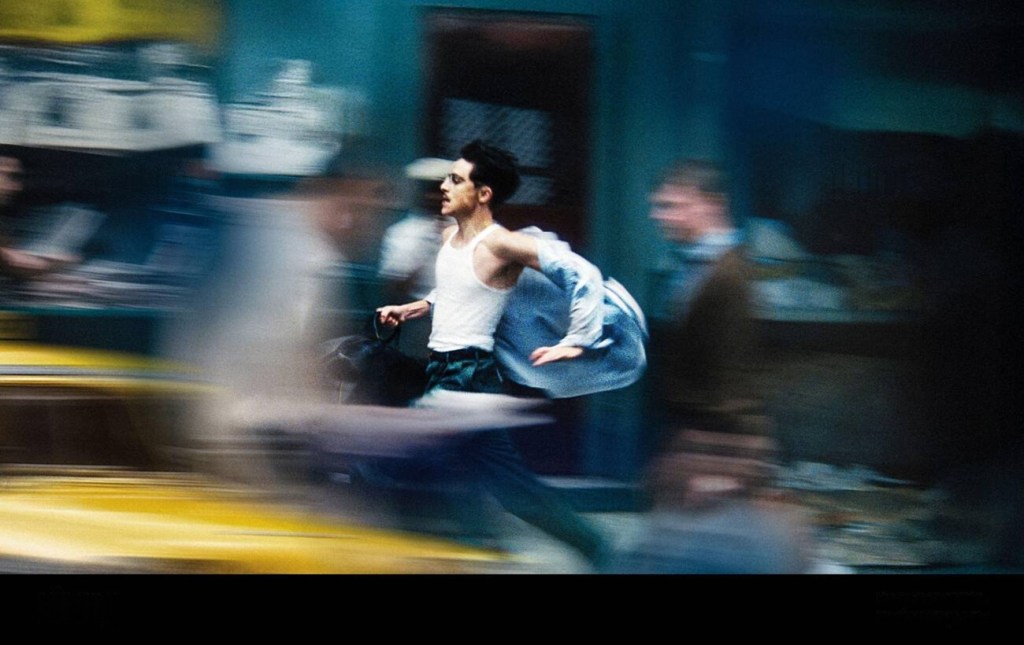
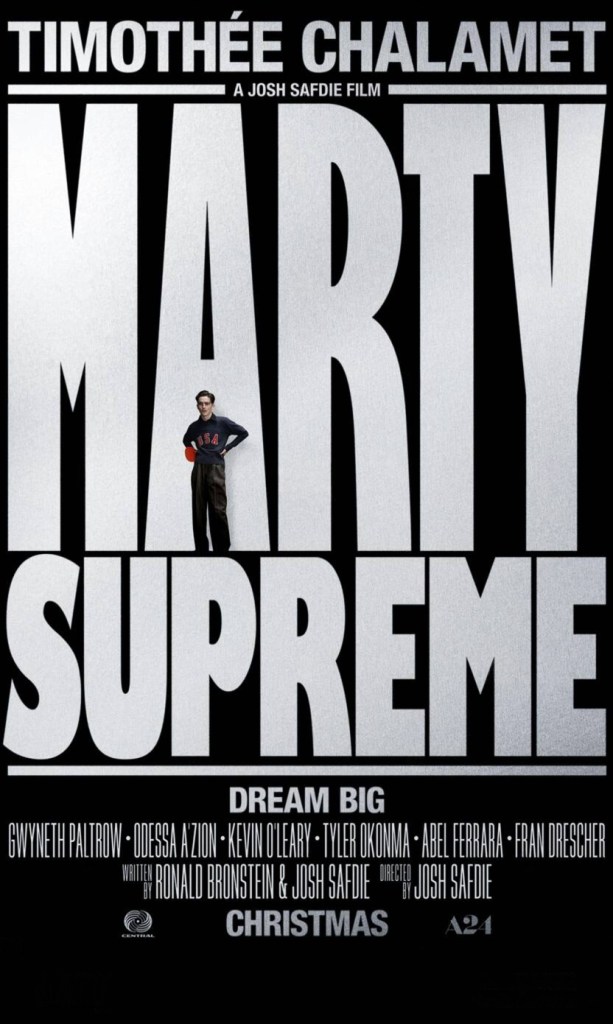
Josh Safdie’s Marty Supreme is a bracing, high-octane movie, one that announces itself immediately as a full-throttle experience and never lets up. Set in 1952 New York, the film follows Marty Mauser (played with ferocious charisma by Timothée Chalamet), a Lower East Side table-tennis hustler whose singular ambition is to become a world champion. The film’s conceit is that he’s not deluded, he’s truly one of the world’s best, and Marty is a striver in the purest sense: restless, abrasive, manipulative, and propelled by a sense of destiny that borders on mania. Safdie stages Marty’s ascent as a grotesque, blackly comic barrage with gunfire, explosions, thefts, betrayals, kidnapped dogs, seduced actresses, humiliated friends, and moral lines crossed so casually they barely register for the man crossing them.
It is, undeniably, a very good movie. The craft is formidable. Safdie—working with co-writer Ronald Bronstein—orchestrates chaos with extraordinary control, and the film’s restless camera, jagged pacing, and densely textured production design (by veteran Jack Fisk) conjure a “Lost New York” that feels sweaty, dangerous, and alive. The performances are uniformly strong: Odessa A’Zion as Rachel, Marty’s childhood girlfriend and emotional punching bag; Gwyneth Paltrow as a once-famous actress who mostly unconvincingly but entertainingly gets involved with Marty; Tyler Okonma (aka Tyler the Creator) as Wally, his tolerant, hustling partner; Fran Drescher as his needy, manipulative mother; and a scary dog-loving Abel Ferrara among the film’s gallery of grotesques.

And yet,despite admiring the workmanship,I found myself resisting the film more than I wished to.
Part of the issue is Marty himself. Chalamet is so charismatic a performer that you remain involved even when Marty becomes actively repellent (which is within minutes). The trick—and it is a trick—is that the people Marty abuses often turn out to be even worse than he is. Safdie constantly rigs the moral field so that Marty’s cruelty feels, if not justified, then at least survivable. You recognize his drive. You understand that he has a singular purpose, something burning inside him that gives his life shape. And the film goes to extraordinary grotesque (and often quite baroquely funny) lengths to show how far he’ll go to protect that purpose.
Still, this is a long movie—nearly 150 minutes—and you will feel its length. Without the presence of a few characters who genuinely understand or respect Marty’s drive, who extend him curiosity or empathy rather than fear or disgust, it would be exhausting to spend this much time with him. That the New York Times reviewer Manohla Dargis describes the film as “one of the most thoroughly pleasurable American movies of the year” surprises me. Marty Supreme is closer to what might be called the Cinema of Cringe: a sustained exercise in discomfort, humiliation, and abuse that places the audience in a state of unease almost immediately and then keeps tightening the screws, which has become a favorite of apparently self-punishing serious audiences of the 21st century.
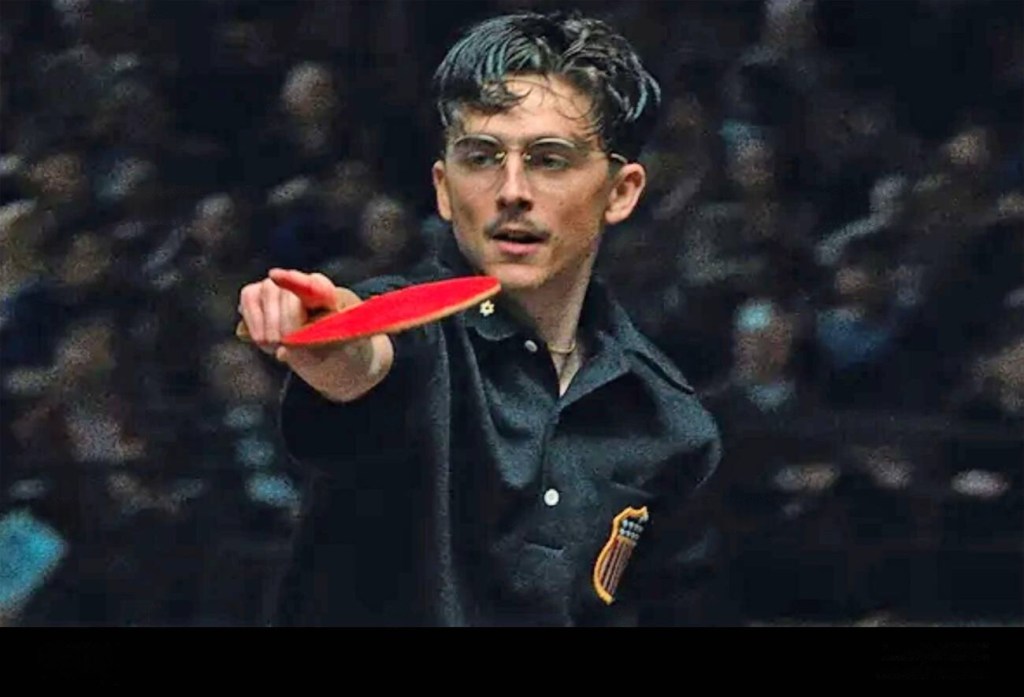
This isn’t exactly new territory for Safdie, who is certainly a master of it, a director of real quality—or for a broader strain of prestige cinema. I’ve long struggled with films like Babel, 21 Grams, and Little Children, works that seem to test their audiences by forcing them to endure pure misery acted out by credentialed actors of quality. There’s a feeling that the viewer, too, is being punished somehow, dragged through the mud alongside the characters. Even when Marty turns his aggression toward wealthy antagonists or cultural gatekeepers who arguably “deserve it,” I’m not convinced that we deserve what the film puts us through.
The film’s tonal and stylistic choices sometimes compound that discomfort. Safdie’s use of an anachronistic 1980s soundtrack, culminating in Tears for Fears’ “Everybody Wants to Rule the World,” is willfully strange and intermittently intriguing, but it never quite coheres for me. That final needle drop, in particular, fails to land with the resonance it seems to want, perhaps because Real Genius used the song so memorably forty years ago as its final needle drop. The gesture feels more self-conscious than revelatory.
None of this is to deny the film’s achievements. Marty Supreme is bold, muscular, and unapologetically original. It isn’t a sequel, it isn’t a reboot, and it has real nerve, something increasingly rare in American studio filmmaking. Safdie’s cinema always has an often hilarious black humor streak that separates it from the grim, humorless examples of the Cinema of Cringe that makes me hate the genre in general. I don’t hate Marty Supreme at all; I found it quite involving. Chalamet’s performance is a genuine feat of endurance and volatility, and Safdie remains one of the most technically assured filmmakers working today. I respect the film enormously: for its craft, for its performances, for its sheer audacity.
But what lingers for me isn’t exhilaration so much as abrasion: the sense of having been dragged through someone else’s obsession, impressed by its ferocity, but relieved when I’m finally freed (with a powerful final sequence that thankfully puts us back in the land of human empathy). Marty Supreme is a swell film. I admire it. I respect it. But I’m not sure I found any pleasure in it, and I suspect that is part of what Safdie wants.




 Tremble...Sigh...Wonder...
Leave a comment