
By James Kenney
Some movies are like restored sports cars — gleaming, expensive, and thrilling for the first few miles until you realize the impressive paint job can only go so far, and you’re not really into restored sports cars. Christopher McQuarrie’s Mission: Impossible – The Final Reckoning is that kind of spectacle: a gorgeous machine you admire more than you enjoy. It inspires concurrent awe and fatigue. It’s sleek, thunderously expensive, and built to impress, but somewhere beneath the noise and the glow of Tom Cruise’s determination lies a film that mistakes hero worship for heroism.
To be fair, Cruise has earned his reputation as the defining action star of the 21st century. Few actors have sustained such a streak of intelligent, beautifully photographed, old-school action filmmaking — from the best of the Mission: Impossible entries to Edge of Tomorrow, Oblivion, and the first Jack Reacher. These are movies made by a man who believes in craftsmanship, in physicality, in the cinematic tradition of doing it for real. But I sometimes miss the smaller-scale Cruise, the one capable of human fallibility in Jerry Maguire or the sly moral reckoning of American Made — a terrific late-period performance that suggests he could still surprise us.
Alas, Final Reckoning is a film less interested in surprise than in canonization. Cruise, or rather his put-upon character Ethan Hunt, spends what feels like fifty-five minutes of screen time being told how selfless, generous, and downright saintly he is. And when you think this thing has lurched to its end, the dead return from the great beyond just to reassure him. The living speechify about his purity of spirit throughout the whole damn movie. If the movie were a church, McQuarrie would be its head altar boy, swinging the incense in Cruise’s honor. The result is a spectacle that gleams — but mostly reflects the man who built it.
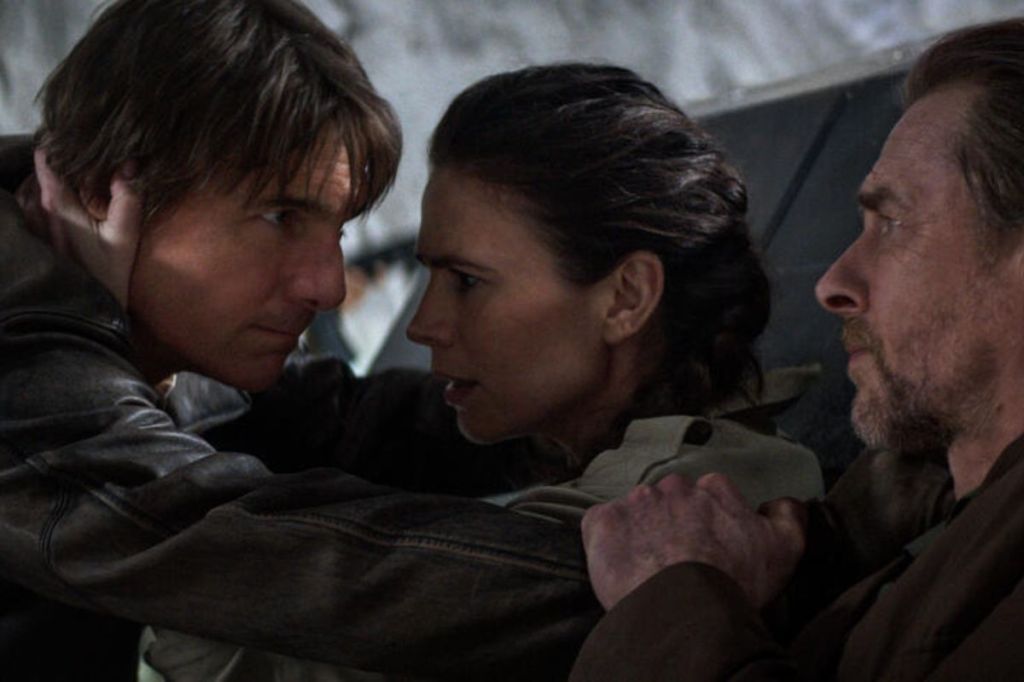
At nearly three hours, The Final Reckoning feels both endless and oddly hemmed in. After the relative box-office disappointment of Dead Reckoning, one senses that some kind of cost-cutting has taken place, even at a reported $200 or $300 million. Much of the film unfolds in caves, basements, and military command centers — rooms without windows, worlds without air. For a series that once turned the globe into a playground of over-the-top stunts amidst postcard backdrops, this installment feels cheaper, more confined, the few big outdoor action sequences the exceptions that prove the rule (and heavily leaned upon for the various trailers and promotional imagery).

If that impression is wrong, the filmmakers erred, because it sure feels that way. They could have rewritten or restaged some of these dialolgue-heavy scenes amid the hum of Paris streets or the glassy heights of Shanghai or some damn place, where the movement and sound of life might have provided a counterpoint to the plot’s endless strategizing. There are glimpses of such vitality, but mostly the film is stuck underground, surrounded by concrete and exposition. The claustrophobia compounds the problem of tone: long, airless sequences where characters explain the tortured, baroque machinations of the story, followed by equally solemn speeches about the nobility and sacrifice of Ethan Hunt — which is to say, of Cruise himself. It’s as though the film is choking on its own reverence.
Part of what once made Cruise so compelling was his volatility — that flicker of manic insanity behind his eyes, the risk of losing control. But somewhere along the way, he purged that element from his screen persona. Across the Mission: Impossible films, a succession of dazzling actresses — Emmanuelle Béart, Maggie Q, Paula Patton, Vanessa Kirby, Rebecca Ferguson, and now Hayley Atwell — have been in kissing distance of Ethan Hunt, only for Hunt to treat them with an almost priestly abstinence. By The Final Reckoning, this chastity has become part of his virtue. Hunt’s sexless selflessness is so total, so unearthly, that to kiss Atwell’s Grace — who all but begs for a flicker of heat — would be to betray the mission, or humanity, or perhaps his brand. He belongs equally to all, to faithful cohort Simon Pegg as much as to Atwell, which is either noble or weirdly neutered, depending on your perspective.
Cruise remains magnetic — that mix of focus and physical intensity is still unmatched — but for the first time in the series, the cracks show. He looks older here than in any previous outing, the telltale signs of cosmetic upkeep just visible beneath the floodlights. A touch of grey at the temples might have given Ethan Hunt something new: a vulnerability, a sense of mortality to match the film’s end-times rhetoric. Instead, everything has been buffed to the same ageless sheen. The human being we once glimpsed behind the mask has been smoothed away, leaving only the icon, preserved and embalmed in motion.
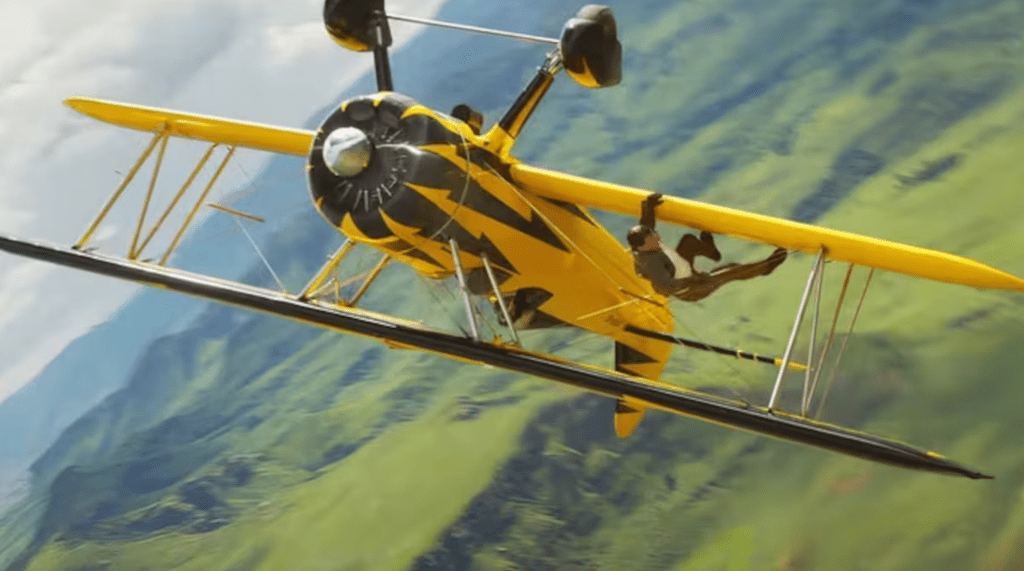
And yet, to deny the effort here would be unfair. You can feel everyone trying — straining, even — to deliver something worthy of the franchise’s legacy. The late stretch boasts a genuinely tremendous stunt sequence that reminds you why Cruise became the modern action standard in the first place. There’s pleasure, too, in some of the film’s playful reappearances: familiar faces from earlier missions popping up with humor and affection, offering glimmers of continuity that made me chuckle, a good thing in an otherwise rather sodden film. But McQuarrie and Cruise’s instinct to connect every dot sometimes tips into absurdity. The revelation that one supporting player I have never cared about is the son of Jon Voight’s character from Brian De Palma’s original Mission: Impossible isn’t a masterstroke of intertextuality — it’s tiresome fan-service (I couldn’t even tell you which Impossible film he showed up in first or anything he’s done in them). And while the movie aims to top itself with every set-piece, too many of its grand gestures echo what’s come before: the motorcycle leap in Dead Reckoning recalling James Bond’s in Goldeneye; the climactic biplane sequence climaxing Final Reckoning channeling Peter Hyam’s Capricorn One. The long mid-film underwater sequence is meticulously crafted, but it’s curious how the same modern critics who fault Thunderball’s superior drawn-out finale — all those stuntmen getting harpooned — give this one-man show of Cruise poking around a submerged submarine a pass.

Still, for all its repetition and gloom, there’s stuff here — real stunts, real suspense, real actors giving it their all. The problem isn’t a lack of effort but an excess of reverence, as if the filmmakers were afraid to let the thing breathe. Between the adrenaline and the admiration, we’re left once again in those same caves and windowless rooms, squinting for a glimpse of daylight — or maybe just a touch of humor— that might have made this final reckoning feel more alert, less embalming.
In the end, Mission: Impossible – The Final Reckoning plays like a deluxe Super-VHS tape unearthed from the back of the closet — tactile, overbuilt, and strangely comforting in its familiarity, but running on a philosophy the world has already outgrown. You pop it in, expecting the magic that once awed you to return, only to find the image fuzzed and the sound warbling under the weight of its own nostalgia.
Ethan Hunt’s final adversary is an A.I., a force of limitless digital malevolence pitted against a hero who still insists on doing everything by hand. All this is, as you might expect, part of what I enjoy about the film, including his ultimate victory over it (spoiler alert!). The irony, of course, is that Cruise himself has become both the warrior and the machine: the last analog movie star fighting to keep cinema human, even as his self-mythologizing turns him into something closer to an algorithm of perfection. It’s grand, melancholy, and a little absurd — a blockbuster built like an altar to its own obsolescence.


 Tremble...Sigh...Wonder...
Leave a comment