By James Kenney
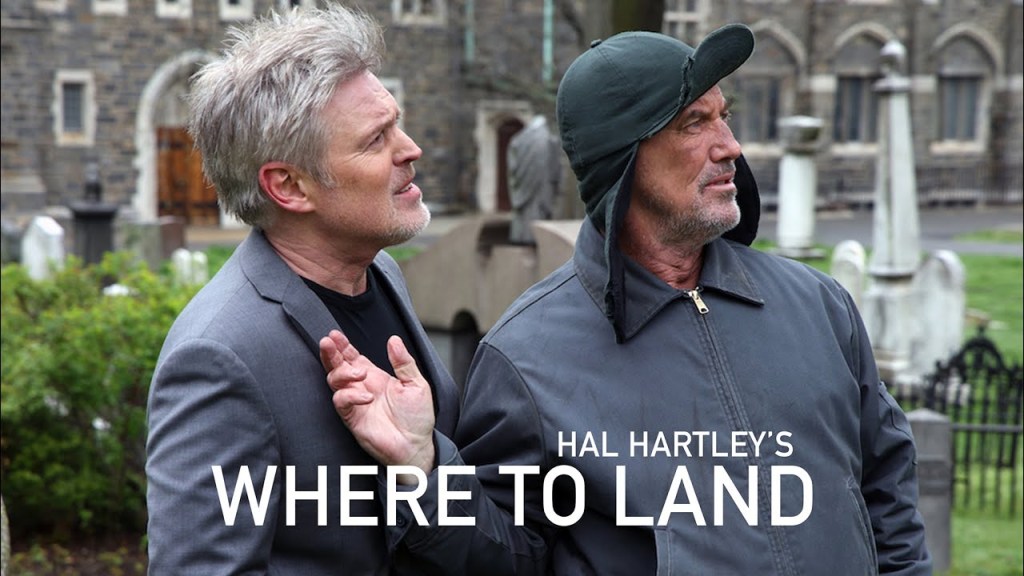
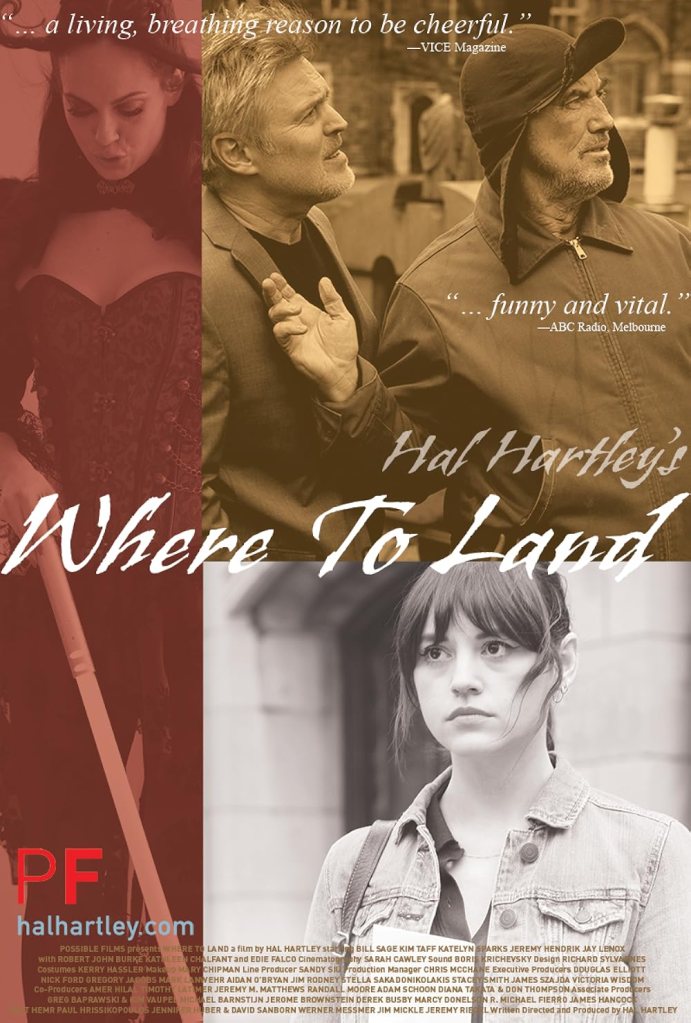
Hal Hartley has long been our great “deadpan tragedian”—an artist who makes the obvious feel newly profound, and the profound strangely obvious. He’s like an “arthouse filmmaker” Charles Schulz, and that’s a mighty compliment. His best films—Amateur, The Unbelievable Truth, Henry Fool, Surviving Desire, The Book of Life—conjure an improbable alchemy of wit, grace, and philosophical ache. They remind us, as I wrote upon release of Ned Rifle, that it’s okay to be unpopular if you’re telling the truth beautifully, as Hartley usually does. Where to Land. his return to filmmaking via a Kickstarter campaign after some time off in which he wrote a great novel among other things, continues that mission, even if it lands a bit shy of the dazzling lift-offs I’ve come to expect.
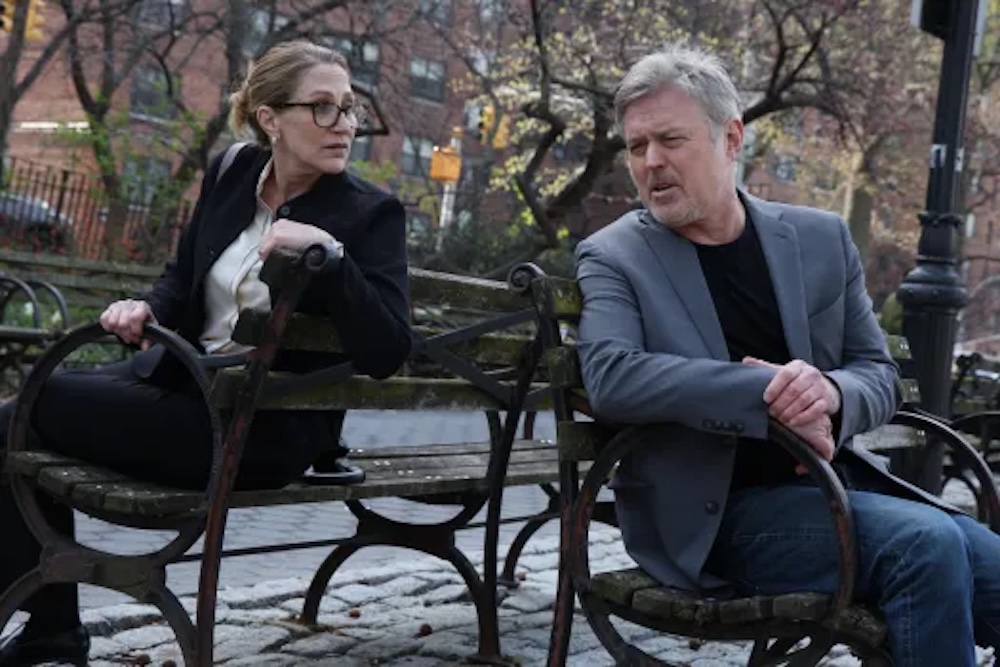
Joe Fulton, a semi-retired director of romantic comedies, decides to have his last will and testament drawn up and even applies for a job as an assistant groundskeeper at a cemetery—moves that prompt his dramatic girlfriend, young niece, neighbors, friends and strangers to conclude he is dying. Over the course of a single day, Joe scrambles to untangle the misunderstandings and wrestles with what new aspirations are fitting for a man of his age—where, exactly, should he land? The film returns us to familiar and welcome Hartley terrain: philosopher-artists, philosopher superintendents, women smarter than everyone else, and conversations that sparkle like proverbs leading to accidental epiphanies. At one point early, Emily, a PhD candidate writing about Fulton, puzzles out a thesis regarding his work—one that might as well describe Hartley himself:
“Ultimately, [Fulton’s] comedy lies in showing what is perfectly obvious to any thinking person. Thoughtful people laugh because it’s a shock to be reminded how the obvious is avoided in everyday life. Unthoughtful people are maybe a little unsettled, not sure if they understand. Perhaps they’re even threatened. But being uncertain, even threatened, is the beginning of thinking.”
Hartley’s films have always lived in that space between the thoughtful laugh and the unsettled silence. Where to Land honors that lineage with crisp dialogue, moral curiosity, and an ensemble of familiar collaborators—Edie Falco, Bill Sage, Robert John Burke—joined by newcomers who inhabit Hartley’s universe with the poise and musicality his work demands. Yet this time, the overall machinery feels more earthbound. Perhaps the Kickstarter-scale budget shows its seams: Hartley’s mise-en-scène, often balletic in its blocking and sly choreography, feels more functional here, the camera setups simpler, the filmmaking rhythms less musically precise. Hartley’s characteristic wit and philosophical snap remain, but the images don’t dance for me as they did previously, including late works like the underseen Meanwhile.
Having read the published screenplay—breezily constructed and filled with Hartley’s humane humor—I found myself anticipating its climax: an impromptu, accidental dinner party at Joe’s apartment, a gathering involving characters who’ve mostly never met before that, on the page, feels like an epiphany, as Joe is forced to use the silverware he was grousing about when drawing up the will earlier . In the finished film, this sequence never quite takes flight. The final notes, while faithful to the script, feel unfinished and maybe a little rushed—as though Hartley couldn’t marshal the resources to properly stage the crescendo he envisioned, or perhaps actors filmed their bits on different days, keeping the potentially wonderful anarchy of the sequence moored to the proverbial dock. The result is an ending that gestures toward transcendence but stops short of achieving it.
Still, there’s deep pleasure in watching Hartley continue to work, to think, to film. Where to Land may not pierce like Amateur or astonish like Henry Fool, but it’s unmistakably the work of a master still wrestling with how to tell the truth plainly, beautifully and humorously. Even when his wings feel clipped, Hartley reminds us: being uncertain, even threatened, is still the beginning of thinking.

 Tremble...Sigh...Wonder...
Leave a comment