
By James Kenney
May, 2025
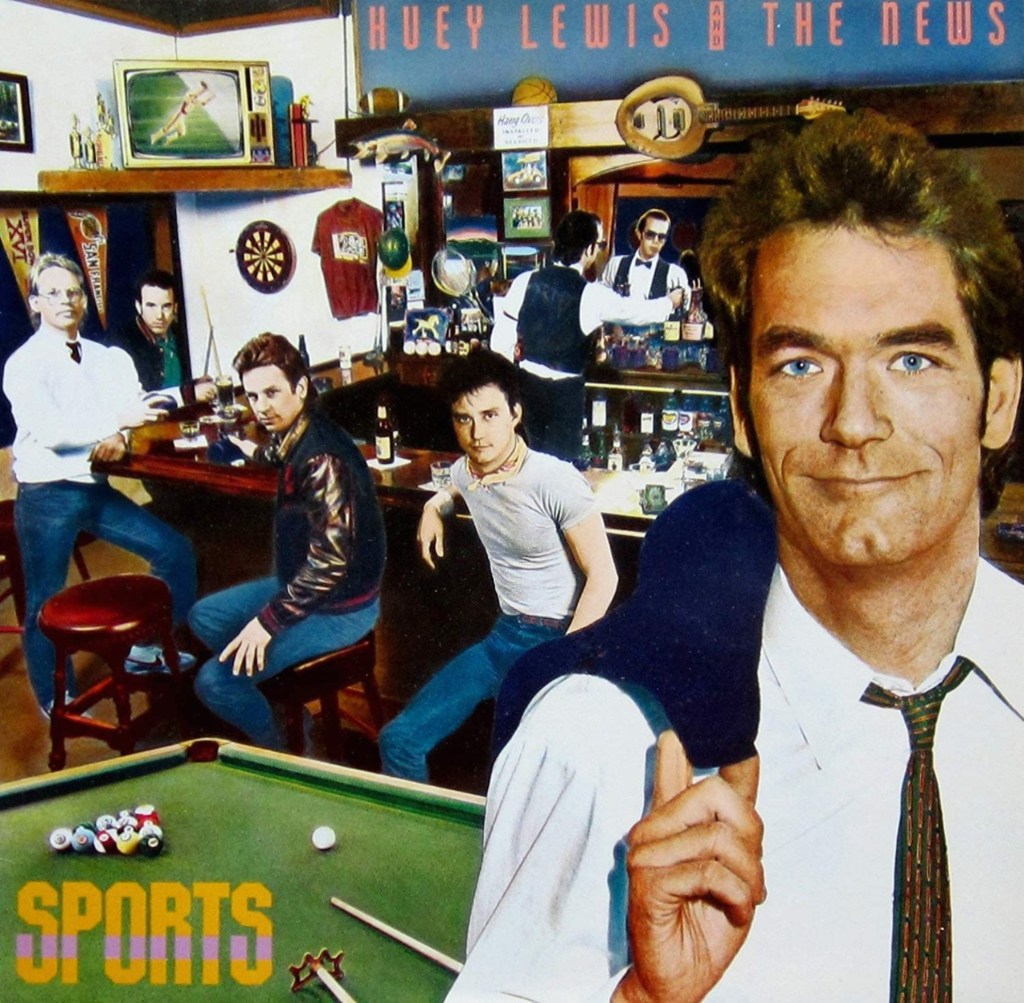
Can an object be your best friend? In the summer of 1983, when I was twelve years old, Huey Lewis and the News’ Sports album became the soundtrack of my life at a moment when I didn’t even know how much I needed one.
My favorite song that summer was “I Want a New Drug,” though it understandably made my dad nervous. The title alone sounded provocative, and I think he was worried about what kind of message it was sending. But one afternoon in our Staten Island kitchen, my older brother John—whom I usually clashed with—offered an unlikely lifeline. “Oh, it’s okay,” he said, “it’s about love.” He said it casually by the refrigerator, and my dad gave a small nod of assent. Just like that, I was officially allowed to be a Huey fan.
“I Want a New Drug” is a funny, clever song where the singer wishes for a high that mimics being in love, meaning what he actually wants is, you know, love. To quote Andrew McCarthy in St. Elmo’s Fire, “Devilishly clever.” Lyrics like “I want a new drug / One that won’t make me sick / One that won’t make me crash my car / Or make me feel three feet thick” balance humor and honesty in a way that instantly appealed to me. It was just one of five Top 40 singles off Sports, a massively popular album that defined a pop/rock/MTV moment in ‘80s rock. I listened to it obsessively, playing it over and over each day. Despite my growing curiosity about pop music in general—1983 was the launch of New York’s Z100, a station in New York that still plays current hits today—Sports’ blend of harmonies, harmonica, horns, heavy metal guitar and Huey felt like it was made just for me.
Sure, I also loved The Police, Michael Jackson, and Madonna. But there was something specific and grounding in Huey’s good-natured, straight-shooting vibe. As a heterosexual white boy entering puberty, I felt awkward, uncertain, and emotionally unmoored. I admired Boy George’s androgynous style, the hip-hop edge of Run DMC, the wild genius of Prince—all of them helped expand the idea of who and what could belong in pop music. MTV was just beginning to reimagine representation after Michael Jackson forced them to. But that summer, I was a boy who didn’t yet know what to do with his new feelings, especially his interest in girls, and I gravitated to the kind of good-natured emotional directness Huey Lewis offered.
Maybe that’s partly because, just a year earlier, my mom had passed away after a long battle with brain cancer. I’d spent much of that time in a daze, understandably withdrawn. My dad was doing everything he could, but he had to keep working full-time, commuting hours each day from Staten Island to teach in the Bronx at Manhattan College. He was kind and present when he could be, but the house often felt quiet and empty. I didn’t have anyone to explain what growing up would feel like, and what losing a parent would do to you. What helped, strangely but truly, was Huey.
That album’s upbeat attitude and calm, centered worldview helped anchor me. It told me, through song, that the world still made sense: girls were good, drugs were bad, and Vietnam veterans deserved better treatment from the country they served. It was music I could trust and sing along with in. And so, all summer, I wore my headphones and let Sports guide me. I didn’t have the words at the time, but Huey gave me his: “I finally found a home / In a song” in the second song on side two.
Looking back now, I know what that album really gave me. It gave me hope. In a season of loss and confusion, it made me feel, to use a modern term, “seen.” It wasn’t just an album—it was a best friend. Long live Huey Lewis & The News.


 Tremble...Sigh...Wonder...
Leave a comment