By James Kenney
Fred Olen Ray is a prolific “B movie” filmmaker, a term that is used inaccurately of course as there are no such things as B films anymore (the cheaper film that would accompany an “A picture” back when Hollywood supplied double features for your dollar), but the term is applied to Ray with affection. If Ray were around when they made B movies, he would have been the King of the B’s, due to his lack of pretension and his ability to get things done and on budget. While Ray has occasional artistic impulses, and puts creative effort into things like foreground miniatures to help sell a spaceship crashed in the desert on a budget of fifty bucks, he has always made films to try to sell them for profit so that he can than generate the budget for the next.
Ray, who began his filmmaking career at a very young age serving as a set photographer on Ken Wiederhorn’s 1975 Shock Waves with John Carradine and Peter Cushing, has proven an efficient and pragmatic survivor adaptable to changes in the market, directing memorable drive-in fare such as Armed Response in the 80s with David Carradine and Lee Van Cleef, episodes of the gay vampire show The Lair for HereTV! in the early 21st century, and more recently family Hallmark channel movies starring the like of Chevy Chase and Viveca A. Fox with titles such as Christmas in Vermont.
You have some action sequences that you want to recycle in a new movie? Hire Ray and you’ll get an amiable action lark starring Treat Williams where he interacts with scenes previously filmed for big budget Hollywood films such as Cliffhanger or Terminator 2. You want an erotic thriller in the wake of Basic Instinct? Ray will overcome working with a sexy but troubled Tanya Roberts to deliver a big money maker in Inner Sanctum and its sequel Inner Sanctum 2. You want someone to come in and shoot some new bits to save a picture deemed unreleasable? Ray has been brought in to bring a sinking ship to shore more than once, most memorably in the late 1980s with Moon in Scorpio starring Brit Ekland and William Smith, where Ray reworked much of an incoherent film, which he admits still makes little sense, but it proved to be a huge video hit after his substantive tinkering. And when Ray realized the snappy title Moon in Scorpio actually made no sense in the context of the film, he wrote a bit of nonsensical but good sounding dialogue to try to explain it to the seven viewers who may care.
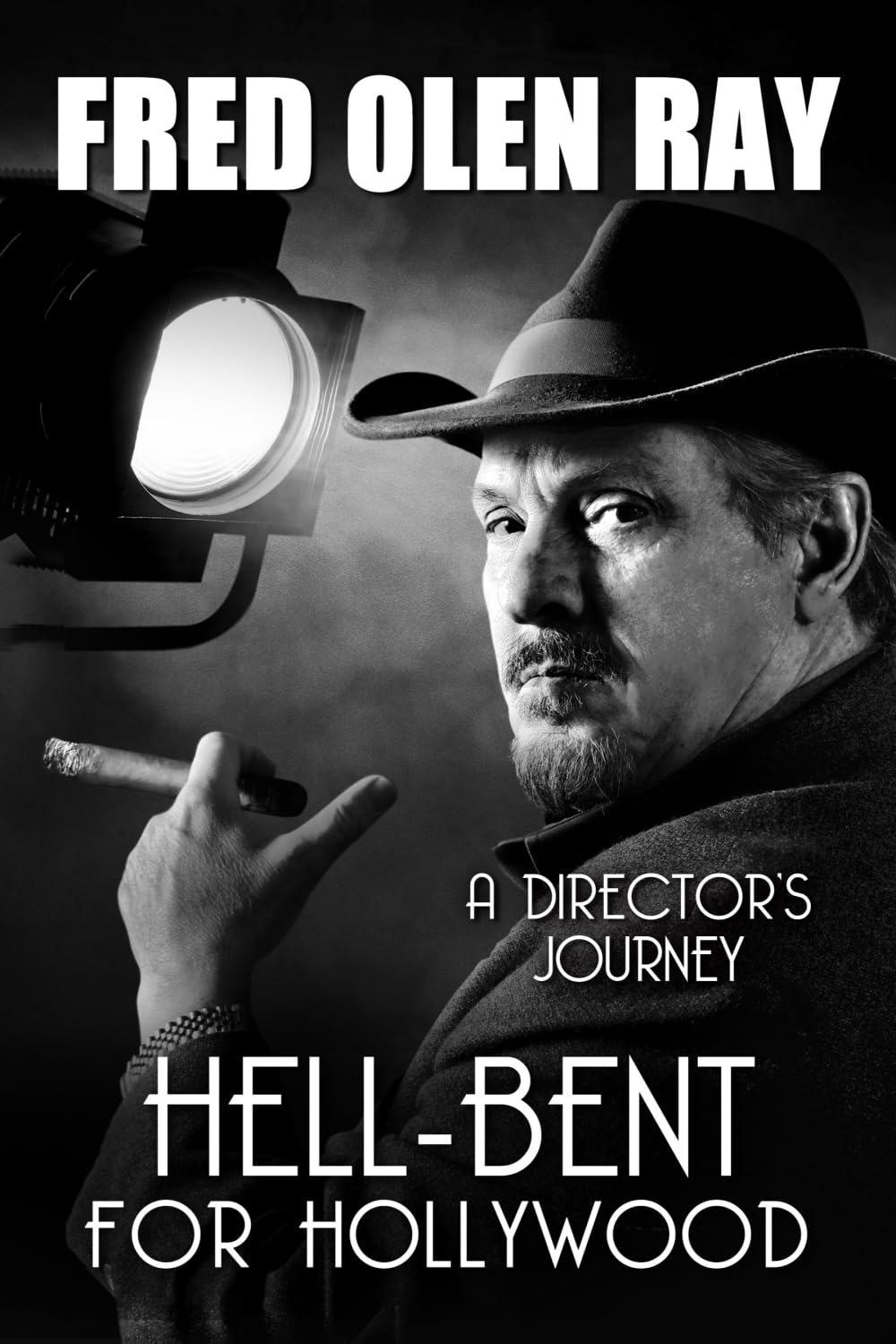
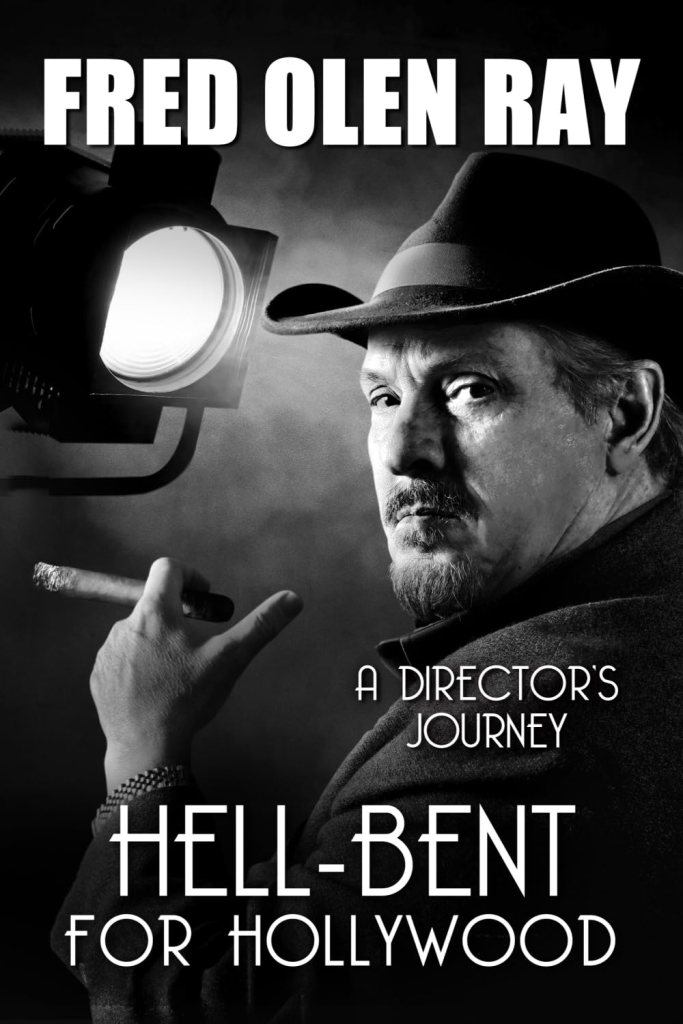
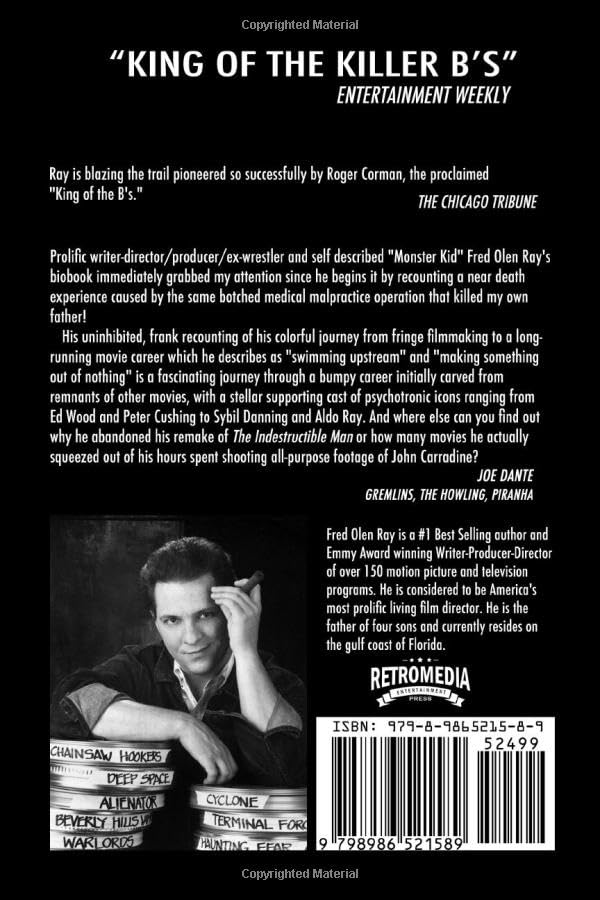
One reason I admire Fred Olen Ray so much is that he is one of us, meaning he genuinely loves movies like those of us on the outside do. Too many go to Hollywood, I believe, with ambition but little knowledge of or interest in film history, largely because of ego, talent, of some sense that there will be great parties and hot women. I guess it is true and doesn’t sound too bad, but I think there are (distressingly few) people, whether it’s Peter Bogdanovich, Martin Scorsese or, yes, Ray who genuinely love cinema and its possibilities. And as Ray shows time and again in his excellent new autobiography Hell-bent for Hollywood, after a big payday he would bank some money, not blow it (his previous impoverishment never fully leaving his mind), and immediately start figuring out a way to shoot another film with rest of the money he had in hand.
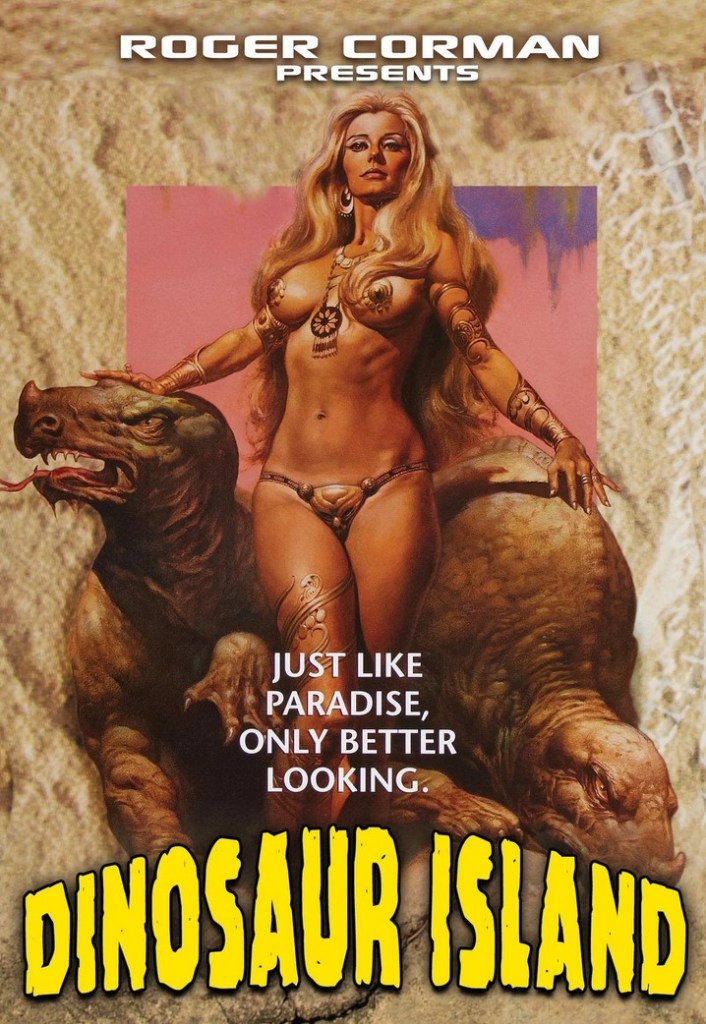
An anecdote he shares regarding the making of Dinosaur Island (co-written by a friend of mine, the late Bob Sheridan) in the mid-90s points to this. This silly sex and dinosaurs video hit, produced by Roger Corman, was co-directed by Ray and Jim Wynorski, a fellow king of the low budget field. Each received $25,000 for their work; Wynorski, Ray reports, used much of the money he received to spirit off to Hawaii on vacation with two buxom young women. Ray used the money he received to get a $1000 membership to the private magicians club the Magic Castle and then used the rest of it as seed money for a new six day opus Bikini Drive-in. This is not to bury Wynorski, who alongside Ray has made some of the most enjoyable exploitation films of the last 40 years such as Chopping Mall and Deathstalker 2. But Ray just loves shooting film, just loves figuring out pragmatic solutions to crazy low budget problems, just loves hiring “has-been” actors such as Huntz Hall from the Bowery boys comedies of the 1940s, Robert Quarry from the Count Yorga films, and Robert Clark, who was never pleasant with Ray, always drinking and complaining about his parts and the projects, but Ray kept hiring him anyway. Ray seems loyal and not prone to stabbing partners in the back or unduly going out of his way to get the best deal while squeezing someone else out in the process, and seems genuinely aggravated that so many lived this way in Hollywood (he has recently moved back to Florida).
At any event, this is how he comes off in Hell-bent for Hollywood which is a real page turner for anyone interested in the subject matter, and is truly revealing, not just about Hollywood gossip, although there is fun gossip to be had. Ray gives us a steady stream of juicy anecdotes about difficult leads, aging legends who can no longer remember their lines, and Steven Seagal, who Ray had the honor of guiding through a bunch of cue cards for two lazy days of acting (to be clear, Seagal wasn’t particularly difficult, just high maintenance and low energy). What truly fascinated me was Ray’s own back story, his complicated and frankly unpleasant relationship with his parents back in Florida, and the complicated interpersonal relationships he has with various romantic partners and his own children. Ray comes off like a straight shooter, explaining convincingly how the near poverty trappings that shaped much of his early life and early time in Hollywood gave him both a work ethic and a desire to risk heavily to move ahead, while also keeping him perhaps much more grounded than many of the eccentrics and scoundrels who pop into the pages of his book. Hollywood as he describes it is truly a town of flakes, and he is affectionate towards them while being level headed enough to keep getting the work done, raise multiple sons on his own, and find new avenues of employment when previous venues dry up. I for one never expected the director of the Alien Dead and Scalps to be an in demand award-winning television director in the 21st century with a slew of lifetime Christmas movies under his belt.
The book is quite readable and fast-paced throughout. There are brief moments where I felt the editing and storytelling is a bit sloppy — his story about John Carradine’s death is actually confusing and seems to leave out key elements (he discusses the official version versus the one Carradine’s son David shared with him, without ever telling us what each story exactly is). But I really only bring this up to show I was paying attention; the book is generally clear and lucid and in fact quite interesting in the way he structures it. No chapter overstays its welcome, no story seems extraneous or self-serving. It’s an excellent read and an essential document in that it puts on page in great detail stories from what really is the last great era of low budget American genre filmmaking. When the book reaches its end I was feeling sad that way you do when you reach the end of a good book, but happily he throws in a final chapter where he goes over various little anecdotes and stories that he didn’t feel really fit into the larger narrative that preceded this chapter, and he also promises a second volume. I look forward to that second volume and I heartily recommend Hell-bent for Hollywood not just for the movie making stuff, but for the interesting and honest personal story he tells which is quite inspiring, to use an overused term. Ray has been in some tough spots in his life , but he’s always worked his way out and the result is this eccentric, impressive book of which he should be proud.



 Tremble...Sigh...Wonder...
Leave a comment