By James Kenney
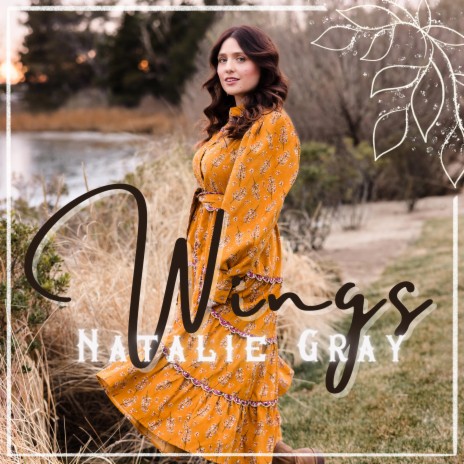
Songwriter and performer Natalie Gray has advice for budding lyricists:
- Always have something with you to get your thoughts down/write with. Inspiration strikes at the strangest moments. Out to dinner with friends and you’re in the bathroom at the restaurant? Bring your phone! Out for a walk in the park? Bring your journal. Waking up from a dream that can easily be turned into a song? Keep that pen and paper beside your bed.
- Keep an archive of your lyrics as a bank to pull from. I’ve written songs that I’ve hated as a whole, but they had one or two lines that were poignant, and could easily flow in another scenario. I’ve learned to never truly get rid of anything, because it can come back later.
- Don’t judge your lyrics as you write them and as they’re coming out. Don’t try to edit them in the “heat of the moment,” so-to-speak. Just word-vomit, get it out, refine and polish later. I’ve learned that judgement and perfection interrupts creative flow.
But don’t just call Natalie Gray a singer-songwriter. She’s a singer-songwriter, sure, but with a twist. “Because of the variety in my music education and musical journey, my music has many underlying genres and influences,” she explains. “This often makes it difficult for folks to place it in a genre-box. Singer-Songwriter feels like a nice umbrella to me, and many other styles can fall under that umbrella with ease.”
Natalie has shaken that umbrella, and the fruits of her efforts are found in her debut EP, Wings, recorded in Nashville with five-time Grammy-nominated, ASCAP award winning, producer, engineer, mixer, songwriter, and musician, Paul Moak.
As a singer-songwriter, Natalie has performed on the New York stages of The Bitter End, Rockwood Music Hall, Birdland, The Living Room, Cornelia Street Café, the Metropolitan Room, Don’t Tell Mama’s, Cleopatra’s Needle, and the Solar1 Stage. She lives a life immersed in music: Natalie received a Master of Arts in Music & Music Education at Columbia University and is currently on Voice Faculty at Molloy College, while teaching private lessons in Music Theatre Voice for the Molloy/CAP 21 Theatre Arts program. Having begun performing at a young age, she continues her passion for elementary and secondary choral education, directing Vocal Technique Across Genres for the not-for-profit organization Every Voice Choirs. She is also a Vocal Technique Coach for Musical Theatre College Auditions (MTCA), as well as the business owner of her own studio, providing voice, piano, and songwriting lessons to students.
Of course her studio, while well-appointed, didn’t prepare her for what it would be like working in Moak’s Nashville studio with some of the best musicians in that storied music city.
“It smells creative…”
“Paul Moak’s studio, The Smoakstack, felt like a magical land. There are colored lights and vintage furniture, amber lamps, rugs, velvet, incense burning, old movies playing on the television. You walk in to a total ambience. It feels creative—heck, it smells creative. You’re ready to write, you’re ready to work just from stepping into the space. And then comes the musicians…
I worked with the greatest musicians I’ve ever collaborated with in my life. They were able to listen to the demo in black and white and bring it to life in living color. When I started playing the piano and hearing the drums, guitar, and organ play along live with me for the first time, it was an emotional experience. They understood my music, Paul understood my sound. It sounded like what I heard in my head, just in real life. And heck, when I heard the strings play on the songs, I melted in my chair.
I have to name these musicians and give them all the credit in the world. Not only are they masters of their craft, they’re also wonderful humans. Nathan Sexton was on Drums and Percussion, Kevin Whitsett on Bass, Paul Moak on a wide array of guitars and stringed instruments; Kris Donegan on Slide Guitar; Charlie Lowell on Celeste, Accordion, B3, Wurlitzger, Mellotron, and Arp Solina; Cara Fox on Cello; Eleanore Denig on Violin. And then there’s our Engineer Zack Zinck and Assistants Brendon Hapgood and Samuel Hayes. I mean, it takes a village to make a project like this.”
How did you know the time was right to put together an EP of your original music?:
This story always is a stand-out for me. I and my then-fiancé, Adam, took a trip to Vermont. We were on a long drive up there, and he asked me a poignant question. He turned to me and said, “Is there anything you want to do, any dreams that you have in your life, that you haven’t quite achieved yet?” I started crying because I knew what the answer was immediately. I wanted to record original music that I felt proud of. I didn’t want to hold back on it, either. I wanted everything—real musicians (not MIDI instrumentation on Logic), a full-fledged recording studio, strings, killer songs. In other words, I wanted to do it the right way.
And I knew I wanted Paul Moak in Nashville to produce it. I had been following his work for years, and the way that he put music together always felt authentic and beautiful. I was always drawn to the arrangements and the soul of the music.
“Songs I wanted to listen to in the car…”
Adam asked me what was hindering me from reaching out to Paul, and I said that I didn’t have a body of work that I was ready to send him. And this is when it dawned on me: I had to write music that I was ready to share with the world in a major way. I had to write music that felt authentic to me. I had to write music that felt cohesive.
I was always experimenting with different styles, but this also made my writing wander quite a bit. I didn’t want my writing to sound like musical theatre, or jazz. I wanted it to sound like me, and the most ‘me’ felt closer to folk/singer-songwriter. I was searching and writing for so long, and then suddenly it all clicked. I sat down to write and then never stopped. Song after song– I wrote, recorded, arranged, and produced all of them in my own little studio with MIDI instrumentation on Logic Pro X. This happened within a span of two weeks. I was staying up all night writing songs; I was covered in inspiration. I felt like the songs had a cohesive style—singer-songwriter with a folk/country flair. They were catchy, they pulled at the heartstrings. They were songs that I wanted to listen to in the car. They were songs I was proud of.
I emailed Paul, and he was on board with the music and ready to make the record with me. Then I knew I hit the nail on the head. This is a Grammy-nominated and award-winning producer who has worked with some of the greatest artists of all time. I believe in my music, but that’s simply not enough. If he believes in it, too, then we’re a team. I was ready to buy my tickets to Nashville.
Lastly, on another note, I had found the love of my life. The entire album isn’t about Adam of course, but he’s certainly a big influence. I can never write enough about him. He will be my forever-muse. The songwriting flowed so easily because I had my major source of inspiration by my side. Who doesn’t want to write songs about their soulmate?
Listening to her debut album, currently available streaming in the usual places (Spotify, Pandora, Apple Music, etc.) and soon to be available as a CD and LP, one can hear many diverse influences. Gray never hyper-focuses on one genre, even in a single song, always dipping into the variety of the genres she was immersed in growing up and at this point has internalized.
Natalie, who has had a busy summer putting out Wings, the single “The Letter” and getting married (to her duet partner and co-writer on “The Letter,” Adam Gray), while continuing to play out and teach music, speaks of the importance of teachers in her life and her many influences that helped her, ahem, spread her Wings:
“My musical path has taken me down many different roads. I’ll start by saying that I had incredible music teachers throughout my life who helped shape and foster my growth and I am so grateful for that. Along the way, they encouraged me to try a bit everything, so I became a sponge soaking up everything I could related to music, artistry, and creativity.
“My love for musical theatre was very real—I was devoted to it.”
Like any little girl with an imagination, I started on the Disney Princess route. There will always be a deep appreciation and love in my heart for Alan Menken’s compositions. This is where I learned what “beautiful” singing sounds like—and what I mean by that is: singers vocalizing with healthy technique. I tried to emulate these sounds.
As a child, I loved dressing up and singing in front of anyone who would hear. This blossomed into performing in regional theatre. I found this insatiable thrill being in front of an audience and playing a character in a story. My love for musical theatre was very real—I was devoted to it. I listened to every possible Broadway soundtrack on the way to and from school, and when I got home from school.
When I discovered Sondheim, everything changed. The complexity in harmony and using chords that strayed from the beacon path opened my eyes to Broadway scores with incredible depth and mastery construction. When I first started writing at 13 years old, my music sounded very much like a Broadway musical, but still within the structure of a pop song (after all, I was still listening to the radio and soaking in the ‘hits’ of the time, as well).
“I discovered jazz...”
In middle school, I discovered jazz. My perspective changed and opened up even more here. I remember sitting in my room in front of a CD player, and listening to every possible record I could. I fell in love with Ella Fitzgerald and the songs of the Great American Songbook, which I quickly realized stemmed from the Golden Age musicals I loved so much (“So In Love” from Kiss Me Kate, “People Will Say We’re In Love” from Oklahoma, “Embraceable You” from East Is West). After studying jazz music, this began to enhance the way that I would play the piano and sing my own original music. My chords were starting to have extensions—it wasn’t just an F major chord, but an Fmaj9#11. The melodies were becoming more improvisatory and flexible—more mature.
I was always studying classical piano and classical music from a young age, but when I got to college, I performed in two full-length operas. Studying classically seriously opened up my voice and my instrument in a major way. After this, I felt like I could sing anything—my voice knew no bounds and it could shape-shift in and out of genre with ease. This enhanced my original writing even more because I was using the entirety of my range and registration.
“A verse to catch everyone’s attention, a catchy chorus, an instrumental jam…”
Growing up, there was always music playing in the house. My Dad introduced me to classic rock and folk rock, and I always had a deep love for it— The Doors, The Eagles, Simon & Garfunkel, Joni Mitchell, James Taylor, Pink Floyd, The Who. This listening bled into my original songwriting in terms of structure—a verse to catch everyone’s attention, a catchy chorus, an instrumental jam. These mega-writers also influenced my lyrics. Jim Morrison was a poet, Joni Mitchell wrote some of the greatest lyrics of all time. I was studying with the greats for free. After college, I fell in love with country music, the storyline of the lyrics, the beauty of the voices, the acoustic instrumentation. Allison Krauss and Bonnie Raitt come to mind as major influencers. Timeless voices with music to span through the ages.
All in all, throughout my life, I never hyper-focused on one genre. I always dipped into the variety with open ears and an open mind. All of these genres made their way into my writing in some way—whether it was through the lyrics, the harmony/chord changes, the melody, or the arrangement/instrumentation.
When do you know when a song is done?:
It’s strange—but I know when a song is done by the way it makes me feel. For example, I have to sing it from start to end, and if it gives me goosebumps or makes me cry or pulls at my heartstrings in a way, I know I’ve made something special. This was especially true for “Sometimes.” I wrote it in one sitting, recorded it in one sitting. When I hit that second to last sus4 chord on the piano and then it resolves, I quickly burst into tears. I sent it to my fiancé (now husband) after I wrote it, and he cried, too. In fact, he was speechless. I think about it this way—if I can’t feel something after I hear a song that I wrote, then how are other people going to feel something? Your heart has to be in it completely. This goes for both the writing phase and the recording phase.
Do you base your lyrics on personal experience, or are they just “made up”?
I look at a verse like
“Walking through the crooked streets
Of a ghostly little town
Stumbled right into the Clinkscale bar
5,000 feet above the ground”
and it feels lived-in. On the other hand
“Sometimes…
I want to be the cool girl
Or maybe the tough girl
Unbothered and coasting on by
But what I want is a fictional story
That I like to tell myself, sometimes”
indicates that maybe you like to construct “fictions” per se? This isn’t true confessions, but do you find you use your own life as a springboard for songs, or do you reach out into the universe for inspiration?
I definitely use my own life as a springboard for songs, and I always have. This works for me for now, but I’m sure it will change later. I mean, how many love songs can you really write before you get tired of them? I’ve tried writing songs that are about imaginary scenarios or from a third-party perspective, but they just feel inauthentic to me.
“I’m an empath…”
My life is full of inspiration—and life is in general. There’s plenty to write about. I’m very driven by emotions and I lead my life from the heart. This bleeds into my writing, without a doubt. Perhaps this comes from being the daughter of a therapist and being in therapy myself, but an awareness (maybe even hyper-awareness) of my own emotions (and others’ emotions for that matter), allows me to paint with a vivid palette for my songwriting.
I’ve always had a sensitivity from a young age—I’m an empath, perhaps to a fault of putting others before myself. But I also think it can be a superpower of sorts as a musician and an artist, because you become a mind-reader/room-reader and you see scenarios in vivid color. I can turn the smallest moment that happened in my life and blow it up into a movie-like song. That’s what makes songwriting so incredibly fun and creative. I do sometimes take real-life scenarios and dial them up with my imagination.
What’s interesting about this is that, at this point in my life, I can’t just wait for something to happen to me that is emotionally charged and then write about it. I wouldn’t generate enough content that way. Sometimes, I have to go back in time— something that happened to me 10 years ago, 5 years ago. I’ll dig it up and re-process it— look at it from a new perspective (my memory is insanely specific and detailed. I can recall things with color and smell, as if it were yesterday). I work quite a bit and life can be so busy. When I’m work-focused, I have to dig things up for songwriting because I’m not exactly out there living life. All in all, I can always write a song. If you tell me to sit down in front of the piano, you give me an hour and ask for a song after that, I can do it. It may need tweaking and refining, but I’d be able to give you a verse, chorus, and bridge at the end of that session.
“You become a mind-reader/room-reader and you see scenarios in vivid color…”

I asked Natalie, now that she has worked in Nashville with Moak, to put on her teaching cap again and give some advice to vocalists on the difference between singing in a microphone for a recording and singing live:
When you’re vocal recording, that mic is going to pick up every little thing you do—every breath, detail, nuance—things that we might not pay attention to or notice with a naked ear with live, in-person, unplugged singing. You shouldn’t change the way you normally sing for a recording microphone, though. You’re using the same vocal technique—it’s your voice, just in the most honest form possible. Make sure that you’re using a microphone that picks up the best qualities of your voice. For example, if you have warmth in your voice, you want to use a mic that picks up the beauty of that warmth and does not overly brighten the way you sound. It’s like trying on clothing and finding the right fit.
As if putting out her debut EP this year wasn’t enough, Natalie has already followed it up with a new duet she recorded with her now-husband that she premiered at her wedding:
I am so excited about my newest recording, which was released on my wedding day, June 11th. We performed it as a surprise for all the wedding guests. Adam and I wrote a song together about our love story, “That Letter,” and recorded it in Nashville with Moak. Adam is a Merchant Marine Officer who absolutely loves to sing. He is also an incredible poet/lyricist. We got together to write this song, and it was so inspiring to watch him in a recording studio for the first time—he was completely relaxed and able to have a great time. This made for a beautiful finished product, which we’ll have for the rest of our lives, and it can be a gift for our friends and family, a little token from our wedding. This is the first duet I’ve ever released, and to release it with my soon-to-be husband is beyond special and memorable.”
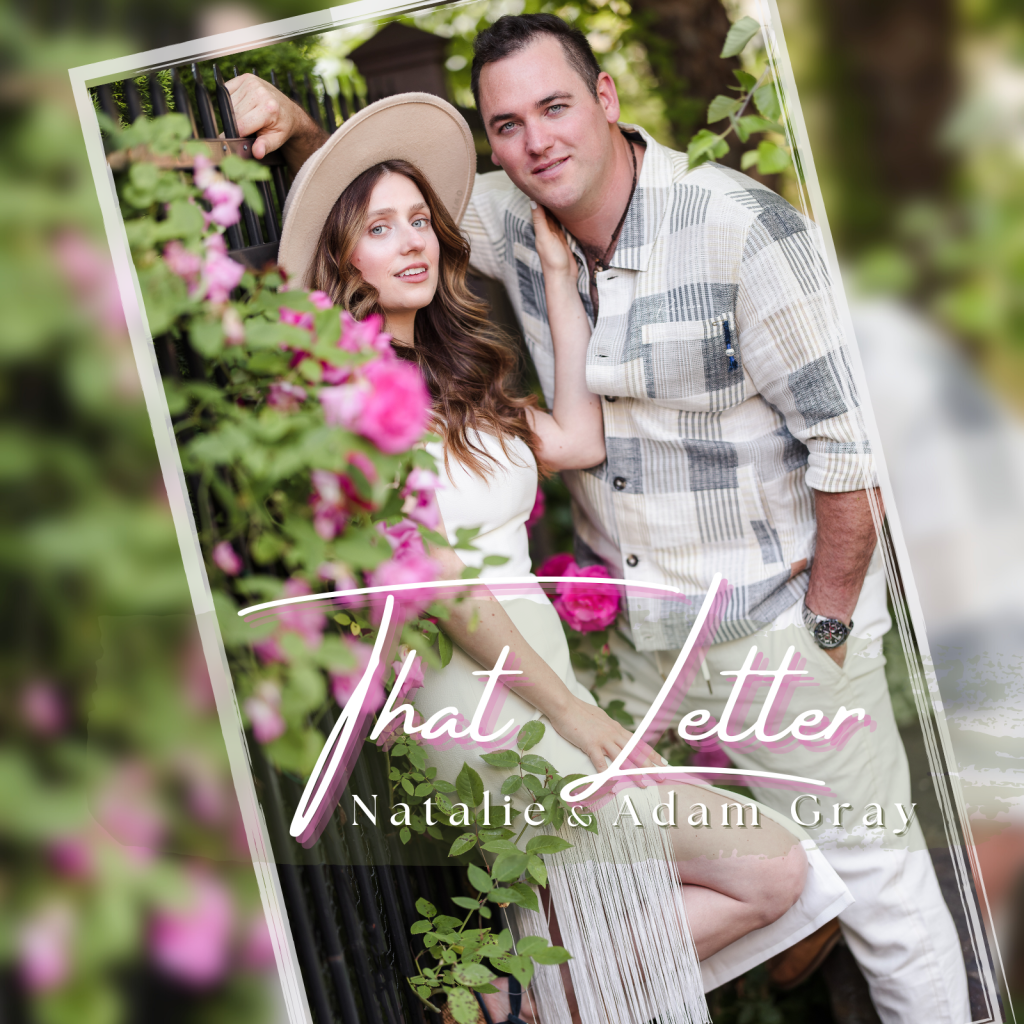
Check out Natalie’s website to learn more about this wonderful artist and her impressive debut release, Wings, (the title song is my personal fave), and the follow-up single “The Letter.”

 Tremble...Sigh...Wonder...
Leave a comment